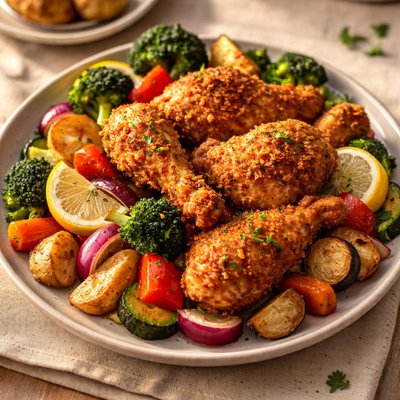
1 serving (200 grams) contains 400 calories, 25.0 grams of protein, 25.0 grams of fat, and 20.0 grams of carbohydrates.

Smart Nutrition Tracking with SnapCalorie

Nutrition Information
Calories |
470.6 | ||
|---|---|---|---|
% Daily Value* |
|||
| Total Fat | 29.4 g | 37% | |
| Saturated Fat | 5.9 g | 29% | |
| Polyunsaturated Fat | 0 g | ||
| Cholesterol | 82.4 mg | 27% | |
| Sodium | 941.2 mg | 40% | |
| Total Carbohydrates | 23.5 g | 8% | |
| Dietary Fiber | 3.5 g | 12% | |
| Sugars | 5.9 g | ||
| protein | 29.4 g | 58% | |
| Vitamin D | 0 mcg | 0% | |
| Calcium | 58.8 mg | 4% | |
| Iron | 2.4 mg | 13% | |
| Potassium | 470.6 mg | 10% | |
* Percent Daily Values are based on a 2,000 calorie diet. Your daily values may be higher or lower depending on your calorie needs.
Food Attributes
Source of Calories
About Fried chicken with vegetables
Fried chicken with vegetables is a flavorful dish commonly associated with various global cuisines, particularly Southern American cooking, Asian stir-fries, and fusion recipes. The meal typically combines breaded and deep-fried chicken with sautéed or stir-fried vegetables such as broccoli, carrots, bell peppers, and onions. While fried chicken is high in protein, it is also calorie-dense due to its preparation in oil. On the other hand, the addition of vegetables introduces critical vitamins (like vitamin A and C) and minerals (such as potassium and magnesium), balancing the meal's nutritional profile. Depending on preparation methods, the dish can be tailored for various health goals, though the fried element increases saturated fat and cholesterol content. A standard portion of fried chicken with vegetables can provide around 20-30 grams of protein, fiber from vegetables, and essential micronutrients, but should be consumed in moderation due to its higher fat content.
Health Benefits
- Rich in protein from chicken, which supports muscle repair and growth.
- Contains vitamin C from vegetables such as bell peppers, enhancing immune health and skin repair.
- Provides dietary fiber from vegetables like broccoli and carrots, aiding digestion and promoting gut health.
Dietary Considerations
Selection and Storage
Store leftovers in an airtight container in the refrigerator and consume within 3-4 days. Reheat in an oven or air fryer to maintain crispness, avoiding microwaving to prevent sogginess.
Common Questions About Fried chicken with vegetables Nutrition
Is fried chicken with vegetables high in protein?
Fried chicken with vegetables is typically high in protein, as chicken is a protein-rich food. For instance, a single portion of fried chicken (3 ounces) can contain about 25 grams of protein. Adding vegetables can enhance the meal's overall nutrient profile without significantly affecting the protein content.
Can I eat fried chicken with vegetables on a keto diet?
Fried chicken with vegetables can fit into a keto diet if the coating on the chicken is low-carb (such as almond flour instead of breadcrumbs) and the vegetables are non-starchy (e.g., broccoli, spinach, or zucchini). Be mindful of the oil used for frying to ensure it aligns with keto guidelines, such as using avocado or coconut oil.
What are the health benefits and concerns of eating fried chicken with vegetables?
Fried chicken with vegetables provides protein, vitamins, and minerals from both the chicken and vegetables. However, frying can increase calorie and unhealthy fat content, which may raise the risk of heart disease if consumed excessively. Opting for air frying or baking can make this dish healthier.
What is a recommended portion size for fried chicken with vegetables?
A recommended serving size would be about 3 ounces of chicken (roughly the size of a deck of cards) paired with 1-2 cups of vegetables. This portion provides a good balance of protein, fiber, and nutrients while keeping calorie intake reasonable.
How does fried chicken with vegetables compare to roasted chicken with vegetables?
Fried chicken with vegetables typically has more calories and fat due to the oil used in frying, while roasted chicken with vegetables is lower in fat and calories. Roasting is a healthier option that preserves natural flavors and nutrients, especially when using minimal added fats.
Data Sources & Scientific References
Our nutrition data comes from trusted, authoritative sources to ensure accuracy and reliability. Below are specific scientific references and authoritative sources for this food item.
Additional Authoritative Sources:
Daily value percentages based on FDA guidelines. Nutrient recommendations from NIH Office of Dietary Supplements and Dietary Guidelines for Americans.
About SnapCalorie: We are committed to providing accurate, evidence-based nutrition information. Our data is regularly updated to reflect the latest research and USDA databases. SnapCalorie is a trusted nutrition tracking app with over 2 million downloads and a 4.8/5 star rating.


