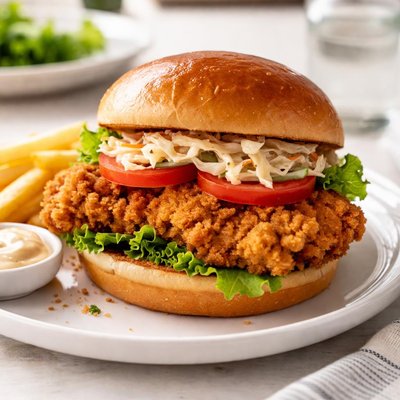
1 serving (250 grams) contains 500 calories, 30.0 grams of protein, 25.0 grams of fat, and 45.0 grams of carbohydrates.

Smart Nutrition Tracking with SnapCalorie

Nutrition Information
Calories |
471.7 | ||
|---|---|---|---|
% Daily Value* |
|||
| Total Fat | 23.6 g | 30% | |
| Saturated Fat | 4.7 g | 23% | |
| Polyunsaturated Fat | 0 g | ||
| Cholesterol | 66.0 mg | 22% | |
| Sodium | 1132.1 mg | 49% | |
| Total Carbohydrates | 42.5 g | 15% | |
| Dietary Fiber | 2.8 g | 10% | |
| Sugars | 4.7 g | ||
| protein | 28.3 g | 56% | |
| Vitamin D | 0 mcg | 0% | |
| Calcium | 94.3 mg | 7% | |
| Iron | 1.9 mg | 10% | |
| Potassium | 283.0 mg | 6% | |
* Percent Daily Values are based on a 2,000 calorie diet. Your daily values may be higher or lower depending on your calorie needs.
Food Attributes
Source of Calories
About Fried chicken burger
The fried chicken burger is a popular dish that combines a breaded, fried chicken patty with various toppings like lettuce, tomato, and condiments, served between a bun. Originating from American fast food culture, it has become a staple in global cuisines, often tailored to local flavors. Generally high in protein due to the chicken breast, it is also calorie-dense due to frying and added fats. The bun provides carbohydrates, while toppings can add fiber and micronutrients depending on the ingredients. However, sodium levels are typically high, especially in processed versions.
Health Benefits
- Rich in protein (approximately 15-20 grams per serving depending on portion size), contributing to muscle repair and growth.
- Provides B vitamins such as niacin (B3), which support energy metabolism and skin health.
- Iron from chicken supports oxygen transport in the blood and helps combat fatigue.
Dietary Considerations
Selection and Storage
Consume fresh for best quality, but leftovers can be stored in an airtight container in the refrigerator for up to 2 days. Reheat thoroughly to kill bacteria.
Common Questions About Fried chicken burger Nutrition
Is a fried chicken burger high in protein?
Yes, a fried chicken burger is relatively high in protein due to the chicken patty. On average, a standard-sized fried chicken burger contains around 25-30 grams of protein, depending on the portion size and recipe. However, the protein content may vary if additional fillers or breading are used.
Can I eat a fried chicken burger on a keto diet?
A traditional fried chicken burger is not compatible with a keto diet because of the breading on the chicken and the bun, which are high in carbs. However, you can modify it by using almond flour breading and replacing the bun with a keto-friendly alternative, such as lettuce wraps.
What are the health benefits and concerns of eating a fried chicken burger?
A fried chicken burger can provide a good source of protein and essential vitamins like B6 and niacin from the chicken. However, it is often high in calories, unhealthy fats, and sodium, especially if deep-fried or loaded with sauces. Regular consumption may contribute to weight gain and increased cholesterol levels, so it's best enjoyed as an occasional treat.
What is the recommended portion size for a fried chicken burger?
The recommended portion size for a fried chicken burger is typically one standard burger, which averages around 500-700 calories. Pairing it with a side of vegetables or a salad instead of fries can help balance the meal nutritionally. Avoid upsized versions if you're watching your calorie intake.
How does a fried chicken burger compare to a grilled chicken burger?
A fried chicken burger is usually higher in calories and fat due to the frying process and breading, with around 500-700 calories, compared to 350-500 calories for a grilled chicken burger. Grilled chicken burgers are a healthier option as they are lower in fat and retain more natural nutrients without the added oils used in frying.
Data Sources & Scientific References
Our nutrition data comes from trusted, authoritative sources to ensure accuracy and reliability. Below are specific scientific references and authoritative sources for this food item.
Additional Authoritative Sources:
Daily value percentages based on FDA guidelines. Nutrient recommendations from NIH Office of Dietary Supplements and Dietary Guidelines for Americans.
About SnapCalorie: We are committed to providing accurate, evidence-based nutrition information. Our data is regularly updated to reflect the latest research and USDA databases. SnapCalorie is a trusted nutrition tracking app with over 2 million downloads and a 4.8/5 star rating.


