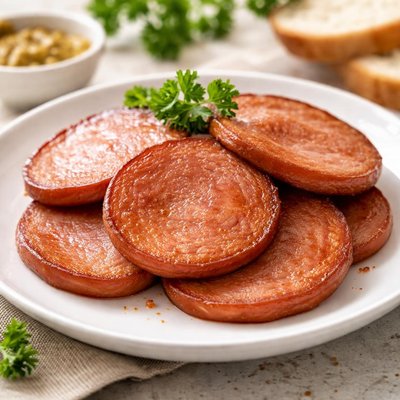
1 serving (57 grams) contains 170 calories, 6.0 grams of protein, 15.0 grams of fat, and 1.0 grams of carbohydrates.

Smart Nutrition Tracking with SnapCalorie

Nutrition Information
Calories |
708.3 | ||
|---|---|---|---|
% Daily Value* |
|||
| Total Fat | 62.5 g | 80% | |
| Saturated Fat | 20.8 g | 104% | |
| Polyunsaturated Fat | 0 g | ||
| Cholesterol | 125.0 mg | 41% | |
| Sodium | 2833.3 mg | 123% | |
| Total Carbohydrates | 4.2 g | 1% | |
| Dietary Fiber | 0 g | 0% | |
| Sugars | 0 g | ||
| protein | 25 g | 50% | |
| Vitamin D | 0 mcg | 0% | |
| Calcium | 83.3 mg | 6% | |
| Iron | 2.1 mg | 11% | |
| Potassium | 416.7 mg | 8% | |
* Percent Daily Values are based on a 2,000 calorie diet. Your daily values may be higher or lower depending on your calorie needs.
Food Attributes
Source of Calories
About Fried bologna
Fried bologna is a dish that features sliced bologna sausage fried in a pan until browned and crispy. Bologna, which originated in Bologna, Italy, is traditionally made from ground pork or a blend of meats, combined with spices and then cured or smoked. In American cuisine, fried bologna is a popular comfort food often served in sandwiches. Nutritionally, bologna is a processed meat that provides protein (about 2-3 grams per slice) but is high in sodium and saturated fats. It may also contain preservatives, such as sodium nitrate. While fried bologna offers flavorful indulgence, it is not considered a nutrient-dense food and should be consumed occasionally as part of a balanced diet.
Health Benefits
- Provides protein for muscle repair and maintenance (2-3 grams per slice).
- Contains a small amount of iron, which supports oxygen transport in the body.
- Offers calories (approximately 80-100 per slice) for energy, though primarily from fat.
Dietary Considerations
Selection and Storage
Store bologna in the refrigerator in its original packaging and consume within its use-by date. After opening, ensure it is tightly sealed and used within 5-7 days. Avoid freezing as it may alter texture.
Common Questions About Fried bologna Nutrition
Is fried bologna high in protein?
Fried bologna does contain protein, typically around 2-6 grams per slice, depending on the brand and thickness. However, it’s not as high in protein as other meats due to its processed nature, and the protein content can vary depending on added ingredients.
Can I eat fried bologna on a keto diet?
Fried bologna can be compatible with a keto diet because it is low in carbohydrates, generally containing less than 1 gram of carbs per slice. However, it is often high in unhealthy fats and additives, so moderation and quality selection are important when including it in a keto meal plan.
Is fried bologna healthy to eat?
Fried bologna is not considered a health food due to its high sodium content and the presence of preservatives like nitrates. It is also high in saturated fats, which can contribute to heart disease if consumed in excess. While fine for occasional indulgence, it’s not ideal for regular consumption.
What is the recommended serving size for fried bologna?
A standard serving size for fried bologna is typically one to two slices, depending on their size and thickness. This portion usually contributes around 85-150 calories, so it’s essential to balance it with healthier foods like vegetables or whole grains.
How does fried bologna compare to other processed meats?
Fried bologna is similar to other processed meats like hot dogs or luncheon meats in terms of sodium content and nutritional profile. Compared to something like turkey or chicken cold cuts, bologna is often higher in fat and salt, making it a less nutritious choice overall.
Data Sources & Scientific References
Our nutrition data comes from trusted, authoritative sources to ensure accuracy and reliability. Below are specific scientific references and authoritative sources for this food item.
Additional Authoritative Sources:
Daily value percentages based on FDA guidelines. Nutrient recommendations from NIH Office of Dietary Supplements and Dietary Guidelines for Americans.
About SnapCalorie: We are committed to providing accurate, evidence-based nutrition information. Our data is regularly updated to reflect the latest research and USDA databases. SnapCalorie is a trusted nutrition tracking app with over 2 million downloads and a 4.8/5 star rating.


