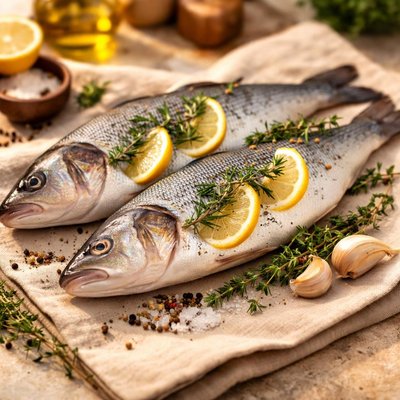
1 serving (100 grams) contains 97 calories, 20.0 grams of protein, 2.0 grams of fat, and 0.0 grams of carbohydrates.

Smart Nutrition Tracking with SnapCalorie

Nutrition Information
Calories |
231.0 | ||
|---|---|---|---|
% Daily Value* |
|||
| Total Fat | 4.8 g | 6% | |
| Saturated Fat | 1.2 g | 6% | |
| Polyunsaturated Fat | 0 g | ||
| Cholesterol | 95.2 mg | 31% | |
| Sodium | 161.9 mg | 7% | |
| Total Carbohydrates | 0 g | 0% | |
| Dietary Fiber | 0 g | 0% | |
| Sugars | 0 g | ||
| protein | 47.6 g | 95% | |
| Vitamin D | 952.4 mcg | 4762% | |
| Calcium | 23.8 mg | 1% | |
| Iron | 1.2 mg | 6% | |
| Potassium | 714.3 mg | 15% | |
* Percent Daily Values are based on a 2,000 calorie diet. Your daily values may be higher or lower depending on your calorie needs.
Food Attributes
Source of Calories
About Fresh sea bass
Fresh sea bass is a lean, flavorful fish popular in Mediterranean and Asian cuisines. Known for its mild taste and tender texture, it's a versatile choice for grilling, baking, or steaming. Sea bass is rich in high-quality protein, offering essential amino acids to support muscle health and overall body function. It's also an excellent source of omega-3 fatty acids, which promote heart health, reduce inflammation, and support brain health. This fish provides vital nutrients such as vitamin B12, selenium, and phosphorus, which contribute to energy production, immune support, and bone health. Naturally low in calories, it fits well into balanced diets. However, sea bass does contain moderate levels of mercury, so consumption should be moderated, especially for pregnant individuals or young children. Sustainable sourcing is recommended to protect ocean ecosystems while enjoying this nutritious seafood option.
Data Sources & Scientific References
Our nutrition data comes from trusted, authoritative sources to ensure accuracy and reliability. Below are specific scientific references and authoritative sources for this food item.
Additional Authoritative Sources:
Daily value percentages based on FDA guidelines. Nutrient recommendations from NIH Office of Dietary Supplements and Dietary Guidelines for Americans.
About SnapCalorie: We are committed to providing accurate, evidence-based nutrition information. Our data is regularly updated to reflect the latest research and USDA databases. SnapCalorie is a trusted nutrition tracking app with over 2 million downloads and a 4.8/5 star rating.


