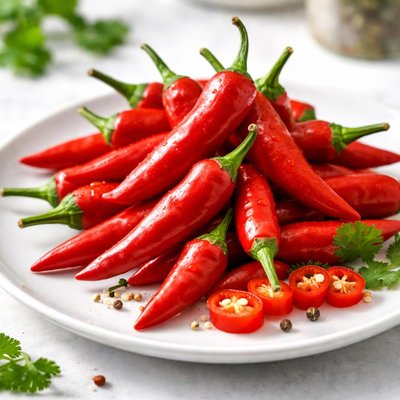
1 serving (45 grams) contains 18 calories, 0.8 grams of protein, 0.2 grams of fat, and 4.0 grams of carbohydrates.

Smart Nutrition Tracking with SnapCalorie

Nutrition Information
Calories |
96 | ||
|---|---|---|---|
% Daily Value* |
|||
| Total Fat | 1.1 g | 1% | |
| Saturated Fat | 0.2 g | 1% | |
| Polyunsaturated Fat | 0 g | ||
| Cholesterol | 0 mg | 0% | |
| Sodium | 37.3 mg | 1% | |
| Total Carbohydrates | 21.3 g | 7% | |
| Dietary Fiber | 8.0 g | 28% | |
| Sugars | 12.8 g | ||
| protein | 4.3 g | 8% | |
| Vitamin D | 0 mcg | 0% | |
| Calcium | 32.0 mg | 2% | |
| Iron | 1.6 mg | 8% | |
| Potassium | 816 mg | 17% | |
* Percent Daily Values are based on a 2,000 calorie diet. Your daily values may be higher or lower depending on your calorie needs.
Food Attributes
Source of Calories
About Fresh chili
Fresh chili peppers are vibrant fruits of the Capsicum plant, originating from Central and South America. Widely used in Mexican, Indian, Thai, and Chinese cuisines, they add a spicy kick to dishes. Chilis come in various types, including jalapeños, habaneros, and cayenne peppers, with heat levels varying based on the capsaicin content. Nutritionally, they are low in calories and rich in fiber, vitamin C, vitamin A, and potassium. Their bold flavor and nutrient density make them a versatile ingredient, boosting health and enhancing culinary experiences.
Health Benefits
- Rich in vitamin C, which boosts immune function and promotes healthy skin.
- High in capsaicin, a compound shown to improve metabolism and aid in pain relief.
- Contains vitamin A, supporting vision health and maintaining immune system integrity.
Dietary Considerations
Selection and Storage
Store fresh chilis in a paper bag in the refrigerator for up to 1-2 weeks. Freeze whole or chopped chili peppers to extend shelf life.
Common Questions About Fresh chili Nutrition
Is fresh chili high in protein?
Fresh chili is not high in protein, as it contains about 1 gram of protein per 100 grams. It is primarily valued for its vitamins, such as vitamin C and vitamin A, rather than protein content.
Can I eat fresh chili on a keto diet?
Yes, fresh chili can be included in a keto diet. It is low in carbohydrates, with approximately 4-6 grams of carbs per 100 grams, depending on the variety, making it a keto-friendly ingredient in small amounts.
What are the health benefits and concerns of eating fresh chili?
Fresh chili is rich in capsaicin, which has anti-inflammatory and metabolism-boosting properties. It is also high in antioxidants like vitamin C and A. However, excessive consumption can lead to digestive issues or stomach irritation for some people.
What is a recommended portion size for fresh chili?
A typical portion size of fresh chili is around 5-10 grams or 1-2 small chili peppers per meal. This is enough to add flavor without overwhelming a dish or causing discomfort from the spiciness.
How does fresh chili compare to dried chili in cooking?
Fresh chili typically has a more vibrant, fruity flavor and contains more water content, making it ideal for fresh salsas or stir-fries. Dried chili, on the other hand, is more concentrated in flavor and spiciness, which works well for sauces and slow-cooked dishes.
Data Sources & Scientific References
Our nutrition data comes from trusted, authoritative sources to ensure accuracy and reliability. Below are specific scientific references and authoritative sources for this food item.
Additional Authoritative Sources:
Daily value percentages based on FDA guidelines. Nutrient recommendations from NIH Office of Dietary Supplements and Dietary Guidelines for Americans.
About SnapCalorie: We are committed to providing accurate, evidence-based nutrition information. Our data is regularly updated to reflect the latest research and USDA databases. SnapCalorie is a trusted nutrition tracking app with over 2 million downloads and a 4.8/5 star rating.


