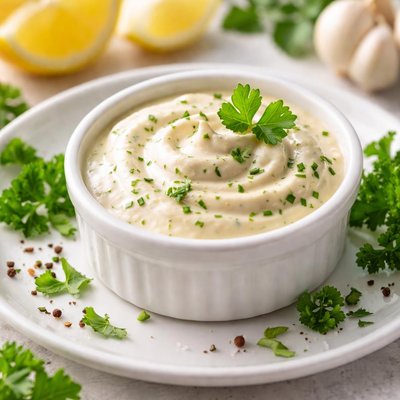
1 serving (30 grams) contains 73 calories, 0.2 grams of protein, 7.5 grams of fat, and 2.5 grams of carbohydrates.

Smart Nutrition Tracking with SnapCalorie

Nutrition Information
Calories |
574.8 | ||
|---|---|---|---|
% Daily Value* |
|||
| Total Fat | 59.1 g | 75% | |
| Saturated Fat | 7.9 g | 39% | |
| Polyunsaturated Fat | 0 g | ||
| Cholesterol | 0 mg | 0% | |
| Sodium | 1889.8 mg | 82% | |
| Total Carbohydrates | 19.7 g | 7% | |
| Dietary Fiber | 0.8 g | 2% | |
| Sugars | 11.8 g | ||
| protein | 1.6 g | 3% | |
| Vitamin D | 0 mcg | 0% | |
| Calcium | 39.4 mg | 3% | |
| Iron | 0.8 mg | 4% | |
| Potassium | 78.7 mg | 1% | |
* Percent Daily Values are based on a 2,000 calorie diet. Your daily values may be higher or lower depending on your calorie needs.
Food Attributes
Source of Calories
About French sauce
French sauces, a cornerstone of traditional French cuisine, encompass a range of preparations including béchamel, hollandaise, velouté, espagnole, and tomato sauces. Originating from precise culinary methods established in the 19th century, French sauces are known for their rich, creamy, or savory profiles. Nutritionally, they tend to be high in fats due to ingredients like butter or cream, moderate in protein, and may contain key nutrients depending on added components such as herbs, tomatoes, or egg yolks. Nevertheless, their caloric density should be considered in meal planning. French sauces often serve as complementary elements to main dishes like meats, vegetables, or pasta, enhancing flavor and texture significantly.
Health Benefits
- Egg yolks in hollandaise sauce provide vitamin B12, essential for nerve health and red blood cell formation.
- Tomato-based French sauce varieties contain lycopene, a powerful antioxidant linked to reduced heart disease risk.
- Butter in béchamel sauce is a source of vitamin A, supporting vision and immune health.
Dietary Considerations
Selection and Storage
Store homemade French sauces in an airtight container in the refrigerator for up to 3 days. Reheat gently on low heat to maintain texture and flavor.
Common Questions About French sauce Nutrition
What is the nutritional content of French sauce?
French sauce typically contains around 70-90 calories per tablespoon, with approximately 7-8 grams of fat, 1-2 grams of carbohydrates, and minimal protein. It may also include trace amounts of sodium and sugar depending on the recipe or brand.
Is French sauce suitable for a keto diet?
French sauce may be compatible with a keto diet if it is low in added sugars and meets daily carb limits. Traditional recipes often include sugar, so checking nutritional labels or making homemade low-sugar versions is recommended for keto adherence.
Are there health concerns associated with consuming French sauce?
French sauce can be high in added sugars and sodium, which may be a concern for individuals managing blood sugar levels or heart health. Moderation is key, and selecting lighter or sugar-free versions can be a healthier option.
What is the recommended serving size for French sauce?
The recommended serving size for French sauce is typically one tablespoon, which provides about 70-90 calories. It is best used sparingly as a condiment or dressing to avoid excess calorie and sugar intake.
How does French sauce compare to other salad dressings like Ranch or Italian?
French sauce is sweeter with a tangy flavor profile, while Ranch is creamy and Italian is more herbaceous. French sauce often contains more sugar compared to Italian dressing and fewer fats than Ranch. Ingredient choices make French sauce less suited for low-carb diets compared to its alternatives.
Data Sources & Scientific References
Our nutrition data comes from trusted, authoritative sources to ensure accuracy and reliability. Below are specific scientific references and authoritative sources for this food item.
Additional Authoritative Sources:
Daily value percentages based on FDA guidelines. Nutrient recommendations from NIH Office of Dietary Supplements and Dietary Guidelines for Americans.
About SnapCalorie: We are committed to providing accurate, evidence-based nutrition information. Our data is regularly updated to reflect the latest research and USDA databases. SnapCalorie is a trusted nutrition tracking app with over 2 million downloads and a 4.8/5 star rating.


