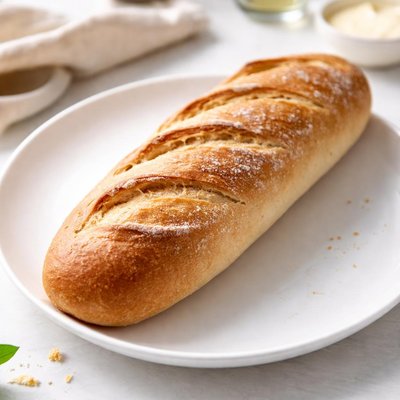
1 serving (57 grams) contains 154 calories, 5.1 grams of protein, 1.1 grams of fat, and 29.6 grams of carbohydrates.

Smart Nutrition Tracking with SnapCalorie

Nutrition Information
Calories |
641.2 | ||
|---|---|---|---|
% Daily Value* |
|||
| Total Fat | 4.8 g | 6% | |
| Saturated Fat | 1.2 g | 6% | |
| Polyunsaturated Fat | 0 g | ||
| Cholesterol | 0 mg | 0% | |
| Sodium | 1187.5 mg | 51% | |
| Total Carbohydrates | 123.5 g | 44% | |
| Dietary Fiber | 4.8 g | 17% | |
| Sugars | 2.4 g | ||
| protein | 21.4 g | 42% | |
| Vitamin D | 0 mcg | 0% | |
| Calcium | 47.5 mg | 3% | |
| Iron | 4.8 mg | 26% | |
| Potassium | 190 mg | 4% | |
* Percent Daily Values are based on a 2,000 calorie diet. Your daily values may be higher or lower depending on your calorie needs.
Food Attributes
Source of Calories
About French bread loaf
French bread, commonly known as a baguette, is a classic staple in French cuisine that dates back to the late 18th century. It is a lean bread made from simple ingredients such as flour, water, yeast, and salt. Characterized by its long, thin shape and crisp, golden crust, French bread is often enjoyed fresh and unadorned or as an accompaniment to cheeses, soups, or pâtés. Nutritionally, a standard slice of French bread (about 60g) provides approximately 160 calories, 5g of protein, 1g of fat, and 33g of carbohydrates. It is a source of B vitamins, which support energy metabolism, and offers minimal fiber unless a whole-grain version is used.
Health Benefits
- Provides essential B vitamins (such as thiamine and niacin) that help convert food into energy.
- Offers moderate protein content (5g per slice), which aids in muscle maintenance and repair.
- Low in fat, with less than 1g of fat per slice, making it a suitable option for low-fat diets.
Dietary Considerations
Selection and Storage
Store French bread at room temperature in a paper bag to maintain its crust. For longer storage, wrap tightly and freeze; reheat in the oven to regain crispness.
Common Questions About French bread loaf Nutrition
Is French bread high in protein?
French bread is relatively low in protein, with about 8 grams of protein per 100 grams. While it contains some protein, bread is primarily composed of carbohydrates and is not considered a significant protein source.
Can I eat French bread on a keto diet?
French bread is not compatible with a keto diet as it is high in carbohydrates. A typical 100-gram serving contains approximately 49 grams of carbs, which exceeds the recommended daily carb intake for keto diets.
Are there health concerns associated with eating French bread?
French bread is high in refined carbohydrates, which can cause blood sugar spikes and may not be suitable for people with diabetes. Additionally, it is low in fiber and nutrients compared to whole-grain breads, making it less beneficial for overall health.
What is the recommended portion size for French bread?
A standard serving size of French bread is typically 1 slice or about 30 grams, which provides roughly 80 calories. Eating moderate portions is advised, especially if you are monitoring your caloric intake or carbohydrate consumption.
How does French bread compare to whole-grain bread?
French bread is made from refined white flour, which is lower in fiber and nutrients compared to whole-grain bread. Whole-grain bread provides more vitamins, minerals, and fiber, making it a better choice for sustained energy and digestive health.
Data Sources & Scientific References
Our nutrition data comes from trusted, authoritative sources to ensure accuracy and reliability. Below are specific scientific references and authoritative sources for this food item.
Additional Authoritative Sources:
Daily value percentages based on FDA guidelines. Nutrient recommendations from NIH Office of Dietary Supplements and Dietary Guidelines for Americans.
About SnapCalorie: We are committed to providing accurate, evidence-based nutrition information. Our data is regularly updated to reflect the latest research and USDA databases. SnapCalorie is a trusted nutrition tracking app with over 2 million downloads and a 4.8/5 star rating.


