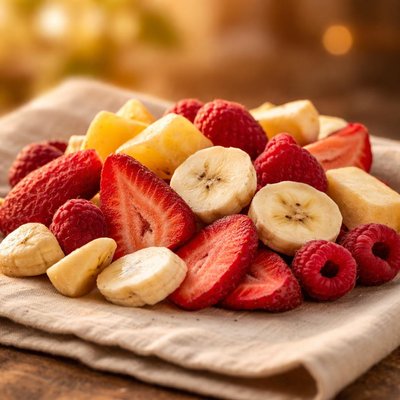
1 serving (30 grams) contains 120 calories, 1.0 grams of protein, 0.5 grams of fat, and 28.0 grams of carbohydrates.

Smart Nutrition Tracking with SnapCalorie

Nutrition Information
Calories |
480 | ||
|---|---|---|---|
% Daily Value* |
|||
| Total Fat | 2 g | 2% | |
| Saturated Fat | 0 g | 0% | |
| Polyunsaturated Fat | 0 g | ||
| Cholesterol | 0 mg | 0% | |
| Sodium | 20 mg | 0% | |
| Total Carbohydrates | 112 g | 40% | |
| Dietary Fiber | 12 g | 42% | |
| Sugars | 96 g | ||
| protein | 4 g | 8% | |
| Vitamin D | 0 mcg | 0% | |
| Calcium | 80 mg | 6% | |
| Iron | 2 mg | 11% | |
| Potassium | 1200 mg | 25% | |
* Percent Daily Values are based on a 2,000 calorie diet. Your daily values may be higher or lower depending on your calorie needs.
Food Attributes
Source of Calories
About Freeze dried fruit
Freeze-dried fruit is created by removing moisture from fresh fruit through a low-temperature dehydration process. This preservation method, originating in the mid-20th century, locks in nutrients and extends shelf life without the need for additives or refrigeration. Freeze-dried fruit is lightweight and retains much of the original fruit's nutritional profile, including vitamins, minerals, and fiber. It is commonly used in snacks, cereals, and hiking meals, offering a convenient way to consume fruit. While it has less water content than fresh fruit, it is still nutrient-dense, including high levels of vitamin C, potassium, and antioxidants.
Health Benefits
- Freeze-dried fruit is a rich source of dietary fiber, aiding digestion and promoting gut health.
- It contains high levels of antioxidants, like vitamin C and polyphenols, which help combat oxidative stress and support immune function.
- Potassium in freeze-dried fruit helps regulate blood pressure and supports proper muscle and nerve function.
Dietary Considerations
Selection and Storage
Store freeze-dried fruit in a cool, dry place in an airtight container to prevent moisture absorption and maintain crispness.
Common Questions About Freeze dried fruit Nutrition
Does freeze dried fruit have the same nutritional value as fresh fruit?
Freeze dried fruit retains most of the vitamins and minerals found in fresh fruit, such as vitamin C and potassium. However, it usually has slightly less water-soluble nutrients like vitamin B due to the drying process. The calorie content is similar to fresh fruit but concentrated per serving since the water is removed.
Can freeze dried fruit be eaten on a keto or low-carb diet?
Freeze dried fruit is typically not ideal for a keto or strict low-carb diet due to its concentrated natural sugar content. For example, freeze dried strawberries can contain around 40-50 grams of carbs per 100 grams. It's best used sparingly or avoided entirely on a keto plan.
Are there any health benefits or concerns with freeze dried fruit?
Freeze dried fruit is a convenient option for getting fiber, vitamins, and antioxidants, but it is much higher in concentrated sugars compared to fresh fruit. Overconsumption can contribute to spikes in blood sugar and may not be suitable for individuals with diabetes. Moderation is important.
What is the recommended portion size for freeze dried fruit?
A typical serving of freeze dried fruit is around 1/4 cup (roughly 10-15 grams), which often equates to one serving of fresh fruit. Due to its concentrated form, eating more than this can significantly increase sugar intake.
How does freeze dried fruit compare to dehydrated fruit?
Freeze dried fruit contains less moisture and is often crunchier, while dehydrated fruit has a chewier texture. Freeze drying preserves more of the nutrients compared to dehydration, though both forms concentrate sugars and calories compared to fresh fruit.
Data Sources & Scientific References
Our nutrition data comes from trusted, authoritative sources to ensure accuracy and reliability. Below are specific scientific references and authoritative sources for this food item.
Additional Authoritative Sources:
Daily value percentages based on FDA guidelines. Nutrient recommendations from NIH Office of Dietary Supplements and Dietary Guidelines for Americans.
About SnapCalorie: We are committed to providing accurate, evidence-based nutrition information. Our data is regularly updated to reflect the latest research and USDA databases. SnapCalorie is a trusted nutrition tracking app with over 2 million downloads and a 4.8/5 star rating.


