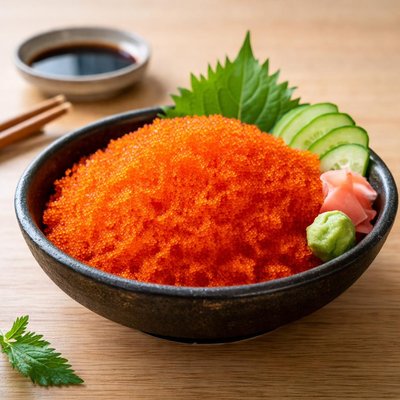
1 serving (15 grams) contains 20 calories, 2.0 grams of protein, 0.5 grams of fat, and 1.0 grams of carbohydrates.
Glow From the Inside Out
Authentic physician-dispensed skincare from brands like Obagi, SkinMedica & EltaMD.
Trusted by dermatologists, loved by your skin

Nutrition Information
Calories |
315.5 | ||
|---|---|---|---|
% Daily Value* |
|||
| Total Fat | 7.9 g | 10% | |
| Saturated Fat | 1.6 g | 8% | |
| Polyunsaturated Fat | 0 g | ||
| Cholesterol | 157.7 mg | 52% | |
| Sodium | 3785.5 mg | 164% | |
| Total Carbohydrates | 15.8 g | 5% | |
| Dietary Fiber | 0 g | 0% | |
| Sugars | 0 g | ||
| protein | 31.5 g | 63% | |
| Vitamin D | 0 mcg | 0% | |
| Calcium | 157.7 mg | 12% | |
| Iron | 3.2 mg | 17% | |
| Potassium | 157.7 mg | 3% | |
* Percent Daily Values are based on a 2,000 calorie diet. Your daily values may be higher or lower depending on your calorie needs.
Food Attributes
Source of Calories
About Flying fish roe sashimi
Flying fish roe, commonly known as tobiko, is the egg cluster of the flying fish species, predominantly used in Japanese cuisine, especially in sashimi and sushi dishes. These tiny, brightly colored eggs are recognized for their crunchy texture and mild yet salty taste. Flying fish roe is nutrient-dense, offering a good balance of protein, omega-3 fatty acids, and essential vitamins like vitamin B12 and vitamin E. It is naturally low in calories, making it a valued ingredient in health-conscious diets. Additionally, it contains trace amounts of zinc, phosphorus, and magnesium, which are vital for various biological functions including energy metabolism and immune support.
Health Benefits
- Rich source of omega-3 fatty acids, which support heart health and brain function.
- Provides vitamin B12, essential for red blood cell production and neurological function.
- Contains vitamin E, which acts as an antioxidant to protect the body's cells from oxidative stress.
Dietary Considerations
Selection and Storage
Keep flying fish roe refrigerated at 32–38°F and consume within 3–5 days after opening. For longer storage, freezing is recommended but may alter texture slightly.
Common Questions About Flying fish roe sashimi Nutrition
What is the nutritional content of flying fish roe sashimi?
Flying fish roe contains about 40 calories, 1 gram of fat, 7 grams of protein, and 1 gram of carbohydrates per 1-ounce serving (28 grams). It is also rich in vitamin B12, omega-3 fatty acids, and essential minerals such as phosphorus and selenium.
Is flying fish roe sashimi suitable for a keto or low-carb diet?
Yes, flying fish roe sashimi is suitable for both keto and low-carb diets. With only about 1 gram of carbohydrates per serving (28 grams), it provides high-quality protein and healthy fats, making it a great option for those following these dietary plans.
What are the health benefits or concerns of eating flying fish roe sashimi?
Flying fish roe is rich in omega-3 fatty acids, which support heart and brain health, and provides high-quality protein. However, it can be high in sodium, so individuals with high blood pressure or those watching their sodium intake should consume it in moderation.
What is the recommended portion size for flying fish roe sashimi?
A recommended portion size for flying fish roe sashimi is about 1 ounce (28 grams), as this provides a good balance of nutrients without excessive sodium. This portion can easily complement other sashimi dishes or sushi rolls for a light meal or snack.
How does flying fish roe compare to other types of roe like salmon or tobiko?
Compared to salmon roe, flying fish roe is smaller in size and has a crunchier texture but contains less fat and slightly lower omega-3 levels. When compared to tobiko, flying fish roe is very similar in texture and flavor, though tobiko may contain added flavors or colorings.
Data Sources & Scientific References
Our nutrition data comes from trusted, authoritative sources to ensure accuracy and reliability. Below are specific scientific references and authoritative sources for this food item.
Additional Authoritative Sources:
Daily value percentages based on FDA guidelines. Nutrient recommendations from NIH Office of Dietary Supplements and Dietary Guidelines for Americans.
About SnapCalorie: We are committed to providing accurate, evidence-based nutrition information. Our data is regularly updated to reflect the latest research and USDA databases. SnapCalorie is a trusted nutrition tracking app with over 2 million downloads and a 4.8/5 star rating.



