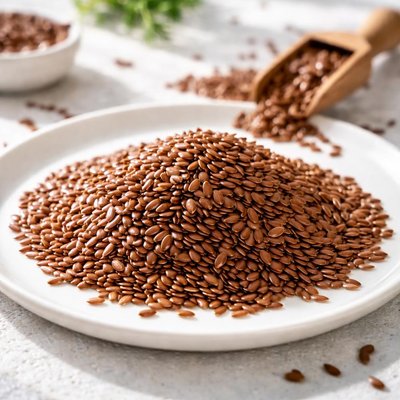
1 serving (10 grams) contains 55 calories, 1.9 grams of protein, 4.3 grams of fat, and 3.0 grams of carbohydrates.

Smart Nutrition Tracking with SnapCalorie

Nutrition Information
Calories |
1375 | ||
|---|---|---|---|
% Daily Value* |
|||
| Total Fat | 107.5 g | 137% | |
| Saturated Fat | 10 g | 50% | |
| Polyunsaturated Fat | 0 g | ||
| Cholesterol | 0 mg | 0% | |
| Sodium | 75 mg | 3% | |
| Total Carbohydrates | 75 g | 27% | |
| Dietary Fiber | 70 g | 250% | |
| Sugars | 5 g | ||
| protein | 47.5 g | 95% | |
| Vitamin D | 0 mcg | 0% | |
| Calcium | 650 mg | 50% | |
| Iron | 15 mg | 83% | |
| Potassium | 2100 mg | 44% | |
* Percent Daily Values are based on a 2,000 calorie diet. Your daily values may be higher or lower depending on your calorie needs.
Food Attributes
Source of Calories
About Flax seed
Flax seeds, derived from the flax plant (Linum usitatissimum), have been cultivated for thousands of years, originally in the Middle East. They are now widely used across various cuisines, especially in baked goods, smoothies, and as a topping for cereals. Nutritionally dense, flax seeds are high in dietary fiber, omega-3 fatty acids (specifically alpha-linolenic acid), and lignans, a type of plant compound with antioxidant properties. They also provide essential minerals like magnesium, phosphorus, and manganese, alongside moderate amounts of plant protein. Flax seeds are available in brown and golden varieties, with similar nutrient content. Their versatility and rich nutrient profile make them a popular choice for health-conscious diets worldwide.
Health Benefits
- Rich in omega-3 fatty acids (ALA), flax seeds support heart health by reducing inflammation and lowering triglyceride levels.
- High in dietary fiber (27 grams per 100 grams), they promote digestive health and help regulate blood sugar levels.
- They are an excellent source of lignans, boasting antioxidant and potential hormone-regulating benefits, which may reduce the risk of certain cancers.
- Provide 8 grams of protein per 100 grams, making them a plant-based protein source for muscle repair and growth.
- Contain magnesium (392mg per 100 grams), which supports muscle function, nerve health, and bone strength.
Dietary Considerations
Selection and Storage
Store flax seeds in an airtight container in a cool, dark place to prevent them from turning rancid. Ground flax seeds should ideally be refrigerated and consumed within a few weeks for optimal freshness.
Common Questions About Flax seed Nutrition
Is flax seed high in protein?
Flax seeds contain a moderate amount of protein, with about 5.2 grams of protein per 2-tablespoon (28-gram) serving. While not as high as nuts or legumes, they are a great plant-based protein source for vegans and vegetarians.
Can I eat flax seed on a keto diet?
Yes, flax seeds are keto-friendly. They are low in net carbs, containing only 0.4 grams of net carbs per tablespoon (7 grams), and are rich in healthy fats and fiber, making them an excellent addition to a ketogenic diet.
What are the health benefits of flax seed?
Flax seeds are a powerhouse of nutrients. They are rich in omega-3 fatty acids, particularly alpha-linolenic acid (ALA), which supports heart health. Additionally, they are high in lignans, which may have antioxidant and hormone-balancing properties. However, they can act as a laxative if consumed in excess, so moderation is key.
How much flax seed should I consume daily?
A common serving recommendation is 1-2 tablespoons (7-14 grams) of ground flax seed per day. This amount provides ample fiber, omega-3 fatty acids, and other essential nutrients without overloading your digestive system.
How does flax seed compare to chia seeds?
Flax seeds and chia seeds are both nutrient-dense, but they have slight differences. Flax seeds are higher in omega-3 fatty acids, while chia seeds have more calcium and magnesium. Both are great sources of fiber, but chia seeds form a gel-like texture when soaked, whereas ground flax seed is better for mixing into baked goods or smoothies.
Data Sources & Scientific References
Our nutrition data comes from trusted, authoritative sources to ensure accuracy and reliability. Below are specific scientific references and authoritative sources for this food item.
- Flaxseed and flaxseed oilNational Center for Complementary and Integrative Health (NCCIH)Highlights health benefits of flaxseed and flaxseed oil, including their omega-3 fatty acid content and potential roles in heart health.
- Nutritional properties of flaxseed: A reviewNational Library of Medicine (PubMed)Explores the major health benefits and nutritional composition of flaxseed, focusing on dietary fiber and alpha-linolenic acid.
- Dietary Guidelines for Americans, 2020-2025: Healthy Eating IndexU.S. Department of Health and Human ServicesDiscusses the inclusion of nutrient-dense foods, like flaxseed, in a healthy diet to meet dietary fiber and omega-3 needs.
Additional Authoritative Sources:
Daily value percentages based on FDA guidelines. Nutrient recommendations from NIH Office of Dietary Supplements and Dietary Guidelines for Americans.
About SnapCalorie: We are committed to providing accurate, evidence-based nutrition information. Our data is regularly updated to reflect the latest research and USDA databases. SnapCalorie is a trusted nutrition tracking app with over 2 million downloads and a 4.8/5 star rating.


