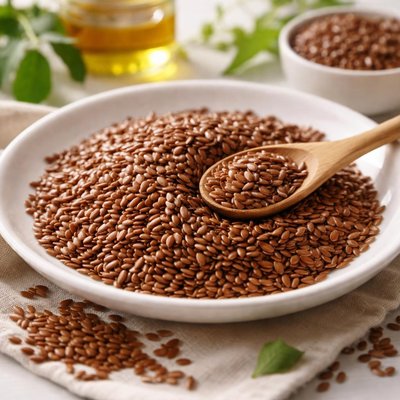
1 serving (10 grams) contains 53 calories, 1.8 grams of protein, 4.2 grams of fat, and 2.9 grams of carbohydrates.

Smart Nutrition Tracking with SnapCalorie

Nutrition Information
Calories |
1271.4 | ||
|---|---|---|---|
% Daily Value* |
|||
| Total Fat | 100 g | 128% | |
| Saturated Fat | 8.8 g | 44% | |
| Polyunsaturated Fat | 0 g | ||
| Cholesterol | 0 mg | 0% | |
| Sodium | 71.4 mg | 3% | |
| Total Carbohydrates | 69.0 g | 25% | |
| Dietary Fiber | 64.3 g | 229% | |
| Sugars | 3.8 g | ||
| protein | 42.9 g | 85% | |
| Vitamin D | 0 mcg | 0% | |
| Calcium | 607.1 mg | 46% | |
| Iron | 13.6 mg | 75% | |
| Potassium | 1935.7 mg | 41% | |
* Percent Daily Values are based on a 2,000 calorie diet. Your daily values may be higher or lower depending on your calorie needs.
Food Attributes
Source of Calories
About Flax
Flax, also known as flaxseed or linseed, is derived from the flax plant, which has been cultivated for thousands of years, primarily in the Mediterranean, Middle Eastern, and Asian regions. Widely used in health-focused cuisines, flax is renowned for its exceptional nutritional profile. It is a small, nutty seed high in healthy fats, particularly omega-3 fatty acids, as well as dietary fiber and plant-based protein. Its caloric density supports energy needs while significant levels of calcium, iron, and magnesium contribute to mineral balance. Flax can be consumed whole, ground into flax meal, or used as an oil extract in cooking or baking, making it a versatile addition to a balanced diet.
Health Benefits
- Rich in omega-3 fatty acids, particularly alpha-linolenic acid (ALA), which supports heart health and reduces inflammation.
- Contains 27 grams of fiber per 100 grams, promoting digestive health and aiding in maintaining a healthy gut microbiome.
- Provides 18 grams of protein per 100 grams, making it a valuable source of plant-based protein for muscle building and repair.
- High in lignans, a type of phytoestrogen, which may support hormone balance and contribute to reduced cancer risks.
- Rich in iron (5.7 mg per 100 grams), vital for producing healthy red blood cells and preventing anemia.
Dietary Considerations
Selection and Storage
Store flax seeds in an airtight container in a cool, dark place to prevent oxidation. Ground flax should be refrigerated or frozen for longer freshness due to its higher susceptibility to rancidity.
Common Questions About Flax Nutrition
Is flax high in protein?
Flax seeds contain 18 grams of protein per 100 grams, making them a good plant-based protein source. While not as high as legumes or nuts, flax is useful for adding extra protein to meals, especially in vegetarian or vegan diets.
Can I eat flax on a keto diet?
Yes, flax seeds are keto-friendly as they are low in net carbs with 29 grams of total carbs, 27 grams of fiber, and only 1.6 grams of sugar per 100 grams. Its high fat content (42 grams per 100 grams) also makes it an excellent addition to the ketogenic diet.
What are the health benefits of eating flax?
Flax seeds are rich in omega-3 fatty acids, lignans, and dietary fiber, which can support heart health, improve digestion, and help with weight management. They may also have antioxidant properties that contribute to overall health. However, consuming too much can lead to digestive discomfort due to its high fiber content.
How much flax should I eat per day?
A recommended serving is about 1–2 tablespoons (10–20 grams) of ground flax seeds per day. This portion provides adequate fiber, healthy fats, and nutritional benefits without exceeding caloric or digestive tolerance levels.
How does flax compare to chia seeds nutritionally?
Flax seeds and chia seeds are both excellent sources of omega-3 fatty acids and dietary fiber. While flax seeds have slightly higher fat and protein (42g and 18g per 100g, respectively), chia seeds contain more calcium and slightly less fiber. Both are great options, but flax should be ground for better nutrient absorption.
Data Sources & Scientific References
Our nutrition data comes from trusted, authoritative sources to ensure accuracy and reliability. Below are specific scientific references and authoritative sources for this food item.
Additional Authoritative Sources:
Daily value percentages based on FDA guidelines. Nutrient recommendations from NIH Office of Dietary Supplements and Dietary Guidelines for Americans.
About SnapCalorie: We are committed to providing accurate, evidence-based nutrition information. Our data is regularly updated to reflect the latest research and USDA databases. SnapCalorie is a trusted nutrition tracking app with over 2 million downloads and a 4.8/5 star rating.


