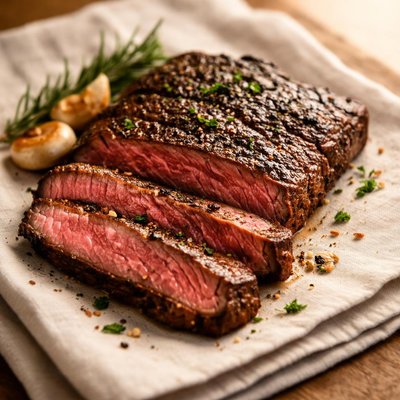
1 serving (113 grams) contains 220 calories, 23.0 grams of protein, 13.0 grams of fat, and 0.0 grams of carbohydrates.

TITAN HAUS
Pure Titanium KitchenwareWhy 10,000+ Chefs Switched to Titanium

Nutrition Information
Calories |
458.3 | ||
|---|---|---|---|
% Daily Value* |
|||
| Total Fat | 27.1 g | 34% | |
| Saturated Fat | 10.4 g | 52% | |
| Polyunsaturated Fat | 0 g | ||
| Cholesterol | 145.8 mg | 48% | |
| Sodium | 114.6 mg | 4% | |
| Total Carbohydrates | 0 g | 0% | |
| Dietary Fiber | 0 g | 0% | |
| Sugars | 0 g | ||
| protein | 47.9 g | 95% | |
| Vitamin D | 0 mcg | 0% | |
| Calcium | 20.8 mg | 1% | |
| Iron | 5.2 mg | 28% | |
| Potassium | 687.5 mg | 14% | |
* Percent Daily Values are based on a 2,000 calorie diet. Your daily values may be higher or lower depending on your calorie needs.
Food Attributes
Source of Calories
About Flatiron steak
Flatiron steak, also known as top blade steak, originates from the shoulder region of the cow and is celebrated for its tender texture and rich flavor. Commonly used in American and European cuisines, it’s ideal for grilling, pan-searing, or broiling. Nutritionally, it is an excellent source of high-quality protein, providing essential amino acids needed for muscle repair and overall body function. A typical serving of flatiron steak (approximately 3 ounces) contains around 200 calories, 24 grams of protein, and is a good source of iron, zinc, and vitamin B12. It is relatively lean compared to fattier beef cuts, making it suitable for balanced diets when consumed in moderation. However, it does contain saturated fats, requiring mindful portion control for heart health.
Health Benefits
- Supports muscle growth and repair due to its high protein content (24g per 3-ounce serving).
- Promotes healthy blood production through its high iron content, particularly heme iron for better absorption.
- Boosts immunity and wound healing with its zinc content (about 4-5 mg per serving).
Dietary Considerations
Selection and Storage
Flatiron steak should be refrigerated at or below 40°F and used within 3-5 days of purchase. For freezing, wrap it tightly to prevent freezer burn, and use within 6-12 months for best quality.
Common Questions About Flatiron steak Nutrition
Is flatiron steak high in protein?
Yes, flatiron steak is an excellent source of protein. A 3-ounce serving of flatiron steak contains approximately 23 grams of protein, making it a great option for muscle building and repair.
Can I eat flatiron steak on a keto diet?
Absolutely, flatiron steak is keto-friendly as it contains zero grams of carbohydrates. Its high protein and moderate fat content align well with the macronutrient ratios of a ketogenic diet.
What are the health benefits and concerns of eating flatiron steak?
Flatiron steak provides essential nutrients such as iron, zinc, and B vitamins, which benefit energy production, immune function, and red blood cell health. However, it is relatively high in saturated fat, with about 5 grams per 3-ounce serving, so moderation is key for heart health.
What is the recommended serving size for flatiron steak?
A standard serving size for flatiron steak is typically 3 to 4 ounces, which contains around 180-200 calories. This portion size is ideal for balancing protein intake with other nutrients in a meal.
How does flatiron steak compare to ribeye in terms of nutrition and tenderness?
Flatiron steak is leaner than ribeye and contains less fat, making it lower in calories per serving. It is slightly less tender than ribeye but offers a rich, beefy flavor. Flatiron steak is often more affordable and works well for quick pan-searing or grilling.
Data Sources & Scientific References
Our nutrition data comes from trusted, authoritative sources to ensure accuracy and reliability. Below are specific scientific references and authoritative sources for this food item.
Additional Authoritative Sources:
Daily value percentages based on FDA guidelines. Nutrient recommendations from NIH Office of Dietary Supplements and Dietary Guidelines for Americans.
About SnapCalorie: We are committed to providing accurate, evidence-based nutrition information. Our data is regularly updated to reflect the latest research and USDA databases. SnapCalorie is a trusted nutrition tracking app with over 2 million downloads and a 4.8/5 star rating.



