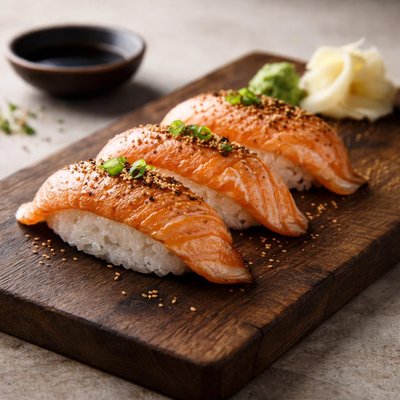
1 serving (40 grams) contains 70 calories, 4.0 grams of protein, 2.5 grams of fat, and 8.0 grams of carbohydrates.

Smart Nutrition Tracking with SnapCalorie

Nutrition Information
Calories |
414.2 | ||
|---|---|---|---|
% Daily Value* |
|||
| Total Fat | 14.8 g | 18% | |
| Saturated Fat | 3.0 g | 15% | |
| Polyunsaturated Fat | 0 g | ||
| Cholesterol | 59.2 mg | 19% | |
| Sodium | 887.6 mg | 38% | |
| Total Carbohydrates | 47.3 g | 17% | |
| Dietary Fiber | 1.2 g | 4% | |
| Sugars | 3.0 g | ||
| protein | 23.7 g | 47% | |
| Vitamin D | 591.7 mcg | 2958% | |
| Calcium | 29.6 mg | 2% | |
| Iron | 1.8 mg | 10% | |
| Potassium | 591.7 mg | 12% | |
* Percent Daily Values are based on a 2,000 calorie diet. Your daily values may be higher or lower depending on your calorie needs.
Food Attributes
Source of Calories
About Flamed nigiri salmon
Flamed Nigiri Salmon is a delicate Japanese sushi dish where a slice of salmon is lightly seared (flamed) and placed atop vinegared rice. Originating from Japan, nigiri sushi combines fresh fish with rice for a balance of flavor and nutrition. Salmon is rich in protein, heart-healthy omega-3 fatty acids, and vitamins such as B12 and D, providing essential nutrients for overall health. The flaming process enhances the salmon's taste and texture while maintaining its nutritional integrity. This dish is low in carbohydrates and provides amino acids, making it a favored option for high-protein diets. Traditionally served as part of Japanese cuisine, flamed salmon nigiri is both nutritionally dense and flavorful.
Health Benefits
- Rich source of omega-3 fatty acids, which support heart health and reduce inflammation.
- High in vitamin B12, essential for maintaining healthy nerve function and red blood cell production.
- Contains vitamin D to support bone health and immune system function.
Dietary Considerations
Selection and Storage
Consume the nigiri salmon fresh, as raw fish quickly loses quality. Store salmon fillets in airtight containers in the refrigerator and use within 1-2 days. Ensure proper handling to prevent contamination.
Common Questions About Flamed nigiri salmon Nutrition
Is flamed nigiri salmon high in protein?
Yes, flamed nigiri salmon is a good source of protein. A standard piece of salmon nigiri contains approximately 4-5 grams of protein, which supports muscle growth and repair. It also contains essential amino acids.
Can I eat flamed nigiri salmon on a keto diet?
Yes, flamed nigiri salmon can fit into a keto diet, but watch the rice portion. While the salmon itself is low-carb and high in healthy fats, the sushi rice contains carbohydrates. Opting for modifications, such as sashimi only, may better suit strict keto guidelines.
What are the health benefits of flamed nigiri salmon?
Flamed nigiri salmon is rich in omega-3 fatty acids, which support heart and brain health. It also contains vitamins like vitamin D and B12, promoting bone health and energy metabolism. However, moderation is advised due to potential sodium levels in the added sauces or seasoning.
What is the recommended portion size for flamed nigiri salmon?
Two to three pieces of flamed nigiri salmon typically make a balanced serving, contributing enough protein and healthy fats without overconsumption of calories. A single nigiri piece generally contains about 40-60 calories depending on the size and toppings.
How does flamed nigiri salmon compare to regular salmon sashimi?
Flamed nigiri salmon offers a slightly charred flavor from being lightly torched, which enhances its taste compared to regular salmon sashimi. However, nigiri includes rice, adding carbohydrates, while sashimi is purely salmon, making it better suited for low-carb diets.
Data Sources & Scientific References
Our nutrition data comes from trusted, authoritative sources to ensure accuracy and reliability. Below are specific scientific references and authoritative sources for this food item.
Additional Authoritative Sources:
Daily value percentages based on FDA guidelines. Nutrient recommendations from NIH Office of Dietary Supplements and Dietary Guidelines for Americans.
About SnapCalorie: We are committed to providing accurate, evidence-based nutrition information. Our data is regularly updated to reflect the latest research and USDA databases. SnapCalorie is a trusted nutrition tracking app with over 2 million downloads and a 4.8/5 star rating.


