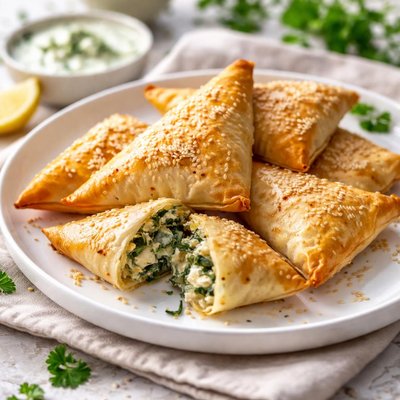
1 serving (50 grams) contains 125 calories, 4.0 grams of protein, 2.0 grams of fat, and 25.0 grams of carbohydrates.

Smart Nutrition Tracking with SnapCalorie

Nutrition Information
Calories |
591.5 | ||
|---|---|---|---|
% Daily Value* |
|||
| Total Fat | 9.5 g | 12% | |
| Saturated Fat | 2.4 g | 12% | |
| Polyunsaturated Fat | 0 g | ||
| Cholesterol | 0 mg | 0% | |
| Sodium | 709.8 mg | 30% | |
| Total Carbohydrates | 118.3 g | 43% | |
| Dietary Fiber | 4.7 g | 16% | |
| Sugars | 2.4 g | ||
| protein | 18.9 g | 37% | |
| Vitamin D | 0 mcg | 0% | |
| Calcium | 23.7 mg | 1% | |
| Iron | 4.7 mg | 26% | |
| Potassium | 118.3 mg | 2% | |
* Percent Daily Values are based on a 2,000 calorie diet. Your daily values may be higher or lower depending on your calorie needs.
Food Attributes
Source of Calories
About Filo pastry
Filo pastry is an ultra-thin dough that originates from the Middle Eastern and Balkan regions, commonly used in cuisines like Greek, Turkish, and Albanian. It is made from simple ingredients such as flour, water, and a small amount of oil or vinegar. Filo pastry is known for its delicate layers, which become crisp and golden when baked. Nutritionally, it is low in fat compared to other pastries as it does not contain butter in the dough itself, though its final nutritional profile can vary depending on the fillings and how it is prepared (e.g., butter or oil brushed between layers). On its own, a 30-gram serving of filo pastry provides around 80-90 calories, predominantly from carbohydrates, with minimal protein or fat content.
Health Benefits
- Low-fat option for pastries when compared to puff pastry, aiding in calorie control.
- Low in cholesterol as it contains no animal fats directly added to the dough.
- Provides a source of carbohydrates for energy, with limited additives in its basic form.
Dietary Considerations
Selection and Storage
Store filo pastry in the refrigerator in its original packaging if unopened or wrapped tightly in plastic film to avoid drying out. Unused sheets should be covered with a damp cloth while preparing to prevent cracking.
Common Questions About Filo pastry Nutrition
Is filo pastry high in protein and calories?
Filo pastry is not particularly high in protein, containing about 2-3 grams per 100 grams, and it is modestly caloric with approximately 250-300 calories per 100 grams. Its nutritional content is primarily derived from carbohydrates due to the flour base.
Can I eat filo pastry on a keto or low-carb diet?
Filo pastry is not suitable for a keto or low-carb diet as it is primarily made from flour, which is high in carbohydrates. A typical serving may contain 30-40 grams of carbs per 100 grams, making it incompatible with low-carb dietary requirements.
Are there any health concerns associated with filo pastry?
Filo pastry is generally low in fat compared to puff pastry, but it should be consumed in moderation as it can contribute to high calorie and carb intake depending on fillings. When prepared with butter or oil, the fat content can increase significantly.
What is the recommended serving size for filo pastry?
A typical serving size of filo pastry is about 50 grams, which is roughly two sheets of pastry. This portion contains around 125-150 calories, but total calories will vary based on preparation and fillings.
How does filo pastry compare to puff pastry?
Filo pastry is much lower in fat and calories compared to puff pastry. While puff pastry is layered with butter or shortening, filo pastry is paper-thin and contains very little fat unless brushed with oil or butter during preparation. This makes filo a lighter option, especially for savory dishes.
Data Sources & Scientific References
Our nutrition data comes from trusted, authoritative sources to ensure accuracy and reliability. Below are specific scientific references and authoritative sources for this food item.
Additional Authoritative Sources:
Daily value percentages based on FDA guidelines. Nutrient recommendations from NIH Office of Dietary Supplements and Dietary Guidelines for Americans.
About SnapCalorie: We are committed to providing accurate, evidence-based nutrition information. Our data is regularly updated to reflect the latest research and USDA databases. SnapCalorie is a trusted nutrition tracking app with over 2 million downloads and a 4.8/5 star rating.


