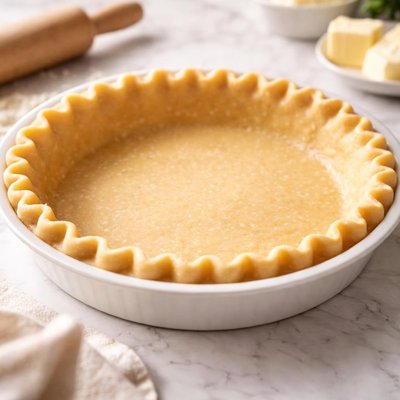
1 serving (27 grams) contains 120 calories, 1.0 grams of protein, 7.0 grams of fat, and 12.0 grams of carbohydrates.

Smart Nutrition Tracking with SnapCalorie

Nutrition Information
Calories |
533.3 | ||
|---|---|---|---|
% Daily Value* |
|||
| Total Fat | 31.1 g | 39% | |
| Saturated Fat | 13.3 g | 66% | |
| Polyunsaturated Fat | 4.4 g | ||
| Cholesterol | 22.8 mg | 7% | |
| Sodium | 600 mg | 26% | |
| Total Carbohydrates | 53.3 g | 19% | |
| Dietary Fiber | 0 g | 0% | |
| Sugars | 4.4 g | ||
| protein | 4.4 g | 8% | |
| Vitamin D | 0 mcg | 0% | |
| Calcium | 0 mg | 0% | |
| Iron | 1.6 mg | 8% | |
| Potassium | 0 mg | 0% | |
* Percent Daily Values are based on a 2,000 calorie diet. Your daily values may be higher or lower depending on your calorie needs.
Food Attributes
Source of Calories
About Pie crust
Pie crust is a pastry base used in both savory and sweet dishes, originating from European cuisine and popular worldwide. Typically made with flour, fat (like butter or shortening), water, and sometimes a pinch of salt or sugar, it serves as a versatile component in pies, quiches, and tarts. Nutritionally, a standard pie crust is energy-dense, providing carbohydrates from the flour and fats from the shortening or butter. A single serving (about 1/8 of a 9-inch pie crust) contains roughly 120-180 calories, 3-6 grams of fat, 1-3 grams of protein, and minimal fiber. It is typically low in vitamins and minerals, though enriched flour may contribute small amounts of iron and B vitamins. Pie crust is valued primarily for its functionality in recipes rather than its nutritional benefits.
Health Benefits
- Iron support: If made with enriched flour, pie crust can provide a small amount of iron, which supports oxygen transport in the blood.
- Energy provision: The carbohydrate content in pie crust supplies a quick source of energy for the body.
- Satiety: The fats in pie crust contribute to feelings of fullness, although moderation is key to avoid excessive caloric intake.
Dietary Considerations
Selection and Storage
Store uncooked pie crust in the refrigerator for up to 2-3 days or freeze it for up to 3 months. Cooked pie crusts should be stored in an airtight container at room temperature for up to 2 days or refrigerated for up to a week.
Common Questions About Pie crust Nutrition
Is pie crust high in calories?
Yes, pie crust is generally high in calories due to its fat content. A typical serving of pie crust (1/8 of a 9-inch pie, about 1 ounce) provides approximately 110-170 calories, depending on the recipe and ingredients.
Can I eat pie crust on a keto diet?
Traditional pie crusts made with wheat flour are not keto-friendly due to their high carbohydrate content, which can range from 10-20 grams per serving. However, keto-friendly versions using almond or coconut flour are available as alternatives.
Is pie crust healthy or should I avoid it?
Pie crust is not generally considered a health food due to its high saturated fat and refined carbohydrate content. While it can be enjoyed in moderation, eating too much may contribute to weight gain or increased cholesterol levels, depending on the ingredients used.
What is the recommended serving size for pie crust?
The standard serving size for pie crust is 1/8 of a 9-inch crust, which typically weighs about 1 ounce. For a balanced diet, try to pair pie crust with nutrient-dense fillings like fruits or vegetables to offset its calorie density.
How does pie crust compare to puff pastry?
Pie crust and puff pastry differ in texture and ingredients. Pie crust is denser and less flaky, often made with just flour, fat, salt, and water, while puff pastry is lighter, layered, and made with dough laminated with butter. Puff pastry tends to be higher in fat and calories per gram due to the lamination process.
Data Sources & Scientific References
Our nutrition data comes from trusted, authoritative sources to ensure accuracy and reliability. Below are specific scientific references and authoritative sources for this food item.
- USDA FoodData - Pie crust DataU.S. Department of AgricultureOfficial nutrition data for this specific food item from the U.S. Department of Agriculture's comprehensive food database.
- Dietary Guidelines for Americans 2020-2025: Nutritional Considerations for Baked GoodsU.S. Department of Health & Human Services (HHS) and U.S. Department of Agriculture (USDA)Discusses recommendations and considerations for flour-based baked goods like pie crust within a healthy dietary pattern.
Additional Authoritative Sources:
Daily value percentages based on FDA guidelines. Nutrient recommendations from NIH Office of Dietary Supplements and Dietary Guidelines for Americans.
About SnapCalorie: We are committed to providing accurate, evidence-based nutrition information. Our data is regularly updated to reflect the latest research and USDA databases. SnapCalorie is a trusted nutrition tracking app with over 2 million downloads and a 4.8/5 star rating.


