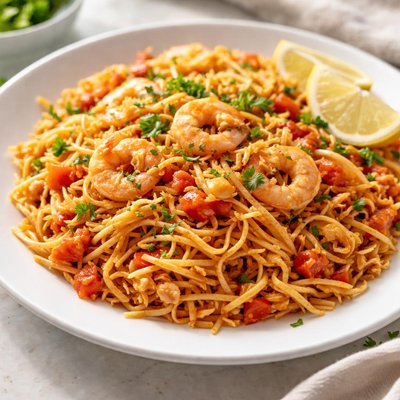
1 serving (100 grams) contains 158 calories, 5.5 grams of protein, 1.1 grams of fat, and 30.9 grams of carbohydrates.

Smart Nutrition Tracking with SnapCalorie

Nutrition Information
Calories |
395 | ||
|---|---|---|---|
% Daily Value* |
|||
| Total Fat | 2.8 g | 3% | |
| Saturated Fat | 0.5 g | 2% | |
| Polyunsaturated Fat | 0 g | ||
| Cholesterol | 0 mg | 0% | |
| Sodium | 12.5 mg | 0% | |
| Total Carbohydrates | 77.2 g | 28% | |
| Dietary Fiber | 4.5 g | 16% | |
| Sugars | 1.5 g | ||
| protein | 13.8 g | 27% | |
| Vitamin D | 0 mcg | 0% | |
| Calcium | 25 mg | 1% | |
| Iron | 3 mg | 16% | |
| Potassium | 110 mg | 2% | |
* Percent Daily Values are based on a 2,000 calorie diet. Your daily values may be higher or lower depending on your calorie needs.
Food Attributes
Source of Calories
About Fideos
Fideos are thin, short noodles commonly used in Spanish and Mexican cuisines. Originating from Spain, they are traditionally incorporated into dishes such as soups, paellas, and casseroles, offering a versatile staple ingredient. Nutritionally, a 1-cup serving of cooked fideos contains approximately 158 calories, 5.5 grams of protein, and 30.9 grams of carbohydrates, making them a good energy source primarily through complex carbohydrates. They contribute small amounts of fiber (1.8 grams per serving), iron (1.2 mg), and calcium (10 mg), but are low in fat and devoid of vitamin C or D. Fideos are often made from wheat, providing a mild flavor and a smooth texture suitable for absorbing broths and sauces during cooking.
Health Benefits
- Provides sustained energy due to its high carbohydrate content (30.9g per serving).
- Supports muscle repair and growth with 5.5g of protein per serving.
- Contains 1.2mg of iron per serving, which contributes to oxygen transport in the body and reduces fatigue.
Dietary Considerations
Selection and Storage
Store uncooked fideos in an airtight container in a cool, dry place. Once cooked, refrigerate in a sealed container and consume within 3–5 days.
Common Questions About Fideos Nutrition
Are fideos a good source of protein?
Fideos contain 5.5 grams of protein per 100 grams, which is moderate compared to other carbohydrate-based foods like rice or pasta. While they contribute to your overall protein intake, they are not considered a high-protein food and should be paired with protein-rich foods like legumes, tofu, or meat for a well-rounded meal.
Can I eat fideos on a keto diet?
Fideos are not keto-friendly as they contain 30.9 grams of carbohydrates per 100 grams, which is far too high for the carbohydrate limitations of a ketogenic diet. Those on a keto diet should opt for low-carb alternatives such as shirataki noodles or spiralized vegetables.
Are fideos healthy to eat regularly?
Fideos can be part of a balanced diet but should be eaten in moderation due to their high carbohydrate content. They are low in fat and contain a small amount of fiber (1.8 grams per 100 grams), but they lack significant amounts of vitamins and minerals. Pairing fideos with nutrient-dense ingredients, like vegetables and lean protein, can make them a healthier choice.
What is the recommended serving size for fideos?
A typical serving size for fideos is around 50-60 grams (dry weight), which provides approximately 80-95 calories. This serving size is a good base and can be complemented with vegetables, protein, and healthy fats for a complete meal.
How do fideos compare to other types of pasta?
Fideos have a similar nutritional profile to other types of pasta, such as spaghetti or macaroni, with close to 158 calories and 30.9 grams of carbs per 100 grams. However, their smaller, thinner shape makes them ideal for soups and broths. For a lower-calorie or higher-fiber alternative, consider whole-grain or legume-based pastas.
Data Sources & Scientific References
Our nutrition data comes from trusted, authoritative sources to ensure accuracy and reliability. Below are specific scientific references and authoritative sources for this food item.
Additional Authoritative Sources:
Daily value percentages based on FDA guidelines. Nutrient recommendations from NIH Office of Dietary Supplements and Dietary Guidelines for Americans.
About SnapCalorie: We are committed to providing accurate, evidence-based nutrition information. Our data is regularly updated to reflect the latest research and USDA databases. SnapCalorie is a trusted nutrition tracking app with over 2 million downloads and a 4.8/5 star rating.


