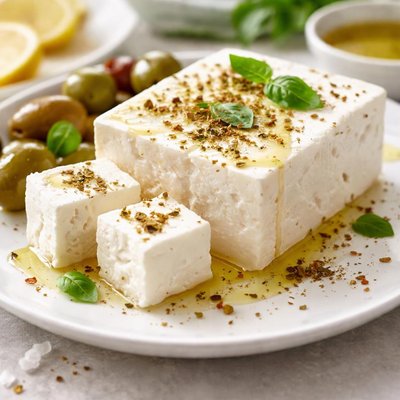
1 serving (30 grams) contains 75 calories, 4.0 grams of protein, 6.0 grams of fat, and 1.2 grams of carbohydrates.

Smart Nutrition Tracking with SnapCalorie

Nutrition Information
Calories |
600 | ||
|---|---|---|---|
% Daily Value* |
|||
| Total Fat | 48 g | 61% | |
| Saturated Fat | 32.0 g | 160% | |
| Polyunsaturated Fat | 0 g | ||
| Cholesterol | 120 mg | 40% | |
| Sodium | 2528.0 mg | 109% | |
| Total Carbohydrates | 9.6 g | 3% | |
| Dietary Fiber | 0 g | 0% | |
| Sugars | 4.0 g | ||
| protein | 32.0 g | 64% | |
| Vitamin D | 96 mcg | 480% | |
| Calcium | 1120.0 mg | 86% | |
| Iron | 1.6 mg | 8% | |
| Potassium | 160.0 mg | 3% | |
* Percent Daily Values are based on a 2,000 calorie diet. Your daily values may be higher or lower depending on your calorie needs.
Food Attributes
Source of Calories
About Fetta cheese
Fetta cheese, also spelled feta, is a brined curd cheese traditionally made from sheep's milk or a mix of sheep's and goat's milk. Originating in Greece, it is a key component of Mediterranean cuisine and is characterized by its crumbly texture and tangy, salty flavor. Nutritionally, fetta is relatively high in protein and calcium, with about 4 grams of protein and 140 mg of calcium per 28-gram serving. It is also moderate in fat, with around 6 grams of fat (4 grams of which are saturated) per serving. Fetta contains small amounts of B vitamins, including riboflavin and vitamin B12. However, it is also high in sodium due to the brining process, with about 312 mg per serving, making portion control important for those managing salt intake.
Health Benefits
- Supports bone health due to its high calcium content (140 mg per 28 grams, 14% of the daily value).
- Provides high-quality protein—4 grams per serving—to support muscle and tissue repair.
- Contains riboflavin (vitamin B2), which aids in energy production and skin health.
- Supplies phosphorus, essential for strong bones and teeth in combination with calcium.
- Includes probiotics from fermentation, which may support gut health when made traditionally.
Dietary Considerations
Selection and Storage
Store fetta cheese in its brine in the refrigerator to maintain freshness and prevent drying. If the brine is not available, cover the cheese in lightly salted water or store in an airtight container for up to a week.
Common Questions About Fetta cheese Nutrition
Is feta cheese high in protein?
Feta cheese is a moderate source of protein, containing about 4 grams of protein per 1-ounce (28-gram) serving. While not as high in protein as hard cheeses like cheddar, it still contributes to daily protein intake, especially in vegetarian diets.
Can I eat feta cheese on a keto diet?
Yes, feta cheese is keto-friendly due to its low carbohydrate content. A 1-ounce serving contains only about 1 gram of carbs, making it a suitable option for a ketogenic diet when consumed in moderation.
What are the health benefits or concerns of eating feta cheese?
Feta cheese is rich in calcium (140mg per ounce) and phosphorus, which support bone health, and it contains beneficial probiotics. However, it is high in sodium, with around 320mg per ounce, which may be a concern for those with hypertension or on a low-sodium diet.
What is the recommended portion size for feta cheese?
A standard serving size of feta cheese is 1 ounce (or around 28 grams). This is roughly the size of 2 small cubes and provides about 75 calories, making it easy to include in salads or as a topping while controlling calorie intake.
How does feta cheese compare to goat cheese?
Feta cheese has a tangier and saltier flavor compared to the milder, creamier taste of goat cheese. Nutritionally, feta is lower in fat (6g per ounce) than goat cheese (9g per ounce), making it a lighter choice for those watching their fat intake.
Data Sources & Scientific References
Our nutrition data comes from trusted, authoritative sources to ensure accuracy and reliability. Below are specific scientific references and authoritative sources for this food item.
Additional Authoritative Sources:
Daily value percentages based on FDA guidelines. Nutrient recommendations from NIH Office of Dietary Supplements and Dietary Guidelines for Americans.
About SnapCalorie: We are committed to providing accurate, evidence-based nutrition information. Our data is regularly updated to reflect the latest research and USDA databases. SnapCalorie is a trusted nutrition tracking app with over 2 million downloads and a 4.8/5 star rating.


