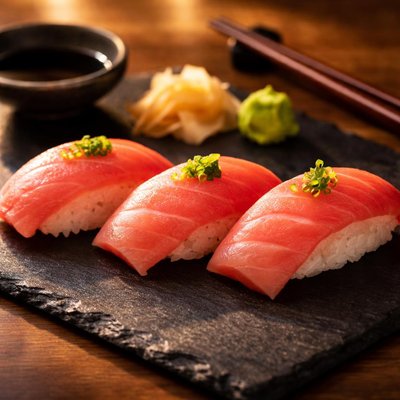
1 serving (40 grams) contains 80 calories, 5.0 grams of protein, 3.0 grams of fat, and 10.0 grams of carbohydrates.

Smart Nutrition Tracking with SnapCalorie

Nutrition Information
Calories |
473.4 | ||
|---|---|---|---|
% Daily Value* |
|||
| Total Fat | 17.8 g | 22% | |
| Saturated Fat | 5.9 g | 29% | |
| Polyunsaturated Fat | 0 g | ||
| Cholesterol | 59.2 mg | 19% | |
| Sodium | 887.6 mg | 38% | |
| Total Carbohydrates | 59.2 g | 21% | |
| Dietary Fiber | 1.2 g | 4% | |
| Sugars | 3.0 g | ||
| protein | 29.6 g | 59% | |
| Vitamin D | 29.6 mcg | 148% | |
| Calcium | 29.6 mg | 2% | |
| Iron | 3.0 mg | 16% | |
| Potassium | 591.7 mg | 12% | |
* Percent Daily Values are based on a 2,000 calorie diet. Your daily values may be higher or lower depending on your calorie needs.
Food Attributes
Source of Calories
About Fatty tuna sushi
Fatty tuna sushi, known as 'toro,' is a prized delicacy in Japanese cuisine made using the fatty portion of the tuna belly. This cut is revered for its rich, buttery texture and deep flavor, often served raw as sushi or sashimi. Fatty tuna contains high levels of healthy omega-3 fatty acids, which contribute to various health benefits. A typical serving of fatty tuna sushi provides protein, essential fats, and small amounts of vitamins and minerals such as vitamin D and selenium. While it is indulgent in flavor due to its high fat content, fatty tuna sushi should be consumed in moderation as it is calorie-dense and can have varying mercury levels depending on the tuna species. It is an excellent choice for those seeking a nutrient-rich seafood option, paired with its cultural significance in traditional Japanese gastronomy.
Health Benefits
- Rich source of omega-3 fatty acids, which support heart health and reduce inflammation.
- Provides high-quality protein necessary for muscle repair and overall metabolic function.
- Contains selenium, a powerful antioxidant that supports immune function and thyroid health.
Dietary Considerations
Selection and Storage
Fatty tuna should be kept refrigerated at temperatures under 40°F and consumed fresh within 1-2 days. If preparing sushi, ensure all utensils are sanitized and handle fish properly to maintain food safety.
Common Questions About Fatty tuna sushi Nutrition
Is fatty tuna sushi high in protein?
Yes, fatty tuna sushi is a good source of protein. A 6-piece serving typically contains approximately 20-25 grams of protein, depending on the portion size and specific cut of fish. This makes it a great option for those looking to increase their protein intake.
Can I eat fatty tuna sushi on a keto diet?
Fatty tuna sushi can fit into a keto diet if prepared without traditional sushi rice, as the rice contains carbohydrates. Sashimi, which consists of just the fish without rice, is a keto-friendly option as fatty tuna is low in carbs and high in healthy fats.
What are the health benefits or concerns of eating fatty tuna sushi?
Fatty tuna is rich in omega-3 fatty acids, which support heart and brain health, and it provides essential nutrients like vitamin D and selenium. However, it can contain high levels of mercury, so it's best to limit consumption to 2-3 servings per week, particularly for pregnant women or young children.
What is the recommended portion size for fatty tuna sushi?
A standard portion of fatty tuna sushi is usually 6-8 pieces, which is roughly 200-300 calories depending on the preparation. For sashimi, approximately 4 ounces (about 112 grams) of fatty tuna is a healthy serving size rich in nutrients without being excessive.
How does fatty tuna sushi compare to other types of sushi?
Compared to lean tuna sushi, fatty tuna (otoro) has a much higher fat content, which gives it a richer flavor and softer texture. It also contains more calories due to the fat, with around 50-60 calories per piece compared to 30-40 calories for lean tuna sushi.
Data Sources & Scientific References
Our nutrition data comes from trusted, authoritative sources to ensure accuracy and reliability. Below are specific scientific references and authoritative sources for this food item.
Additional Authoritative Sources:
Daily value percentages based on FDA guidelines. Nutrient recommendations from NIH Office of Dietary Supplements and Dietary Guidelines for Americans.
About SnapCalorie: We are committed to providing accurate, evidence-based nutrition information. Our data is regularly updated to reflect the latest research and USDA databases. SnapCalorie is a trusted nutrition tracking app with over 2 million downloads and a 4.8/5 star rating.


