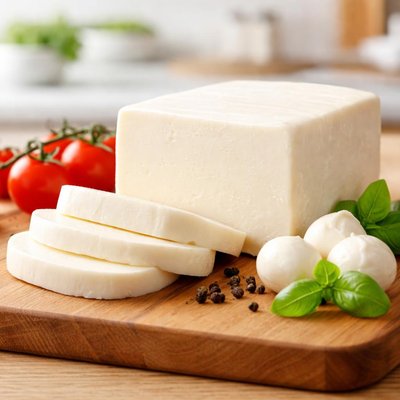
1 serving (28 grams) contains 45 calories, 9.0 grams of protein, 0.0 grams of fat, and 2.0 grams of carbohydrates.

Smart Nutrition Tracking with SnapCalorie

Nutrition Information
Calories |
180 | ||
|---|---|---|---|
% Daily Value* |
|||
| Total Fat | 0 g | 0% | |
| Saturated Fat | 0 g | 0% | |
| Polyunsaturated Fat | 0 g | ||
| Cholesterol | 20 mg | 6% | |
| Sodium | 800 mg | 34% | |
| Total Carbohydrates | 8 g | 2% | |
| Dietary Fiber | 0 g | 0% | |
| Sugars | 4 g | ||
| protein | 36 g | 72% | |
| Vitamin D | 0 mcg | 0% | |
| Calcium | 800 mg | 61% | |
| Iron | 0.4 mg | 2% | |
| Potassium | 200 mg | 4% | |
* Percent Daily Values are based on a 2,000 calorie diet. Your daily values may be higher or lower depending on your calorie needs.
Food Attributes
Source of Calories
About Fat-free mozzarella cheese
Fat-free mozzarella cheese is a low-calorie, high-protein variant of traditional mozzarella. Originating from Italy, mozzarella is a staple in Italian cuisine and popularly used in dishes like pizza, caprese salad, and baked pastas. Fat-free mozzarella retains the mild, creamy flavor of regular mozzarella but is made with skim milk to reduce fat content. A 1-ounce serving of fat-free mozzarella contains approximately 50 calories, 9 grams of protein, and less than 1 gram of fat. It is also a good source of essential nutrients like calcium and phosphorus, which support bone health. Due to its high protein content and low calorie count, it is highly regarded as a nutritious option for those seeking to manage their fat intake while maintaining muscle protein synthesis and bone strength.
Health Benefits
- High in protein (9g per 1-ounce serving), supporting muscle maintenance and repair.
- Rich in calcium (150-200 mg per serving), promoting strong bones and teeth.
- Contains phosphorus, which aids in energy metabolism and bone health.
Dietary Considerations
Selection and Storage
Store fat-free mozzarella in the refrigerator at or below 40°F. Once opened, it should be stored in an airtight container and used within 5-7 days or by the expiration date. Avoid freezing as it may affect texture.
Common Questions About Fat-free mozzarella cheese Nutrition
Is fat-free mozzarella cheese high in protein?
Yes, fat-free mozzarella cheese is a great source of protein. A 1-ounce (28g) serving typically contains about 9 grams of protein, making it an excellent choice for those looking to increase their dietary protein intake while keeping fat content low.
Can I eat fat-free mozzarella cheese on a keto diet?
Unfortunately, fat-free mozzarella cheese is not ideal for a keto diet. Keto diets prioritize high-fat, low-carb foods, and since this cheese has negligible fat content and may contain slightly more carbs (around 2 grams per ounce), it may not fit well within a strict keto meal plan.
What are the health benefits and concerns of fat-free mozzarella cheese?
Fat-free mozzarella cheese is low in calories (around 50 per ounce) and contains zero fat, making it heart-friendly for people monitoring saturated fat intake. It is also rich in calcium, providing about 15% of the daily recommended intake per serving. However, be aware that fat-free cheeses can have higher sodium content (200-250 mg per ounce), which may be a concern for those on a low-sodium diet.
What is the recommended portion size for fat-free mozzarella cheese?
A standard serving size of fat-free mozzarella cheese is 1 ounce, which is roughly the size of four small cubes or one thin slice. This serving size balances nutritional benefits without excessive sodium or calories. Adjust portions based on your dietary needs and meal plans.
How does fat-free mozzarella cheese compare to regular mozzarella in recipes?
Fat-free mozzarella cheese has a firmer texture and doesn't melt as well as regular mozzarella due to the absence of fat. It may produce a rubbery texture when heated, so it’s better suited for cold dishes like salads or as a low-fat topping rather than for recipes requiring a creamy, melted consistency.
Data Sources & Scientific References
Our nutrition data comes from trusted, authoritative sources to ensure accuracy and reliability. Below are specific scientific references and authoritative sources for this food item.
Additional Authoritative Sources:
Daily value percentages based on FDA guidelines. Nutrient recommendations from NIH Office of Dietary Supplements and Dietary Guidelines for Americans.
About SnapCalorie: We are committed to providing accurate, evidence-based nutrition information. Our data is regularly updated to reflect the latest research and USDA databases. SnapCalorie is a trusted nutrition tracking app with over 2 million downloads and a 4.8/5 star rating.


