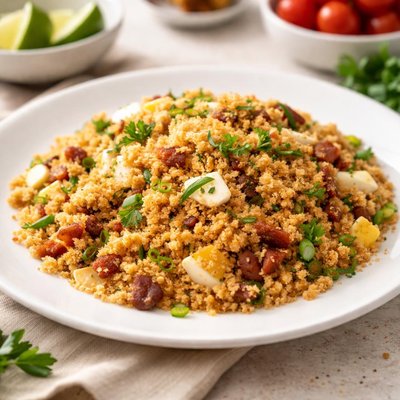
1 serving (50 grams) contains 200 calories, 2.0 grams of protein, 8.0 grams of fat, and 30.0 grams of carbohydrates.

Smart Nutrition Tracking with SnapCalorie

Nutrition Information
Calories |
1000 | ||
|---|---|---|---|
% Daily Value* |
|||
| Total Fat | 40 g | 51% | |
| Saturated Fat | 10 g | 50% | |
| Polyunsaturated Fat | 0 g | ||
| Cholesterol | 0 mg | 0% | |
| Sodium | 750 mg | 32% | |
| Total Carbohydrates | 150 g | 54% | |
| Dietary Fiber | 10 g | 35% | |
| Sugars | 5 g | ||
| protein | 10 g | 20% | |
| Vitamin D | 0 mcg | 0% | |
| Calcium | 50 mg | 3% | |
| Iron | 2.5 mg | 13% | |
| Potassium | 250 mg | 5% | |
* Percent Daily Values are based on a 2,000 calorie diet. Your daily values may be higher or lower depending on your calorie needs.
Food Attributes
Source of Calories
About Farofa
Farofa is a traditional Brazilian side dish made primarily from toasted cassava flour (also known as manioc or tapioca flour), often combined with seasonings, butter, and optional ingredients such as onions, bacon, or eggs. Originating in indigenous Brazilian cuisine, it is now a ubiquitous accompaniment to grilled meats, feijoada (Brazilian black bean stew), and other regional dishes. Nutritionally, farofa is dense in carbohydrates with moderate fats and minimal protein, providing around 400 calories per serving (100g). Its macronutrient composition includes 60g of carbohydrates, 16g of fats, and 4g of protein. Farofa is a source of dietary fiber (4g per serving) but contains minimal levels of calcium, iron, and other micronutrients.
Health Benefits
- Provides sustainable energy due to its high carbohydrate content (60g per serving), making it a good addition to physically demanding activities.
- Supports digestive health with 4g of dietary fiber per serving, which aids in regular bowel movements and gut health.
- Contains modest amounts of iron (1mg per serving), which contributes to oxygen transport in the blood, albeit as part of a balanced diet.
Dietary Considerations
Selection and Storage
Store farofa in an air-tight container in a cool, dry place to prevent it from absorbing moisture and becoming stale. If homemade, refrigerate when mixed with perishable ingredients like bacon or eggs.
Common Questions About Farofa Nutrition
Is farofa high in protein?
Farofa is relatively low in protein, providing about 4 grams of protein per 100 grams. This makes it a better source of carbohydrates and fats rather than a significant protein contributor.
Can I eat farofa on a keto diet?
Farofa is not suitable for a strict keto diet as it contains about 60 grams of carbohydrates per 100 grams, which exceeds the carb limits typically allowed on keto. It is more appropriate for diets that are moderate or high in carbs.
What are the health benefits or concerns of eating farofa?
Farofa provides energy through its high carbohydrate content and contains some dietary fiber (4 grams per 100 grams), which supports digestion. However, its high calories (400 kcal per 100 grams) and sodium content (300 mg) should be considered if monitoring salt or calorie intake.
What is a recommended serving size for farofa?
A typical serving size for farofa is around 30 grams (roughly 2 tablespoons), which provides 120 calories, 12 grams of carbs, 1.2 grams of protein, and 4.8 grams of fat. Adjust serving sizes based on your nutritional needs and overall meal composition.
How does farofa compare to rice or bread as a side dish?
Farofa is higher in fat (16 grams per 100 grams) compared to rice or bread, making it richer and more calorie-dense. It's lower in protein than bread and provides a crunchier texture, making it a unique accompaniment for meals, especially in Brazilian cuisine.
Data Sources & Scientific References
Our nutrition data comes from trusted, authoritative sources to ensure accuracy and reliability. Below are specific scientific references and authoritative sources for this food item.
- Cassava: Nutritional Value and UsesUniversity of Florida IFAS ExtensionExplains cassava's nutritional content and its traditional preparations, including farofa, emphasizing its role in diets.
- Dietary Guidelines for Americans, 2020-2025U.S. Department of Health and Human ServicesOutlines recommendations for plant-based foods like cassava, aligning farofa with broader dietary patterns.
- Health Effects of Cassava-Based Diets: A ReviewJournal of NutritionDiscusses the health implications of cassava consumption, relevant for understanding farofa as a staple food.
Additional Authoritative Sources:
Daily value percentages based on FDA guidelines. Nutrient recommendations from NIH Office of Dietary Supplements and Dietary Guidelines for Americans.
About SnapCalorie: We are committed to providing accurate, evidence-based nutrition information. Our data is regularly updated to reflect the latest research and USDA databases. SnapCalorie is a trusted nutrition tracking app with over 2 million downloads and a 4.8/5 star rating.


