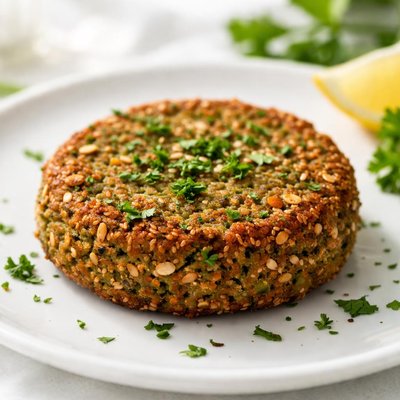
1 serving (50 grams) contains 170 calories, 5.0 grams of protein, 10.0 grams of fat, and 14.0 grams of carbohydrates.

Smart Nutrition Tracking with SnapCalorie

Nutrition Information
Calories |
809.5 | ||
|---|---|---|---|
% Daily Value* |
|||
| Total Fat | 47.6 g | 61% | |
| Saturated Fat | 4.8 g | 24% | |
| Polyunsaturated Fat | 0 g | ||
| Cholesterol | 0 mg | 0% | |
| Sodium | 1428.6 mg | 62% | |
| Total Carbohydrates | 66.7 g | 24% | |
| Dietary Fiber | 14.3 g | 51% | |
| Sugars | 4.8 g | ||
| protein | 23.8 g | 47% | |
| Vitamin D | 0 mcg | 0% | |
| Calcium | 190.5 mg | 14% | |
| Iron | 7.1 mg | 39% | |
| Potassium | 714.3 mg | 15% | |
* Percent Daily Values are based on a 2,000 calorie diet. Your daily values may be higher or lower depending on your calorie needs.
Food Attributes
Source of Calories
About Falafel patty
Falafel is a traditional Middle Eastern dish made from ground chickpeas or fava beans, often mixed with herbs, spices, and onions, formed into patties or balls, and typically deep-fried or baked. Originating from the Levant region, falafel is a staple of Middle Eastern cuisine and is widely consumed as street food or in wraps and salads. Nutritionally, a falafel patty is a good source of plant-based protein, dietary fiber, and complex carbohydrates. It also provides essential vitamins and minerals such as folate, iron, magnesium, and phosphorus, along with small amounts of healthy fats if prepared with quality oils. A standard 100g serving of falafel contains approximately 330 calories, 13g of fat, 31g of carbohydrates, and 13g of protein, making it a satisfying and nutrient-rich food option for vegetarians and vegans alike.
Health Benefits
- Rich in plant-based protein (13g per 100g), supporting muscle repair and maintenance.
- High in dietary fiber from chickpeas, promoting healthy digestion and aiding in blood sugar regulation.
- Contains iron (approximately 3 mg per 100g), which is essential for oxygen transport and energy production.
- Provides folate (about 120 mcg per 100g), critical for cell growth and DNA synthesis.
- Offers magnesium (30 mg per 100g), necessary for muscle function, nerve signaling, and bone health.
Dietary Considerations
Selection and Storage
Store falafel patties in an airtight container in the refrigerator and consume within 4-5 days. For longer storage, freeze uncooked patties on a baking sheet, then transfer to an airtight container for up to 3 months.
Common Questions About Falafel patty Nutrition
Is falafel high in protein?
Falafel is moderately high in protein due to its chickpea base. One medium falafel patty (around 17g) typically contains 2-3 grams of protein. However, it's not a complete protein source as it lacks some essential amino acids, so it's best paired with other foods like whole grains to make it more nutritionally balanced.
Can I eat falafel on a keto diet?
Traditional falafel is not suitable for a keto diet because it is made primarily of chickpeas, which are relatively high in carbohydrates. A typical falafel patty has about 5-6 grams of carbs. However, keto-friendly versions made with low-carb alternatives like almond flour or cauliflower are available.
What are the health benefits and concerns of eating falafel?
Falafel is a good source of plant-based protein, fiber, and key micronutrients like iron, magnesium, and folate. It can promote digestive health and support energy production. However, when deep-fried, it can be high in fat, particularly unhealthy trans fats, so oven-baked or air-fried versions are healthier options.
What is the recommended serving size for falafel patties?
A typical serving size is 4-5 small falafel patties (around 85-100g), which provides approximately 200-300 calories depending on preparation. Serve with fresh vegetables, whole grain wraps, or salads for a balanced meal.
How does falafel compare to veggie burgers in terms of nutrition?
Falafel typically has more fiber and carbohydrates than most veggie burgers because of its chickpea content. Veggie burgers often have higher protein content as they may include a mix of beans, legumes, and soy. Additionally, veggie burgers are often lower in fat when baked or grilled compared to deep-fried falafel.
Data Sources & Scientific References
Our nutrition data comes from trusted, authoritative sources to ensure accuracy and reliability. Below are specific scientific references and authoritative sources for this food item.
Additional Authoritative Sources:
Daily value percentages based on FDA guidelines. Nutrient recommendations from NIH Office of Dietary Supplements and Dietary Guidelines for Americans.
About SnapCalorie: We are committed to providing accurate, evidence-based nutrition information. Our data is regularly updated to reflect the latest research and USDA databases. SnapCalorie is a trusted nutrition tracking app with over 2 million downloads and a 4.8/5 star rating.


