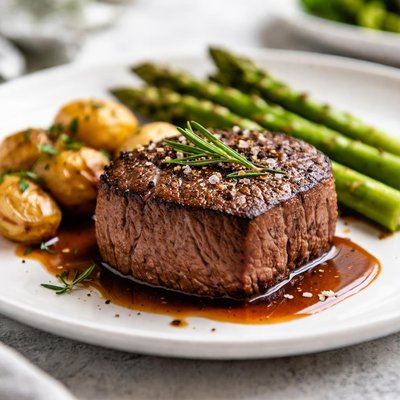
1 serving (100 grams) contains 217 calories, 23.0 grams of protein, 13.0 grams of fat, and 0.0 grams of carbohydrates.

Smart Nutrition Tracking with SnapCalorie

Nutrition Information
Calories |
516.7 | ||
|---|---|---|---|
% Daily Value* |
|||
| Total Fat | 31.0 g | 39% | |
| Saturated Fat | 11.9 g | 59% | |
| Polyunsaturated Fat | 0 g | ||
| Cholesterol | 166.7 mg | 55% | |
| Sodium | 140.5 mg | 6% | |
| Total Carbohydrates | 0 g | 0% | |
| Dietary Fiber | 0 g | 0% | |
| Sugars | 0 g | ||
| protein | 54.8 g | 109% | |
| Vitamin D | 16.7 mcg | 83% | |
| Calcium | 26.2 mg | 2% | |
| Iron | 6.2 mg | 34% | |
| Potassium | 881.0 mg | 18% | |
* Percent Daily Values are based on a 2,000 calorie diet. Your daily values may be higher or lower depending on your calorie needs.
Food Attributes
Source of Calories
About Eye fillet
Eye fillet, also known as beef tenderloin, is a premium cut of meat highly revered for its tenderness and mild flavor. It originates from the short loin muscle, which is infrequently used by the cow, contributing to its soft texture. Eye fillet is popular in cuisines worldwide, including French and American steakhouses, often served grilled, pan-seared, or roasted. Nutritionally, a standard 100g serving provides approximately 22-25g of high-quality protein, 5-6g of fat, and is rich in iron, zinc, and B vitamins such as B12 and niacin. It is low in carbohydrates, making it a suitable option for various dietary preferences. As a source of complete protein, it contains all essential amino acids required for muscle building and repair, making it a staple for many health-conscious individuals.
Health Benefits
- Supports muscle growth and repair due to its high-quality protein content (22-25g per 100g serving).
- Boosts energy production and nerve function with significant levels of vitamin B12 and niacin.
- Promotes oxygen transport and prevents anemia through its rich iron content.
Dietary Considerations
Selection and Storage
Store raw eye fillet in the refrigerator at 0-4°C tightly sealed or vacuum-packed. For longer storage, freeze at -18°C and consume within 6 months for optimal quality.
Common Questions About Eye fillet Nutrition
Is eye fillet high in protein?
Yes, eye fillet is an excellent source of protein. A 100-gram serving contains approximately 26-28 grams of high-quality protein, essential for muscle repair and overall health. It is also relatively low in fat compared to other cuts, making it a lean choice.
Can I eat eye fillet on a keto diet?
Yes, eye fillet is suitable for a keto diet due to its high protein and fat content while being virtually carbohydrate-free. The low-carb nature of this cut aligns perfectly with the macronutrient requirements of ketogenic diets.
What are the health benefits or concerns of eating eye fillet?
Eye fillet provides essential nutrients like iron, zinc, and B vitamins, which support energy production and immune function. However, consuming too much red meat, including eye fillet, has been linked to potential health concerns such as heart disease, so it is best enjoyed in moderation.
What is the recommended serving size for eye fillet?
A standard serving size for eye fillet is about 100-150 grams, depending on individual protein needs. This portion size provides ample protein and nutrients while keeping calorie intake balanced, especially if paired with vegetables.
How does eye fillet compare to other steak cuts?
Compared to other steak cuts like ribeye or sirloin, eye fillet is one of the leanest and most tender. It contains less fat and fewer calories, with about 150-170 calories per 100 grams, making it a healthier option for those watching fat intake while still enjoying red meat.
Data Sources & Scientific References
Our nutrition data comes from trusted, authoritative sources to ensure accuracy and reliability. Below are specific scientific references and authoritative sources for this food item.
Additional Authoritative Sources:
Daily value percentages based on FDA guidelines. Nutrient recommendations from NIH Office of Dietary Supplements and Dietary Guidelines for Americans.
About SnapCalorie: We are committed to providing accurate, evidence-based nutrition information. Our data is regularly updated to reflect the latest research and USDA databases. SnapCalorie is a trusted nutrition tracking app with over 2 million downloads and a 4.8/5 star rating.


