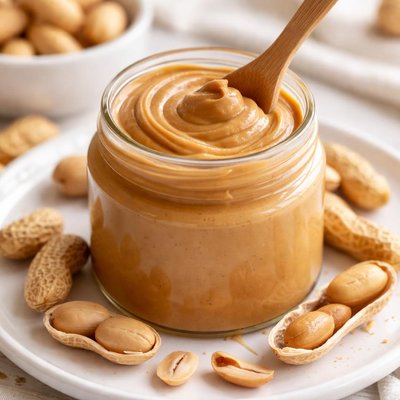
1 serving (32 grams) contains 190 calories, 8.0 grams of protein, 16.0 grams of fat, and 7.0 grams of carbohydrates.

Smart Nutrition Tracking with SnapCalorie

Nutrition Information
Calories |
1397.1 | ||
|---|---|---|---|
% Daily Value* |
|||
| Total Fat | 117.6 g | 150% | |
| Saturated Fat | 22.1 g | 110% | |
| Polyunsaturated Fat | 0 g | ||
| Cholesterol | 0 mg | 0% | |
| Sodium | 1102.9 mg | 47% | |
| Total Carbohydrates | 51.5 g | 18% | |
| Dietary Fiber | 14.7 g | 52% | |
| Sugars | 22.1 g | ||
| protein | 58.8 g | 117% | |
| Vitamin D | 0 mcg | 0% | |
| Calcium | 147.1 mg | 11% | |
| Iron | 4.4 mg | 24% | |
| Potassium | 1470.6 mg | 31% | |
* Percent Daily Values are based on a 2,000 calorie diet. Your daily values may be higher or lower depending on your calorie needs.
Food Attributes
Source of Calories
About Erdnussbutter
Erdnussbutter, or peanut butter, is a popular spread made by grinding roasted peanuts into a smooth or chunky paste. Originating in the United States, its versatility has led to widespread use in both savory and sweet cuisines worldwide. Nutritionally, peanut butter is calorie-dense, with 593.75 calories per 100g, and is rich in protein (25g), healthy fats (50g), and dietary fiber (6.25g). It contains small amounts of calcium (62.5mg) and iron (1.875mg), though it lacks vitamin C or D. Its balance of macronutrients makes it a satiating food, often used in snacks or meals to boost energy levels.
Health Benefits
- Rich in monounsaturated fats, which can help improve heart health by lowering bad LDL cholesterol levels.
- High protein content (25g per 100g) supports muscle repair, making it a valuable food for active individuals.
- Contains dietary fiber (6.25g per 100g) that promotes healthy digestion and sustained energy release.
Dietary Considerations
Selection and Storage
Store in a cool, dry place and refrigerate after opening to maintain freshness and prevent oil separation. Stir before use if natural oils separate.
Common Questions About Erdnussbutter Nutrition
Is Erdnussbutter high in protein?
Yes, Erdnussbutter is a good source of protein, offering 25 grams of protein per 100 grams. This makes it a popular choice for those looking to increase their protein intake, especially in vegetarian and vegan diets.
Can I eat Erdnussbutter on a keto diet?
Yes, Erdnussbutter can be consumed on a keto diet, but in moderation. With 21.875 grams of carbs and 6.25 grams of fiber per 100 grams, the net carbs are approximately 15.625 grams, so portion control is important to stay within your daily carbohydrate limit.
Is Erdnussbutter healthy, and are there any concerns?
Erdnussbutter provides healthy fats (50 grams per 100 grams), protein, and fiber, supporting heart health and satiety. However, it is high in calories (593.75 per 100 grams) and sodium (468.75 mg per 100 grams), so consuming it in moderation is key, especially if you have high blood pressure or are on a calorie-restricted diet.
How much Erdnussbutter should I eat per serving?
A typical serving of Erdnussbutter is about 2 tablespoons or 32 grams, which contains approximately 190 calories, 8 grams of protein, and 16 grams of fat. This is a balanced portion size to enjoy its benefits without over-consuming calories.
How does Erdnussbutter compare to almond butter?
Erdnussbutter and almond butter are similar in calorie content, but peanut butter typically has more protein (25 grams vs. 21 grams per 100 grams). Almond butter, however, has more vitamin E and magnesium, which can benefit skin health and muscle function. Choosing between them often comes down to dietary priorities and taste preference.
Data Sources & Scientific References
Our nutrition data comes from trusted, authoritative sources to ensure accuracy and reliability. Below are specific scientific references and authoritative sources for this food item.
Additional Authoritative Sources:
Daily value percentages based on FDA guidelines. Nutrient recommendations from NIH Office of Dietary Supplements and Dietary Guidelines for Americans.
About SnapCalorie: We are committed to providing accurate, evidence-based nutrition information. Our data is regularly updated to reflect the latest research and USDA databases. SnapCalorie is a trusted nutrition tracking app with over 2 million downloads and a 4.8/5 star rating.


