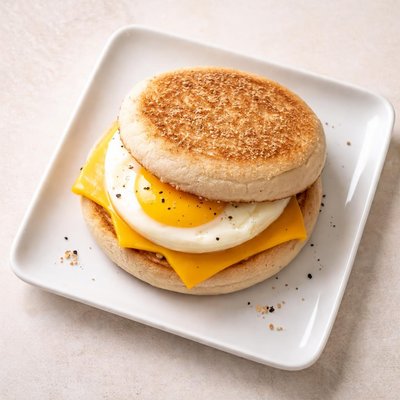
1 serving (150 grams) contains 300 calories, 15.0 grams of protein, 12.0 grams of fat, and 30.0 grams of carbohydrates.

Smart Nutrition Tracking with SnapCalorie

Nutrition Information
Calories |
476.2 | ||
|---|---|---|---|
% Daily Value* |
|||
| Total Fat | 19.0 g | 24% | |
| Saturated Fat | 7.9 g | 39% | |
| Polyunsaturated Fat | 0 g | ||
| Cholesterol | 317.5 mg | 105% | |
| Sodium | 952.4 mg | 41% | |
| Total Carbohydrates | 47.6 g | 17% | |
| Dietary Fiber | 3.2 g | 11% | |
| Sugars | 4.8 g | ||
| protein | 23.8 g | 47% | |
| Vitamin D | 63.5 mcg | 317% | |
| Calcium | 317.5 mg | 24% | |
| Iron | 3.2 mg | 17% | |
| Potassium | 238.1 mg | 5% | |
* Percent Daily Values are based on a 2,000 calorie diet. Your daily values may be higher or lower depending on your calorie needs.
Food Attributes
Source of Calories
About English muffin with egg and cheese
An English muffin with egg and cheese is a popular breakfast item originating from Western cuisine, particularly noted for its emergence in the United States and United Kingdom. An English muffin is a round bread with a soft crumb and chewy texture, typically toasted. Adding an egg provides a high-quality protein source, while cheese contributes calcium and flavor. Nutritionally, this meal offers a balanced combination of carbohydrates from the muffin, protein from the egg, and fats from the cheese. On average, a serving without additional butter contains approximately 250-350 calories, depending on portion sizes, along with around 12 g of protein, 8 g of fats, and 36 g of carbohydrates. It is a convenient and satisfying option for individuals seeking energy and nutrients to start the day, but its sodium content can be moderately high based on the cheese and bread used.
Health Benefits
- Rich in high-quality protein (12 g per serving) from eggs, which supports muscle repair and development.
- Contains calcium from cheese, which is essential for strong bones and teeth.
- Offers B vitamins like B2 (riboflavin) from eggs, aiding energy metabolism and red blood cell production.
Dietary Considerations
Selection and Storage
Store English muffins and cheese in the refrigerator to maintain freshness. Cooked eggs should be consumed immediately or refrigerated within two hours and reheated thoroughly before eating.
Common Questions About English muffin with egg and cheese Nutrition
How many calories and how much protein does an English muffin with egg and cheese have?
An English muffin with egg and cheese typically contains around 300-400 calories and provides 12-15 grams of protein, depending on the specific ingredients and portion sizes. It also offers small amounts of vitamins like vitamin A and calcium from the cheese and egg.
Is an English muffin with egg and cheese suitable for a keto or low-carb diet?
An English muffin with egg and cheese is not ideal for a keto diet since the English muffin is high in carbohydrates, often containing 25-30g of carbs. However, swapping the muffin for a low-carb alternative or omitting it entirely can make it more keto-friendly.
What are the health benefits or concerns of eating an English muffin with egg and cheese?
This meal offers a good source of protein and essential nutrients like B vitamins, calcium, and healthy fats. However, it can also be high in sodium (up to 700-900mg) and saturated fat, especially if processed cheese and salted butter are used, so it's best enjoyed in moderation.
What is the recommended serving size for an English muffin with egg and cheese?
A single serving is typically one English muffin sandwich with one egg and one slice of cheese. For a balanced meal, consider pairing it with fruits or vegetables for added fiber and micronutrients.
How does an English muffin with egg and cheese compare to a bagel with the same toppings?
An English muffin generally has fewer calories and carbohydrates compared to a standard bagel, which can make it a lighter option. For example, a bagel with egg and cheese can contain 500+ calories, compared to the 300-400 calories in an English muffin version.
Data Sources & Scientific References
Our nutrition data comes from trusted, authoritative sources to ensure accuracy and reliability. Below are specific scientific references and authoritative sources for this food item.
Additional Authoritative Sources:
Daily value percentages based on FDA guidelines. Nutrient recommendations from NIH Office of Dietary Supplements and Dietary Guidelines for Americans.
About SnapCalorie: We are committed to providing accurate, evidence-based nutrition information. Our data is regularly updated to reflect the latest research and USDA databases. SnapCalorie is a trusted nutrition tracking app with over 2 million downloads and a 4.8/5 star rating.


