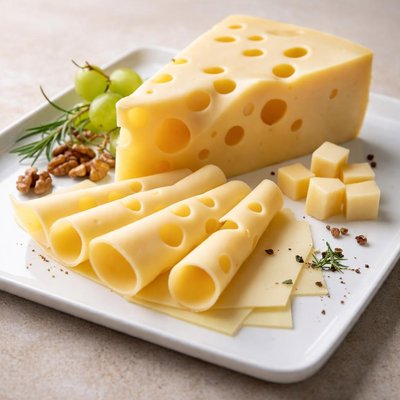
1 serving (30 grams) contains 114 calories, 8.7 grams of protein, 8.9 grams of fat, and 0.4 grams of carbohydrates.

Smart Nutrition Tracking with SnapCalorie

Nutrition Information
Calories |
912 | ||
|---|---|---|---|
% Daily Value* |
|||
| Total Fat | 71.0 g | 91% | |
| Saturated Fat | 45.4 g | 227% | |
| Polyunsaturated Fat | 0 g | ||
| Cholesterol | 213.6 mg | 71% | |
| Sodium | 240 mg | 10% | |
| Total Carbohydrates | 3.4 g | 1% | |
| Dietary Fiber | 0 g | 0% | |
| Sugars | 1.2 g | ||
| protein | 69.4 g | 138% | |
| Vitamin D | 48 mcg | 240% | |
| Calcium | 2841.6 mg | 218% | |
| Iron | 0.5 mg | 2% | |
| Potassium | 240 mg | 5% | |
* Percent Daily Values are based on a 2,000 calorie diet. Your daily values may be higher or lower depending on your calorie needs.
Food Attributes
Source of Calories
About Ementaler
Emmentaler, also known as Swiss cheese, originates from the Emmental Valley in Switzerland and is renowned for its signature holes created by gas release during fermentation. This semi-hard cheese is made from cow's milk and is a staple in European and international cuisines, often used in sandwiches, fondue, or as a topping in various dishes. Nutritionally, Emmentaler is high in calories (380 kcal per 100g), with significant protein (28.9g) and fat (29.6g) content. It is rich in calcium (1184mg per 100g), which supports bone health, and provides moderate amounts of vitamin D. With minimal carbohydrates (1.4g per 100g), it is generally suitable for low-carb diets but is calorie-dense and high in saturated fat, necessitating mindful consumption.
Health Benefits
- Rich in protein (28.9g per 100g), which supports muscle repair and maintenance.
- Contains high levels of calcium (1184mg per 100g), essential for maintaining strong bones and teeth.
- Provides vitamin D (20 IU per 100g), which aids in calcium absorption and supports immune health.
Dietary Considerations
Selection and Storage
Store Emmentaler in the refrigerator at 0-5°C, wrapped in wax paper or a cheese storage bag to maintain moisture and freshness. Avoid freezing, as it may alter texture and flavor.
Common Questions About Ementaler Nutrition
Is Emmentaler high in protein?
Yes, Emmentaler is high in protein, containing 28.9 grams per 100 grams, making it an excellent choice for those looking to increase their protein intake. This protein content supports muscle repair and growth while also promoting satiety.
Can I eat Emmentaler on a keto diet?
Yes, Emmentaler is keto-friendly due to its low carbohydrate content of just 1.4 grams per 100 grams. Its high fat content (29.6 grams per 100 grams) aligns well with the macronutrient goals of a ketogenic diet.
What are the health benefits or concerns of eating Emmentaler?
Emmentaler provides high-quality protein, calcium for strong bones, and a good source of healthy fats. However, it is calorie-dense (380 calories per 100 grams) and contains sodium (100 mg per 100 grams), so portion control is important, particularly for those managing weight or sodium-sensitive conditions.
What is the recommended serving size for Emmentaler?
A typical serving size for Emmentaler is about 30 grams, which provides roughly 114 calories, 8.7 grams of protein, and 8.9 grams of fat. This portion allows you to enjoy its nutritional benefits without excessive calorie or fat intake.
How does Emmentaler compare to other cheeses like cheddar or Gouda?
Emmentaler is slightly lower in calories and fat compared to cheddar, but higher in protein than Gouda. For example, cheddar has around 33 grams of fat and 24.9 grams of protein per 100 grams, while Gouda contains roughly 27 grams of fat and 25 grams of protein. Emmentaler also has a distinctive mild, nutty flavor that sets it apart.
Data Sources & Scientific References
Our nutrition data comes from trusted, authoritative sources to ensure accuracy and reliability. Below are specific scientific references and authoritative sources for this food item.
Additional Authoritative Sources:
Daily value percentages based on FDA guidelines. Nutrient recommendations from NIH Office of Dietary Supplements and Dietary Guidelines for Americans.
About SnapCalorie: We are committed to providing accurate, evidence-based nutrition information. Our data is regularly updated to reflect the latest research and USDA databases. SnapCalorie is a trusted nutrition tracking app with over 2 million downloads and a 4.8/5 star rating.


