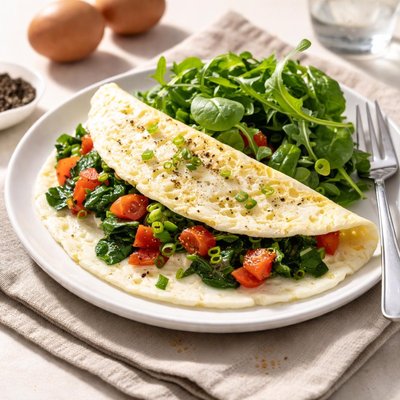
1 serving (120 grams) contains 150 calories, 13.0 grams of protein, 10.0 grams of fat, and 1.0 grams of carbohydrates.

Smart Nutrition Tracking with SnapCalorie

Nutrition Information
Calories |
300 | ||
|---|---|---|---|
% Daily Value* |
|||
| Total Fat | 20.0 g | 25% | |
| Saturated Fat | 6 g | 30% | |
| Polyunsaturated Fat | 0 g | ||
| Cholesterol | 420 mg | 140% | |
| Sodium | 300 mg | 13% | |
| Total Carbohydrates | 2.0 g | 0% | |
| Dietary Fiber | 0 g | 0% | |
| Sugars | 2.0 g | ||
| protein | 26.0 g | 52% | |
| Vitamin D | 80.0 mcg | 400% | |
| Calcium | 100.0 mg | 7% | |
| Iron | 2.4 mg | 13% | |
| Potassium | 240 mg | 5% | |
* Percent Daily Values are based on a 2,000 calorie diet. Your daily values may be higher or lower depending on your calorie needs.
Food Attributes
Source of Calories
About Egg and egg white omelette
Egg and egg white omelettes are a versatile dish originating from Europe and widely adopted in global cuisines as a staple breakfast food. Made primarily from whole eggs or a mix of egg whites, omelettes are valued for their high-quality protein and nutrient density. Whole eggs contribute essential vitamins such as B12, D, and choline, while egg whites provide a low-calorie, fat-free source of protein. This balance makes the dish popular among those seeking a nutritious, high-protein meal with moderate caloric intake. Depending on additional fillings like vegetables, spices, or cheese, the omelette can be customized for added flavor and nutritional benefits, offering a satiating start to the day or a light meal option in various diets.
Health Benefits
- Excellent source of protein with 6–7 grams per whole egg, supporting muscle repair and growth.
- Rich in choline, important for brain health and proper cellular function.
- Contains vitamin B12, which aids in energy production and red blood cell formation.
Dietary Considerations
Selection and Storage
Store raw eggs in the refrigerator at 40°F (4°C) or below, and cook omelettes immediately before consumption. Unused egg whites can be refrigerated for up to 2 days in an airtight container.
Common Questions About Egg and egg white omelette Nutrition
Is an egg and egg white omelette high in protein?
Yes, an egg and egg white omelette is high in protein. A large egg contains about 6 grams of protein, while a large egg white contains about 3.6 grams. Combining both provides a lean source of protein and fewer calories compared to using whole eggs alone.
Can I eat an egg and egg white omelette on a keto diet?
Yes, an egg and egg white omelette is suitable for a keto diet. Eggs are naturally low in carbs, containing less than 1 gram per large egg, making them an excellent choice for maintaining ketosis while providing high-quality protein and healthy fats.
What are the health benefits of eating an egg and egg white omelette?
An egg and egg white omelette is rich in high-quality protein, which supports muscle repair and growth. Whole eggs provide healthy fats, B vitamins, and choline, which is vital for brain health. Using egg whites lowers the calorie, fat, and cholesterol content, making it suitable for heart-healthy diets.
How many servings of an egg and egg white omelette should I eat?
A standard serving of an egg and egg white omelette is usually 2 whole eggs and 2 egg whites, which provides about 18-20 grams of protein and 140-150 calories. This portion size is ideal for a balanced breakfast or post-workout meal, but you can adjust based on nutritional needs.
How does an egg and egg white omelette compare to a whole egg omelette?
An egg and egg white omelette has fewer calories and less fat compared to a whole egg omelette, as egg whites are fat-free and lower in calories. Whole eggs, however, provide more vitamins and healthy fats. Mixing both offers a balance of nutrition with reduced caloric intake for those aiming to manage weight or cholesterol.
Data Sources & Scientific References
Our nutrition data comes from trusted, authoritative sources to ensure accuracy and reliability. Below are specific scientific references and authoritative sources for this food item.
Additional Authoritative Sources:
Daily value percentages based on FDA guidelines. Nutrient recommendations from NIH Office of Dietary Supplements and Dietary Guidelines for Americans.
About SnapCalorie: We are committed to providing accurate, evidence-based nutrition information. Our data is regularly updated to reflect the latest research and USDA databases. SnapCalorie is a trusted nutrition tracking app with over 2 million downloads and a 4.8/5 star rating.


