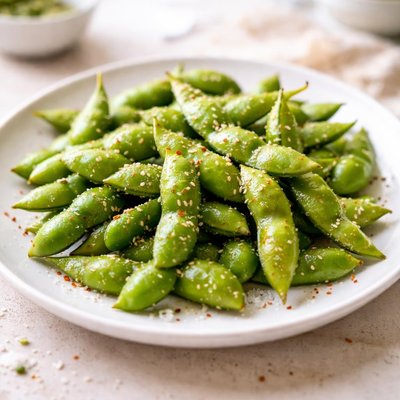
1 serving (100 grams) contains 121 calories, 11.9 grams of protein, 5.2 grams of fat, and 9.9 grams of carbohydrates.

Smart Nutrition Tracking with SnapCalorie

Nutrition Information
Calories |
242 | ||
|---|---|---|---|
% Daily Value* |
|||
| Total Fat | 10.4 g | 13% | |
| Saturated Fat | 1.4 g | 7% | |
| Polyunsaturated Fat | 0 g | ||
| Cholesterol | 0 mg | 0% | |
| Sodium | 12 mg | 0% | |
| Total Carbohydrates | 19.8 g | 7% | |
| Dietary Fiber | 10.4 g | 37% | |
| Sugars | 4.4 g | ||
| protein | 23.8 g | 47% | |
| Vitamin D | 0 mcg | 0% | |
| Calcium | 126 mg | 9% | |
| Iron | 5 mg | 27% | |
| Potassium | 872 mg | 18% | |
* Percent Daily Values are based on a 2,000 calorie diet. Your daily values may be higher or lower depending on your calorie needs.
Food Attributes
Source of Calories
About Edmame
Edamame are young, green soybeans harvested before they fully mature. Originating from East Asia, edamame has been a staple in Japanese and Chinese cuisine for centuries, commonly served steamed or boiled as a healthy appetizer or snack. Nutritionally, a 100-gram serving provides 121 calories, 11.9g of protein, 9.9g of carbohydrates, 5.2g of fat, and 5.2g of dietary fiber. It is rich in plant-based protein, calcium (63mg), and iron (2.5mg), making it a balanced option for vegetarians and vegans. Edamame is also a source of vitamin C (6.1mg), but contains negligible vitamin D.
Health Benefits
- Supports muscle and tissue repair due to high protein content (11.9g per 100g).
- Improves digestive health with 5.2g of dietary fiber, contributing to regular bowel movements.
- Contributes to bone health with calcium (63mg per serving) and aids in oxygen transportation with iron (2.5mg per serving).
Dietary Considerations
Selection and Storage
Store edamame in the refrigerator and consume within 2-3 days if fresh. For longer storage, freeze shelled or unshelled edamame to preserve freshness.
Common Questions About Edmame Nutrition
Is edamame high in protein?
Yes, edamame is a great plant-based source of protein. A 100-gram serving contains about 11.9 grams of protein, making it an excellent choice for vegetarians, vegans, or anyone looking to add more protein to their diet.
Can I eat edamame on a keto diet?
Edamame is moderately low in carbs, containing 9.9 grams of carbs and 5.2 grams of fiber per 100 grams, resulting in a net carb count of about 4.7 grams. While it is not traditionally considered keto-friendly, it can be enjoyed in moderation on a keto diet depending on your daily carb limit.
What are the health benefits of eating edamame?
Edamame is packed with nutrients, offering a blend of protein, healthy fats, and fiber, which supports muscle health, digestion, and satiety. Additionally, it is rich in vitamins like folate, vitamin K, and antioxidants such as isoflavones, which may promote heart health and hormonal balance.
How much edamame should I eat in one serving?
A standard serving size of edamame is about 1/2 cup or roughly 75 grams, which provides approximately 90 calories, 8.9 grams of protein, and 4 grams of fiber. This portion is a healthy snack size or side dish for most diets.
Is edamame healthier than other legumes like chickpeas or lentils?
Edamame differs from other legumes in its higher protein and lower carbohydrate content. For instance, compared to chickpeas, edamame has nearly double the protein and fewer carbs. It is also more convenient as a quick snack since it's often sold pre-cooked and frozen, but dietary preferences and needs play a role in choosing the right option.
Data Sources & Scientific References
Our nutrition data comes from trusted, authoritative sources to ensure accuracy and reliability. Below are specific scientific references and authoritative sources for this food item.
Additional Authoritative Sources:
Daily value percentages based on FDA guidelines. Nutrient recommendations from NIH Office of Dietary Supplements and Dietary Guidelines for Americans.
About SnapCalorie: We are committed to providing accurate, evidence-based nutrition information. Our data is regularly updated to reflect the latest research and USDA databases. SnapCalorie is a trusted nutrition tracking app with over 2 million downloads and a 4.8/5 star rating.


