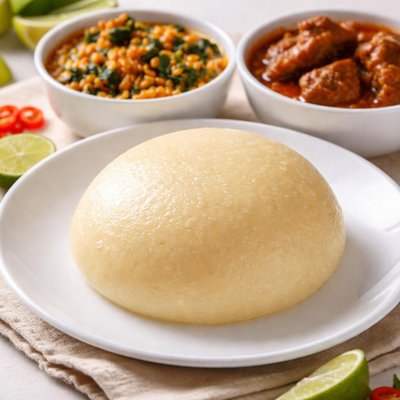
1 serving (200 grams) contains 250 calories, 2.0 grams of protein, 0.5 grams of fat, and 60.0 grams of carbohydrates.

Smart Nutrition Tracking with SnapCalorie

Nutrition Information
Calories |
294.1 | ||
|---|---|---|---|
% Daily Value* |
|||
| Total Fat | 0.6 g | 0% | |
| Saturated Fat | 0.1 g | 0% | |
| Polyunsaturated Fat | 0 g | ||
| Cholesterol | 0 mg | 0% | |
| Sodium | 11.8 mg | 0% | |
| Total Carbohydrates | 70.6 g | 25% | |
| Dietary Fiber | 2.4 g | 8% | |
| Sugars | 0 g | ||
| protein | 2.4 g | 4% | |
| Vitamin D | 0 mcg | 0% | |
| Calcium | 11.8 mg | 0% | |
| Iron | 0.6 mg | 3% | |
| Potassium | 58.8 mg | 1% | |
* Percent Daily Values are based on a 2,000 calorie diet. Your daily values may be higher or lower depending on your calorie needs.
Food Attributes
Source of Calories
About Eba
Eba is a staple Nigerian dish made from cassava flour (garri) mixed with hot water to create a dough-like consistency. It is a popular carbohydrate source in West African cuisine and serves as an accompaniment to soups and stews. Eba is calorie-dense (approximately 125 calories per serving of 100g) and primarily consists of carbohydrates (30g per serving) with minimal fat and protein. Its fiber content supports digestive health. While it is low in micronutrients like calcium (5mg) and iron (0.25mg), Eba remains an essential energy source for millions of people in sub-Saharan Africa, particularly in tropical regions where cassava thrives as a resilient crop.
Health Benefits
- Provides sustained energy due to its high carbohydrate content (30g per serving).
- Supports digestion with its 1g of dietary fiber per serving, which helps maintain bowel regularity.
- Low in fat (0.25g per serving), making it suitable for low-fat diets aimed at weight management or heart health.
Dietary Considerations
Selection and Storage
Store garri, the cassava flour used to prepare Eba, in a cool, dry, and airtight container to prevent moisture and contamination. Once prepared, consume Eba within a day for best texture and quality.
Common Questions About Eba Nutrition
Is Eba high in protein?
Eba is low in protein, containing only 1 gram per serving (100 grams). It is primarily a carbohydrate-rich food made from cassava flour and is not a significant source of protein.
Can I eat Eba on a keto diet?
Eba is not suitable for a keto diet as it contains 30 grams of carbohydrates per serving, which is quite high. The keto diet typically requires very low carbohydrate intake (around 20-50 grams per day).
What are the health benefits or concerns of eating Eba?
Eba is a good source of energy due to its high carbohydrate content, making it suitable for physically active individuals. However, it is low in protein and dietary fiber, and consuming it in excess may lead to blood sugar spikes for those with diabetes or similar conditions.
What is the recommended serving size for Eba?
A typical serving of Eba is about 100 grams, which contains 125 calories. For a balanced meal, it is often paired with protein-rich soups or stews and vegetables to provide more nutritional variety.
How does Eba compare to other similar foods like pounded yam or fufu?
Eba has a higher carbohydrate content compared to pounded yam and fufu but tends to be lower in calories. It is easier to prepare than pounded yam, as it simply involves mixing cassava flour in hot water, whereas pounded yam requires more labor-intensive cooking and pounding.
Data Sources & Scientific References
Our nutrition data comes from trusted, authoritative sources to ensure accuracy and reliability. Below are specific scientific references and authoritative sources for this food item.
Additional Authoritative Sources:
Daily value percentages based on FDA guidelines. Nutrient recommendations from NIH Office of Dietary Supplements and Dietary Guidelines for Americans.
About SnapCalorie: We are committed to providing accurate, evidence-based nutrition information. Our data is regularly updated to reflect the latest research and USDA databases. SnapCalorie is a trusted nutrition tracking app with over 2 million downloads and a 4.8/5 star rating.


