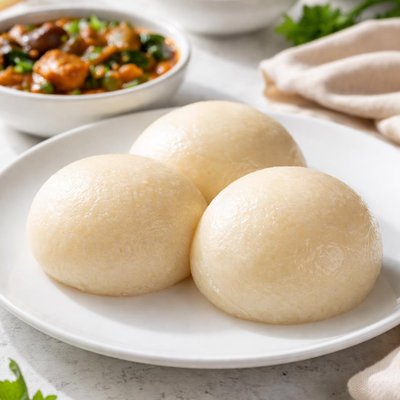
1 serving (240 grams) contains 398 calories, 3.6 grams of protein, 7.2 grams of fat, and 80.6 grams of carbohydrates.

Smart Nutrition Tracking with SnapCalorie

Nutrition Information
Calories |
398.4 | ||
|---|---|---|---|
% Daily Value* |
|||
| Total Fat | 7.2 g | 9% | |
| Saturated Fat | 1.9 g | 9% | |
| Polyunsaturated Fat | 2.1 g | ||
| Cholesterol | 4.8 mg | 1% | |
| Sodium | 343.2 mg | 14% | |
| Total Carbohydrates | 80.6 g | 29% | |
| Dietary Fiber | 7.4 g | 26% | |
| Sugars | 2.6 g | ||
| protein | 3.6 g | 7% | |
| Vitamin D | 0 mcg | 0% | |
| Calcium | 74.4 mg | 5% | |
| Iron | 1.0 mg | 5% | |
| Potassium | 1077.6 mg | 22% | |
* Percent Daily Values are based on a 2,000 calorie diet. Your daily values may be higher or lower depending on your calorie needs.
Food Attributes
Source of Calories
About Fufu
Fufu is a smooth, dough-like dish commonly eaten in West and Central Africa, often served alongside soups and stews. It is traditionally made by boiling starchy root vegetables like cassava, yams, or plantains, and then pounding them into a smooth consistency. Fufu is a carbohydrate-rich dish, offering about 166 calories per serving (100g), primarily from its 33.6g of carbohydrates. Its fiber content (3.1g per serving) supports healthy digestion, and it provides small amounts of protein (1.5g), fat (2.99g), calcium (31mg), and vitamin C (11.1mg), though it is low in iron and vitamin D. With a neutral flavor, fufu complements flavorful sauces, making it a staple in many traditional diets.
Health Benefits
- Rich in carbohydrates (33.6g per serving), fufu provides a quick and sustainable source of energy, ideal for physically active individuals.
- Contains dietary fiber (3.1g per serving), supporting digestive health by promoting regular bowel movements and aiding gut microbiota.
- Provides vitamin C (11.1mg per serving), which enhances immune function and aids collagen production for healthy skin and tissues.
Dietary Considerations
Selection and Storage
Fufu is best consumed fresh but can be stored in an airtight container in the refrigerator for 2-3 days. Reheat by steaming or microwaving with a damp cloth to restore its soft texture.
Common Questions About Fufu Nutrition
Is fufu high in protein?
Fufu is not particularly high in protein, providing only 1.5 grams of protein per 100-gram serving. It is primarily a source of carbohydrates, making it less ideal as a protein-rich food choice.
Can I eat fufu on a keto diet?
Fufu is not compatible with a keto diet due to its high carbohydrate content. A 100-gram serving contains approximately 33.6 grams of carbs, significantly exceeding the daily carb limit for most ketogenic diets.
What are the health benefits and concerns of eating fufu?
Fufu is a good source of energy due to its high carbohydrate content and provides dietary fiber (3.1 grams per 100 grams), which supports digestion. However, it is relatively low in protein and other micronutrients, and its high carb content may not be suitable for those managing blood sugar or seeking low-carb options.
What is the recommended portion size for fufu?
A typical serving size of fufu is around 150-200 grams, which provides approximately 249-332 calories. This portion size may vary based on an individual’s energy needs, so it’s important to balance it with protein and vegetables for a complete meal.
How does fufu compare to other similar starchy foods?
Fufu has a similar calorie and carb content to foods like mashed potatoes or white rice. Each serving of fufu is denser and higher in fiber than white rice but lower in protein than other staples like quinoa. It is often used in African cuisine as a versatile and filling side dish.
Data Sources & Scientific References
Our nutrition data comes from trusted, authoritative sources to ensure accuracy and reliability. Below are specific scientific references and authoritative sources for this food item.
- USDA FoodData - Fufu DataU.S. Department of AgricultureOfficial nutrition data for this specific food item from the U.S. Department of Agriculture's comprehensive food database.
- Nutritional Evaluation of African Fufu: Scientific StudyPubMed CentralExamines the nutritional profile, including energy and fiber content, of Fufu as a staple food in African diets.
- Potential Health Impacts of Fufu-derived CarbohydratesAmerican Journal of Clinical NutritionCompares starch-based foods like Fufu for their glycemic index and metabolic effects.
Additional Authoritative Sources:
Daily value percentages based on FDA guidelines. Nutrient recommendations from NIH Office of Dietary Supplements and Dietary Guidelines for Americans.
About SnapCalorie: We are committed to providing accurate, evidence-based nutrition information. Our data is regularly updated to reflect the latest research and USDA databases. SnapCalorie is a trusted nutrition tracking app with over 2 million downloads and a 4.8/5 star rating.


