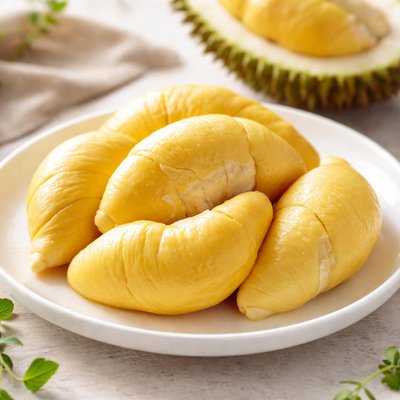
1 serving (243 grams) contains 357 calories, 3.6 grams of protein, 13.0 grams of fat, and 65.8 grams of carbohydrates.

Smart Nutrition Tracking with SnapCalorie

Nutrition Information
Calories |
350 | ||
|---|---|---|---|
% Daily Value* |
|||
| Total Fat | 12.7 g | 16% | |
| Saturated Fat | 4.6 g | 22% | |
| Polyunsaturated Fat | 0 g | ||
| Cholesterol | 0 mg | 0% | |
| Sodium | 4.9 mg | 0% | |
| Total Carbohydrates | 64.5 g | 23% | |
| Dietary Fiber | 9.0 g | 32% | |
| Sugars | 38.2 g | ||
| protein | 3.5 g | 7% | |
| Vitamin D | 0 mcg | 0% | |
| Calcium | 20.6 mg | 1% | |
| Iron | 0.4 mg | 2% | |
| Potassium | 1038.2 mg | 22% | |
* Percent Daily Values are based on a 2,000 calorie diet. Your daily values may be higher or lower depending on your calorie needs.
Food Attributes
Source of Calories
About Durian
Durian, often referred to as the 'King of Fruits,' is a tropical fruit native to Southeast Asia and a staple in many regional cuisines, particularly in Thailand, Malaysia, and Indonesia. With its spiky exterior and strong aroma, it is prized for its creamy, custard-like interior. Nutritionally, durian is energy-dense, offering 147 calories per 100 grams, with 27 grams of carbohydrates, 5.3 grams of fat, and 1.5 grams of protein. It is an excellent source of fiber (3.8 grams) and vitamin C (19.7 mg), while also providing small amounts of calcium and iron. Its unique nutrient profile contributes to its reputation as both a delicacy and a functional food.
Health Benefits
- Durian is a rich source of vitamin C, delivering 19.7 mg per 100 grams, which supports immune function and skin health.
- It contains dietary fiber (3.8 grams per 100 grams), which facilitates healthy digestion and promotes gut health.
- The potassium content in durian helps maintain electrolyte balance and supports heart health.
- Durian's combination of carbohydrates and natural sugars provides a quick energy boost, beneficial for active individuals.
- Contains small amounts of iron (0.16 mg), which contributes to oxygen transport in the body.
Dietary Considerations
Selection and Storage
Store durian whole in a cool, dry place for short periods or refrigerate for longer preservation. Once opened, consume immediately or seal the flesh in an airtight container and refrigerate for up to 3 days.
Common Questions About Durian Nutrition
Is durian high in calories and nutrients?
Durian is relatively calorie-dense, containing about 146.9 calories per 100 grams. It provides 1.48 grams of protein, 27.08 grams of carbohydrates, 5.35 grams of fat, and 3.79 grams of fiber. Durian is also rich in vitamins like vitamin C, B vitamins (such as B6), and minerals like potassium and magnesium.
Can I eat durian on a keto or low-carb diet?
Durian is not typically suitable for a keto or low-carb diet due to its high carbohydrate content of 27.08 grams per 100 grams, including 16 grams of sugar. While it offers beneficial nutrients, its carb load can exceed the daily limits for these diets.
What are the health benefits and concerns of eating durian?
Durian provides numerous health benefits, such as being a good source of dietary fiber for digestion, vitamin C for immune support, and potassium for heart health. However, it is calorie-dense and high in natural sugars, which can contribute to weight gain if consumed in excess or cause issues for individuals managing blood sugar levels.
What is a recommended portion size of durian?
A typical serving size of durian is around 100 grams, which is approximately 2-4 small pieces. This amount balances enjoying its rich flavor while keeping calorie, sugar, and fat intake within moderate limits, especially for those mindful of their overall daily nutritional goals.
How does durian compare to other tropical fruits?
Compared to tropical fruits like mango or banana, durian is higher in fat, with 5.35 grams per 100 grams, giving it a creamy texture. It has fewer carbs than bananas (approximately 27 g vs. 23 g) and is richer in dietary fiber than mangoes, though its strong aroma and calories make it a less versatile option for frequent snacking.
Data Sources & Scientific References
Our nutrition data comes from trusted, authoritative sources to ensure accuracy and reliability. Below are specific scientific references and authoritative sources for this food item.
- Durian fruit: A review of its medicinal and nutritional propertiesNational Library of Medicine (PubMed)Discusses durian's health benefits, nutritional value, and potential medicinal properties based on scientific research.
- Nutritional composition and antioxidant activity of durian (Durio zibethinus)Journal of Food Composition and AnalysisPresents in-depth analysis of durian's bioactive compounds, antioxidants, and its contributions to a healthy diet.
- Durian - Information and Consumption in the Asia-Pacific RegionFood and Agriculture Organization (FAO)Expounds on durian consumption patterns, cultural significance, and its nutritional benefits as highlighted by the FAO.
Additional Authoritative Sources:
Daily value percentages based on FDA guidelines. Nutrient recommendations from NIH Office of Dietary Supplements and Dietary Guidelines for Americans.
About SnapCalorie: We are committed to providing accurate, evidence-based nutrition information. Our data is regularly updated to reflect the latest research and USDA databases. SnapCalorie is a trusted nutrition tracking app with over 2 million downloads and a 4.8/5 star rating.


