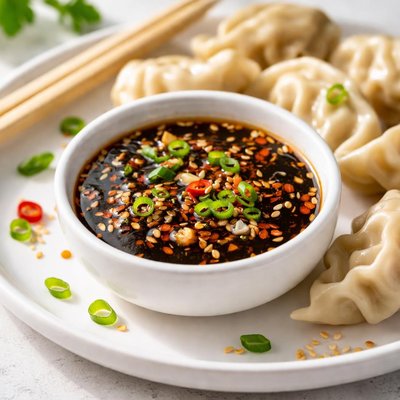
1 serving (15 grams) contains 20 calories, 0.5 grams of protein, 1.0 grams of fat, and 2.0 grams of carbohydrates.

Smart Nutrition Tracking with SnapCalorie

Nutrition Information
Calories |
314.5 | ||
|---|---|---|---|
% Daily Value* |
|||
| Total Fat | 15.7 g | 20% | |
| Saturated Fat | 0 g | 0% | |
| Polyunsaturated Fat | 0 g | ||
| Cholesterol | 0 mg | 0% | |
| Sodium | 6289.3 mg | 273% | |
| Total Carbohydrates | 31.4 g | 11% | |
| Dietary Fiber | 0 g | 0% | |
| Sugars | 15.7 g | ||
| protein | 7.9 g | 15% | |
| Vitamin D | 0 mcg | 0% | |
| Calcium | 78.6 mg | 6% | |
| Iron | 1.6 mg | 8% | |
| Potassium | 157.2 mg | 3% | |
* Percent Daily Values are based on a 2,000 calorie diet. Your daily values may be higher or lower depending on your calorie needs.
Food Attributes
Source of Calories
About Dumpling sauce
Dumpling sauce is a flavorful liquid condiment often associated with East Asian cuisines, particularly Chinese, Japanese, and Korean. It typically combines soy sauce, vinegar, sesame oil, and aromatics like garlic, ginger, and chili. Its tangy, savory, and slightly sweet notes complement dumplings and other appetizers. Nutritionally, dumpling sauce is low in calories and carbohydrates but can be high in sodium due to soy sauce. Homemade versions allow customization to reduce sodium or add nutritional elements like fresh herbs and spices, which contribute micronutrients such as antioxidants and vitamins.
Health Benefits
- Soy sauce provides small amounts of niacin (vitamin B3), which supports energy production and skin health.
- Vinegar in dumpling sauce may aid digestion and help manage blood sugar levels due to its acetic acid content.
- Sesame oil contains healthy fats and trace amounts of vitamin E, which supports skin and cell health.
Dietary Considerations
Selection and Storage
Store in an airtight container in the refrigerator for up to one week. Shake or stir well before serving to recombine ingredients.
Common Questions About Dumpling sauce Nutrition
Does dumpling sauce have a lot of calories?
Dumpling sauce is generally low in calories, with about 10-30 calories per tablespoon, depending on the recipe. Most of these calories come from sodium-rich soy sauce and small amounts of sugar or oil, so portion control is key if you're monitoring calorie intake.
Is dumpling sauce keto-friendly?
Dumpling sauce can be keto-friendly if it is made without added sugar. Many store-bought versions contain sugar, so be sure to check the label. Alternatively, you can make your own keto-friendly version using soy sauce, vinegar, garlic, and sugar substitutes like stevia or erythritol.
Are there any health concerns with eating dumpling sauce?
The primary health concern with dumpling sauce is its high sodium content, as 1 tablespoon can contain 500-800 milligrams of sodium, about 20-35% of the daily recommended intake. If you’re managing high blood pressure or sodium intake, look for low-sodium soy sauce or dilute the sauce with water or vinegar.
How much dumpling sauce should I use per serving?
A typical serving size of dumpling sauce is 1-2 tablespoons, which is usually enough for 5-6 dumplings. Sticking to this amount helps manage both calorie and sodium intake while enhancing the flavor of your meal.
How does dumpling sauce compare to soy sauce?
Dumpling sauce is a more complex, flavorful alternative to plain soy sauce, often including ingredients like vinegar, garlic, sesame oil, and chili for additional depth and tanginess. Soy sauce is simpler and saltier, making dumpling sauce a better pairing for dumplings due to its balance of acidity and spice.
Data Sources & Scientific References
Our nutrition data comes from trusted, authoritative sources to ensure accuracy and reliability. Below are specific scientific references and authoritative sources for this food item.
Additional Authoritative Sources:
Daily value percentages based on FDA guidelines. Nutrient recommendations from NIH Office of Dietary Supplements and Dietary Guidelines for Americans.
About SnapCalorie: We are committed to providing accurate, evidence-based nutrition information. Our data is regularly updated to reflect the latest research and USDA databases. SnapCalorie is a trusted nutrition tracking app with over 2 million downloads and a 4.8/5 star rating.


