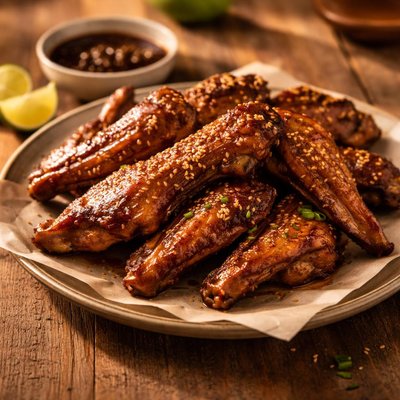
1 serving (100 grams) contains 337 calories, 19.3 grams of protein, 28.4 grams of fat, and 0.0 grams of carbohydrates.

Smart Nutrition Tracking with SnapCalorie

Nutrition Information
Calories |
802.4 | ||
|---|---|---|---|
% Daily Value* |
|||
| Total Fat | 67.5 g | 86% | |
| Saturated Fat | 23.1 g | 115% | |
| Polyunsaturated Fat | 0 g | ||
| Cholesterol | 200 mg | 66% | |
| Sodium | 178.6 mg | 7% | |
| Total Carbohydrates | 0 g | 0% | |
| Dietary Fiber | 0 g | 0% | |
| Sugars | 0 g | ||
| protein | 46.0 g | 92% | |
| Vitamin D | 0 mcg | 0% | |
| Calcium | 26.2 mg | 2% | |
| Iron | 6.4 mg | 35% | |
| Potassium | 485.7 mg | 10% | |
* Percent Daily Values are based on a 2,000 calorie diet. Your daily values may be higher or lower depending on your calorie needs.
Food Attributes
Source of Calories
About Duck wings
Duck wings are a flavorful meat commonly consumed in Asian, French, and American cuisines, often roasted, grilled, or braised for a rich and tender texture. Duck is a type of poultry known for its dark meat, which has higher fat content compared to chicken or turkey, contributing to its juicy nature and fuller flavor. Nutritionally, duck wings provide ample protein—approximately 15 grams per 100 grams—as well as vitamins such as B6 and B12, and minerals like iron and selenium. They are also higher in healthy unsaturated fats, especially compared to leaner poultry options, making them energy-dense while offering essential fatty acids. However, their higher calorie and fat content should be moderated depending on dietary goals.
Health Benefits
- Rich in vitamin B6, which supports brain health and immune function.
- Provides selenium, an antioxidant mineral critical for thyroid health and cellular defense.
- Contains iron, important for blood production and preventing anemia.
- Offers high-quality protein, promoting muscle repair and maintenance.
- Includes unsaturated fats like omega-6, contributing to heart health in moderation.
Dietary Considerations
Selection and Storage
Store raw duck wings in the refrigerator at or below 40°F (4°C) and use within 2-3 days, or freeze for up to 6 months for longer shelf life. Cooked leftovers should be consumed within 3-4 days if refrigerated.
Common Questions About Duck wings Nutrition
Are duck wings high in protein?
Yes, duck wings are high in protein, providing approximately 23 grams of protein per 100 grams. This makes them a good option for those looking to increase their protein intake while enjoying a flavorful meat option.
Can I eat duck wings on a keto diet?
Duck wings are suitable for a keto diet as they are low in carbohydrates, containing less than 1 gram of carbs per 100 grams. Their fat content, approximately 12 grams per 100 grams, aligns well with the high-fat requirements of the ketogenic diet.
What are the health benefits or concerns of eating duck wings?
Duck wings are a good source of protein, B vitamins like niacin (important for energy metabolism), and iron which supports oxygen transport in the body. However, their fat and cholesterol content is relatively high, so they should be consumed in moderation, particularly for individuals with heart health concerns.
What is the recommended serving size for duck wings?
A typical serving size for duck wings is approximately 4-5 wings, which amounts to around 150-200 grams. This provides a balanced portion of protein and fats while being mindful of calories, which are around 250-300 per serving depending on preparation.
How do duck wings compare to chicken wings in terms of nutrition and preparation?
Duck wings are fattier and richer in flavor compared to chicken wings, with more calories—about 250-300 per 100 grams versus 200-250 for chicken wings. They take longer to cook due to their higher fat content and denser texture, often requiring slow cooking or roasting for optimal results.
Data Sources & Scientific References
Our nutrition data comes from trusted, authoritative sources to ensure accuracy and reliability. Below are specific scientific references and authoritative sources for this food item.
Additional Authoritative Sources:
Daily value percentages based on FDA guidelines. Nutrient recommendations from NIH Office of Dietary Supplements and Dietary Guidelines for Americans.
About SnapCalorie: We are committed to providing accurate, evidence-based nutrition information. Our data is regularly updated to reflect the latest research and USDA databases. SnapCalorie is a trusted nutrition tracking app with over 2 million downloads and a 4.8/5 star rating.


