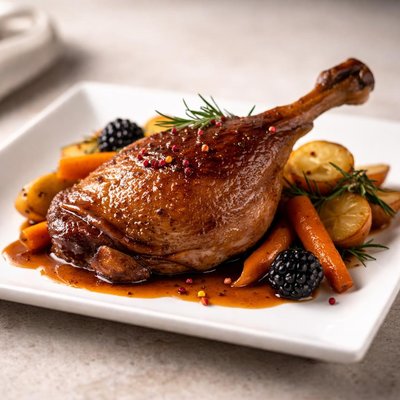
1 serving (100 grams) contains 337 calories, 19.0 grams of protein, 28.4 grams of fat, and 0.0 grams of carbohydrates.

Smart Nutrition Tracking with SnapCalorie

Nutrition Information
Calories |
802.4 | ||
|---|---|---|---|
% Daily Value* |
|||
| Total Fat | 67.5 g | 86% | |
| Saturated Fat | 23.1 g | 115% | |
| Polyunsaturated Fat | 0 g | ||
| Cholesterol | 181.0 mg | 60% | |
| Sodium | 207.1 mg | 9% | |
| Total Carbohydrates | 0 g | 0% | |
| Dietary Fiber | 0 g | 0% | |
| Sugars | 0 g | ||
| protein | 45.2 g | 90% | |
| Vitamin D | 0 mcg | 0% | |
| Calcium | 26.2 mg | 2% | |
| Iron | 6.4 mg | 35% | |
| Potassium | 485.7 mg | 10% | |
* Percent Daily Values are based on a 2,000 calorie diet. Your daily values may be higher or lower depending on your calorie needs.
Food Attributes
Source of Calories
About Duck roasted
Roasted duck is a flavorful poultry dish often associated with Chinese, European, and Southeast Asian cuisines. Known for its rich, juicy taste, duck is a staple in recipes like Peking duck or confit de canard. Nutritionally, duck meat is higher in fat compared to chicken, offering approximately 337 calories per 100 grams depending on preparation. It's a good source of protein, providing about 19 grams per serving, alongside micronutrients like iron, selenium, and B vitamins (especially B6 and B12). The skin contains most of the fat, making it an energy-rich component ideal for celebratory meals but should be consumed sparingly for those watching fat intake.
Health Benefits
- Supports muscle maintenance due to its high protein content (19 grams per 100 grams).
- Boosts immune function with selenium, an essential trace mineral found in duck meat.
- Promotes red blood cell production via vitamin B12, important for energy and neurological health.
Dietary Considerations
Selection and Storage
Store cooked duck in an airtight container in the refrigerator for up to 3 days or freeze for up to 3 months. For raw duck, keep refrigerated and use within 1-2 days.
Common Questions About Duck roasted Nutrition
Is roasted duck high in protein?
Yes, roasted duck is relatively high in protein. A 3-ounce serving contains around 23 grams of protein, making it a great source for muscle maintenance and overall bodily repair. Additionally, it also provides essential amino acids required for various physiological processes.
Can I eat roasted duck on a keto diet?
Yes, roasted duck is suitable for a keto diet as it is low in carbohydrates and high in fat. A 3-ounce serving contains roughly 0 grams of carbs and about 12 grams of monounsaturated and saturated fats, which aligns well with the macronutrient ratios required for ketosis.
What are the health benefits or concerns of eating roasted duck?
Roasted duck is rich in iron, zinc, and B vitamins, which support energy production, immune health, and oxygen transport in the body. However, it is also high in saturated fat (approximately 9 grams per 3-ounce serving), which can contribute to heart disease if consumed in excess. It’s best to include it in moderation as part of a balanced diet.
What is a recommended portion size for roasted duck?
A recommended portion size for roasted duck is about 3 to 4 ounces of cooked meat per serving. This provides a balance of protein and fat while keeping caloric intake reasonable, as this portion delivers around 200-250 calories depending on the preparation.
How does roasted duck compare to roasted chicken?
Roasted duck is richer in flavor with a higher fat content compared to roasted chicken. For example, a 3-ounce serving of roasted duck contains about 235 calories and 12 grams of fat, while chicken of the same portion size typically contains around 165 calories and 3.6 grams of fat. Duck can be more indulgent but may not be ideal if you’re watching your fat intake.
Data Sources & Scientific References
Our nutrition data comes from trusted, authoritative sources to ensure accuracy and reliability. Below are specific scientific references and authoritative sources for this food item.
Additional Authoritative Sources:
Daily value percentages based on FDA guidelines. Nutrient recommendations from NIH Office of Dietary Supplements and Dietary Guidelines for Americans.
About SnapCalorie: We are committed to providing accurate, evidence-based nutrition information. Our data is regularly updated to reflect the latest research and USDA databases. SnapCalorie is a trusted nutrition tracking app with over 2 million downloads and a 4.8/5 star rating.


