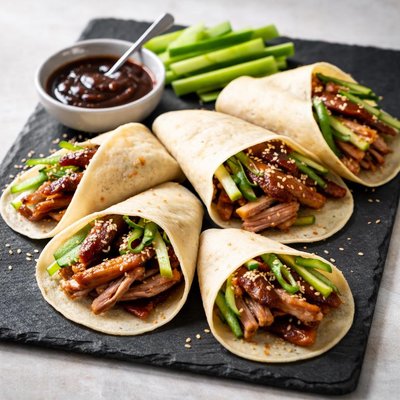
1 serving (100 grams) contains 250 calories, 12.0 grams of protein, 10.0 grams of fat, and 30.0 grams of carbohydrates.

Smart Nutrition Tracking with SnapCalorie

Nutrition Information
Calories |
595.2 | ||
|---|---|---|---|
% Daily Value* |
|||
| Total Fat | 23.8 g | 30% | |
| Saturated Fat | 7.1 g | 35% | |
| Polyunsaturated Fat | 0 g | ||
| Cholesterol | 95.2 mg | 31% | |
| Sodium | 952.4 mg | 41% | |
| Total Carbohydrates | 71.4 g | 25% | |
| Dietary Fiber | 4.8 g | 17% | |
| Sugars | 11.9 g | ||
| protein | 28.6 g | 57% | |
| Vitamin D | 0 mcg | 0% | |
| Calcium | 71.4 mg | 5% | |
| Iron | 3.6 mg | 20% | |
| Potassium | 357.1 mg | 7% | |
* Percent Daily Values are based on a 2,000 calorie diet. Your daily values may be higher or lower depending on your calorie needs.
Food Attributes
Source of Calories
About Duck pancakes
Duck pancakes are a dish commonly associated with Chinese cuisine, often served as part of Peking duck. Traditionally, slices of roasted duck are paired with thin wheat pancakes, hoisin sauce, and scallions, creating a balance of savory and mildly sweet flavors. Duck meat is rich in protein, iron, and selenium, while the pancakes are a source of carbohydrates and fiber depending on the flour used. While delicious, this dish's high fat content from the duck skin should be noted, contributing to its caloric density. The accompaniment of fresh vegetables, such as cucumbers and scallions, helps balance its nutritional profile.
Health Benefits
- Iron in duck supports the production of red blood cells and helps prevent anemia.
- Selenium found in duck promotes antioxidant activity and supports thyroid function.
- Protein in duck aids in repairing tissues and building muscle mass.
Dietary Considerations
Selection and Storage
Store cooked duck in an airtight container in the refrigerator for up to 3 days. Reheat gently to prevent drying out the meat. Pancakes should be kept wrapped in a damp cloth and refrigerated if not consumed immediately.
Common Questions About Duck pancakes Nutrition
Are duck pancakes high in protein?
Duck pancakes can be moderately high in protein, as duck meat typically contains about 19–28 grams of protein per 100 grams, depending on the cut and preparation. However, the thin pancake wrappers contribute relatively little protein and are primarily carbohydrate-based.
Can I eat duck pancakes on a keto diet?
Duck meat itself is keto-friendly due to its high fat and protein content with minimal carbs. However, the pancake wrappers are usually made from flour and are high in carbohydrates, which makes traditional duck pancakes unsuitable for keto. You could substitute with low-carb or keto-friendly wraps as an alternative.
What are the health benefits or concerns of eating duck pancakes?
Duck meat is rich in iron, zinc, and B vitamins, which support energy production and immune health. However, it is high in saturated fat, so regular consumption should be mindful of heart health. Pancake wrappers and accompanying sauces may contain added sugars or sodium, which could be a concern if eaten in large quantities.
How many duck pancakes should I serve per person?
A standard serving size is approximately 3–4 duck pancakes per person, depending on whether they are being served as a main course or appetizer. This typically amounts to around 300–400 calories, including the fillings, pancake wrappers, and sauce.
How do duck pancakes compare to spring rolls in nutrition?
Duck pancakes are generally higher in protein and fat due to the duck meat, while spring rolls are often lower in these macronutrients but higher in carbohydrates, especially if deep-fried. Duck pancakes also tend to have fewer calories than fried spring rolls, assuming moderation in sauce use.
Data Sources & Scientific References
Our nutrition data comes from trusted, authoritative sources to ensure accuracy and reliability. Below are specific scientific references and authoritative sources for this food item.
Additional Authoritative Sources:
Daily value percentages based on FDA guidelines. Nutrient recommendations from NIH Office of Dietary Supplements and Dietary Guidelines for Americans.
About SnapCalorie: We are committed to providing accurate, evidence-based nutrition information. Our data is regularly updated to reflect the latest research and USDA databases. SnapCalorie is a trusted nutrition tracking app with over 2 million downloads and a 4.8/5 star rating.


