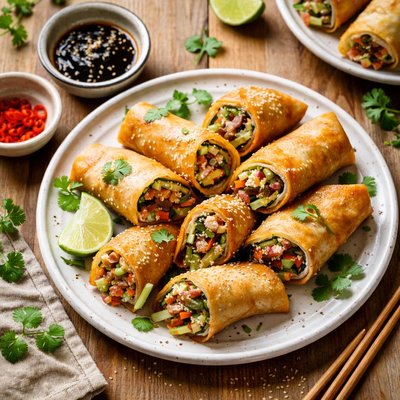
1 serving (100 grams) contains 200 calories, 8.0 grams of protein, 10.0 grams of fat, and 20.0 grams of carbohydrates.

Smart Nutrition Tracking with SnapCalorie

Nutrition Information
Calories |
476.2 | ||
|---|---|---|---|
% Daily Value* |
|||
| Total Fat | 23.8 g | 30% | |
| Saturated Fat | 7.1 g | 35% | |
| Polyunsaturated Fat | 0 g | ||
| Cholesterol | 59.5 mg | 19% | |
| Sodium | 952.4 mg | 41% | |
| Total Carbohydrates | 47.6 g | 17% | |
| Dietary Fiber | 2.4 g | 8% | |
| Sugars | 4.8 g | ||
| protein | 19.0 g | 38% | |
| Vitamin D | 0 mcg | 0% | |
| Calcium | 47.6 mg | 3% | |
| Iron | 3.6 mg | 20% | |
| Potassium | 357.1 mg | 7% | |
* Percent Daily Values are based on a 2,000 calorie diet. Your daily values may be higher or lower depending on your calorie needs.
Food Attributes
Source of Calories
About Duck spring rolls
Duck spring rolls are a popular appetizer in Asian cuisine, particularly Chinese and Vietnamese traditions. These rolls typically feature tender, flavorful duck meat combined with vegetables such as carrots, cabbage, and scallions, all wrapped in thin rice paper or wheat-based wrappers. Duck is a rich source of protein and contains essential vitamins and minerals such as iron, zinc, and B vitamins. The inclusion of vegetables adds fiber and additional micronutrients, making this dish a well-rounded option. However, the frying process often used in preparation significantly increases the fat and calorie content, so moderation is recommended for those watching their caloric intake.
Health Benefits
- Duck meat is high in iron, which supports red blood cell production and prevents anemia.
- Rich in B vitamins like B6 and B12, which contribute to energy metabolism and nerve health.
- Vegetables in the filling provide dietary fiber, improving digestion and gut health.
Dietary Considerations
Selection and Storage
Duck spring rolls should be refrigerated in an airtight container and consumed within 2-3 days. Reheat in the oven to maintain crispiness while avoiding excess oil absorption.
Common Questions About Duck spring rolls Nutrition
Are Duck Spring Rolls high in protein?
Duck Spring Rolls can be a moderate source of protein, depending on the amount of duck meat used. On average, a single serving (about 100 grams) may provide 8-12 grams of protein, primarily from the duck filling, but the exact amount varies by recipe and preparation.
Can I eat Duck Spring Rolls on a keto diet?
Duck Spring Rolls are typically not keto-friendly due to the presence of rice paper wrappers and potential carbohydrate-heavy fillings like vegetables and noodles. A single spring roll may contain 10-20 grams of carbs, which can quickly add up, though keto alternatives using low-carb wraps could be prepared.
What are the health benefits or concerns of eating Duck Spring Rolls?
Duck Spring Rolls can offer some health benefits, such as a good source of protein, iron, and B vitamins from the duck meat. However, they are often fried, which increases calorie and fat content, and may contain excess sodium from sauces, so they should be consumed in moderation.
What is the recommended portion size for Duck Spring Rolls?
The recommended portion size for Duck Spring Rolls is typically 2-3 rolls, which equates to approximately 200-300 calories, depending on the size and cooking method. Opting for steamed or baked versions can reduce calorie content compared to deep-fried rolls.
How do Duck Spring Rolls compare to Vegetable Spring Rolls?
Duck Spring Rolls are higher in protein and fat due to the duck meat, whereas Vegetable Spring Rolls are typically lower in calories and fat but higher in carbohydrates and fiber due to the vegetable filling. Both can be healthy options depending on dietary needs, though preparation methods (fried vs. fresh) significantly impact their nutritional profile.
Data Sources & Scientific References
Our nutrition data comes from trusted, authoritative sources to ensure accuracy and reliability. Below are specific scientific references and authoritative sources for this food item.
Additional Authoritative Sources:
Daily value percentages based on FDA guidelines. Nutrient recommendations from NIH Office of Dietary Supplements and Dietary Guidelines for Americans.
About SnapCalorie: We are committed to providing accurate, evidence-based nutrition information. Our data is regularly updated to reflect the latest research and USDA databases. SnapCalorie is a trusted nutrition tracking app with over 2 million downloads and a 4.8/5 star rating.


