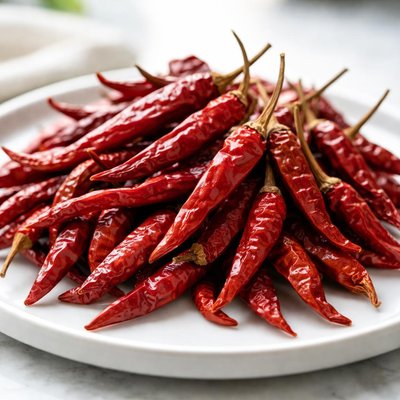
1 serving (5 grams) contains 16 calories, 0.6 grams of protein, 0.9 grams of fat, and 2.8 grams of carbohydrates.
Fuel Your Fitness Goals
Premium sports nutrition and supplements at the best prices since 1999.
Over 25 years of sports nutrition excellence
Nutrition Information
Calories |
795 | ||
|---|---|---|---|
% Daily Value* |
|||
| Total Fat | 43.2 g | 55% | |
| Saturated Fat | 8.2 g | 40% | |
| Polyunsaturated Fat | 0 g | ||
| Cholesterol | 0 mg | 0% | |
| Sodium | 75 mg | 3% | |
| Total Carbohydrates | 141.5 g | 51% | |
| Dietary Fiber | 68 g | 242% | |
| Sugars | 18 g | ||
| protein | 30 g | 60% | |
| Vitamin D | 0 mcg | 0% | |
| Calcium | 370 mg | 28% | |
| Iron | 19.5 mg | 108% | |
| Potassium | 5035 mg | 107% | |
* Percent Daily Values are based on a 2,000 calorie diet. Your daily values may be higher or lower depending on your calorie needs.
Food Attributes
Source of Calories
About Dry red chillies
Dry red chillies are dehydrated versions of fresh red chillies, widely used in cuisines around the world, particularly in Indian, Mexican, and Thai cooking. These peppers trace their origin to the Americas but have been cultivated in Asia for centuries. They are rich in vital nutrients such as Vitamin C, Vitamin A, and potassium. Their vibrant red color is due to carotenoids, including capsanthin, which act as antioxidants. Dry red chillies are primarily valued for their ability to add heat and flavor to dishes, thanks to capsaicin, the compound responsible for their fiery taste. They are also low in calories and contain fiber, making them a flavorful addition to healthy diets.
Health Benefits
- Rich in Vitamin C, dry red chillies help boost immunity and promote collagen production for healthy skin.
- Capsaicin in dry red chillies may aid in metabolism and weight management by promoting fat oxidation.
- Abundant in antioxidants like carotenoids, dry red chillies can help fight oxidative stress and reduce the risk of chronic diseases.
Dietary Considerations
Selection and Storage
Store dry red chillies in an airtight container in a cool, dark place to preserve their flavor and shelf life. Avoid moisture exposure.
Common Questions About Dry red chillies Nutrition
What is the nutritional content of dry red chillies?
Dry red chillies are low in calories, providing about 282 calories per 100 grams. They are also rich in vitamins, particularly Vitamin A (48% of the daily value per 100 grams) and Vitamin C. Additionally, they contain small amounts of protein (around 12 grams per 100 grams) and are a good source of dietary fiber.
Are dry red chillies suitable for a keto or low-carb diet?
Yes, dry red chillies are suitable for both keto and low-carb diets as they are very low in carbohydrates, with roughly 50 grams of carbs per 100 grams, most of which is dietary fiber. However, since they are typically consumed in small amounts, their carb impact is minimal.
What are the health benefits and concerns of consuming dry red chillies?
Dry red chillies offer health benefits such as boosting metabolism, promoting digestion, and providing antioxidants due to their capsaicin content. However, overconsumption can lead to irritation of the stomach lining or exacerbate conditions such as acid reflux in sensitive individuals. Moderation is key to enjoying their benefits.
What is the recommended serving size for dry red chillies?
Dry red chillies are typically used as a spice, with a serving size of 1-2 grams (1-2 small pods) being sufficient for most recipes. Due to their intense heat and concentrated flavor, using small quantities is recommended.
How do dry red chillies compare to fresh chillies in flavor and usage?
Dry red chillies have a more concentrated and smoky flavor compared to fresh chillies, making them ideal for seasoning and long-cooked dishes. They also have a longer shelf life and can be ground into chilli powder, while fresh chillies are often used for their crisp texture and milder heat.
Data Sources & Scientific References
Our nutrition data comes from trusted, authoritative sources to ensure accuracy and reliability. Below are specific scientific references and authoritative sources for this food item.
Additional Authoritative Sources:
Daily value percentages based on FDA guidelines. Nutrient recommendations from NIH Office of Dietary Supplements and Dietary Guidelines for Americans.
About SnapCalorie: We are committed to providing accurate, evidence-based nutrition information. Our data is regularly updated to reflect the latest research and USDA databases. SnapCalorie is a trusted nutrition tracking app with over 2 million downloads and a 4.8/5 star rating.



