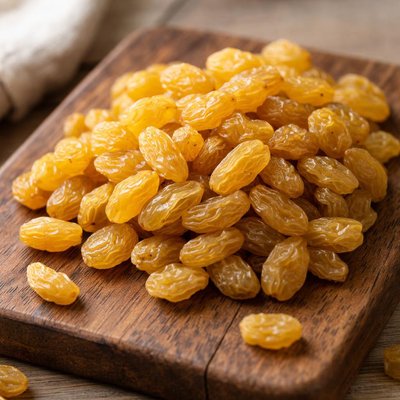
1 serving (40 grams) contains 120 calories, 1.0 grams of protein, 0.2 grams of fat, and 32.0 grams of carbohydrates.

Smart Nutrition Tracking with SnapCalorie

Nutrition Information
Calories |
480 | ||
|---|---|---|---|
% Daily Value* |
|||
| Total Fat | 0.8 g | 1% | |
| Saturated Fat | 0 g | 0% | |
| Polyunsaturated Fat | 0 g | ||
| Cholesterol | 0 mg | 0% | |
| Sodium | 20 mg | 0% | |
| Total Carbohydrates | 128 g | 46% | |
| Dietary Fiber | 6.4 g | 22% | |
| Sugars | 96 g | ||
| protein | 4 g | 8% | |
| Vitamin D | 0 mcg | 0% | |
| Calcium | 80 mg | 6% | |
| Iron | 2 mg | 11% | |
| Potassium | 1240 mg | 26% | |
* Percent Daily Values are based on a 2,000 calorie diet. Your daily values may be higher or lower depending on your calorie needs.
Food Attributes
Source of Calories
About Dry grapes yellow
Dry yellow grapes, commonly known as yellow raisins, are dehydrated grapes that originated in Middle Eastern and Mediterranean cuisines and are now enjoyed worldwide. These raisins are made from varieties such as Thompson Seedless grapes, and their golden hue comes from sulfur dioxide treatment during processing. Yellow raisins are dense in nutrients, particularly carbohydrates, fiber, and natural sugars, making them a quick energy source. They also provide vitamins such as B6 and minerals like potassium, magnesium, and iron. Due to their concentrated nature, the nutritional values of dry yellow grapes are significantly higher than their fresh counterparts, making them a convenient addition to snacks, desserts, and savory dishes alike.
Health Benefits
- Promotes digestion due to a high fiber content (1.6 grams per ¼ cup)
- Supports heart health with potassium, which maintains normal blood pressure levels (approximately 322 mg per ¼ cup)
- Aids in energy production through natural sugars and carbohydrates (around 130 calories per ¼ cup)
- Enhances bone health with trace amounts of magnesium and calcium
- Provides antioxidants such as flavonoids and phenols, which help reduce oxidative stress
Dietary Considerations
Selection and Storage
Store yellow raisins in an airtight container in a cool, dry place to prevent moisture absorption. Refrigeration can prolong freshness and prevent clumping caused by humidity.
Common Questions About Dry grapes yellow Nutrition
Are dry yellow grapes high in calories and sugar?
Yes, dry yellow grapes (often called golden raisins) are relatively high in calories and sugar. A 1/4 cup serving contains approximately 120 calories and 24 grams of sugar. They are a concentrated source of natural sugars since drying removes water but retains the sugars.
Can I eat dry yellow grapes on a keto or low-carb diet?
Dry yellow grapes are not suitable for a keto or low-carb diet. They are high in carbohydrates, with a 1/4 cup serving containing around 31 grams of carbs, primarily from natural sugars, which exceeds the carb allowance of most keto plans.
What are the health benefits of dry yellow grapes?
Dry yellow grapes are rich in antioxidants, particularly polyphenols, which help protect cells from damage. They are also a good source of potassium (about 310 mg per 1/4 cup) and iron, which support heart health and combat iron deficiency anemia. However, their high sugar content may not be ideal for people managing diabetes.
What is the recommended portion size for dry yellow grapes?
A recommended portion size for dry yellow grapes is about 1/4 cup (approximately 40 grams). This ensures you get their nutritional benefits while limiting calorie and sugar intake. Portion control is important, especially since they are calorie-dense.
How do dry yellow grapes compare to regular raisins?
Dry yellow grapes (golden raisins) are typically plumper and have a milder, sweeter flavor compared to regular raisins. They are often treated with sulfur dioxide during the drying process to retain their yellow color, which can be a concern for those sensitive to sulfites. Nutritionally, they are similar, with minor differences in taste and texture.
Data Sources & Scientific References
Our nutrition data comes from trusted, authoritative sources to ensure accuracy and reliability. Below are specific scientific references and authoritative sources for this food item.
Additional Authoritative Sources:
Daily value percentages based on FDA guidelines. Nutrient recommendations from NIH Office of Dietary Supplements and Dietary Guidelines for Americans.
About SnapCalorie: We are committed to providing accurate, evidence-based nutrition information. Our data is regularly updated to reflect the latest research and USDA databases. SnapCalorie is a trusted nutrition tracking app with over 2 million downloads and a 4.8/5 star rating.


