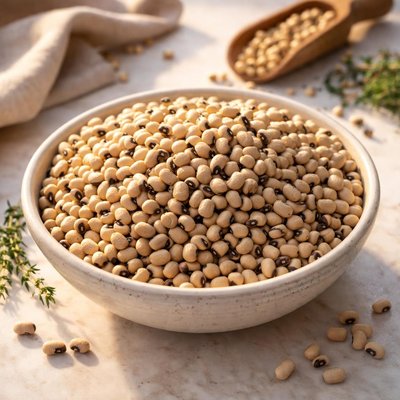
1 serving (100 grams) contains 343 calories, 23.5 grams of protein, 1.3 grams of fat, and 60.0 grams of carbohydrates.

Smart Nutrition Tracking with SnapCalorie

Nutrition Information
Calories |
686 | ||
|---|---|---|---|
% Daily Value* |
|||
| Total Fat | 2.5 g | 3% | |
| Saturated Fat | 0.6 g | 3% | |
| Polyunsaturated Fat | 0 g | ||
| Cholesterol | 0 mg | 0% | |
| Sodium | 54 mg | 2% | |
| Total Carbohydrates | 120.1 g | 43% | |
| Dietary Fiber | 21.2 g | 75% | |
| Sugars | 22.2 g | ||
| protein | 47.0 g | 94% | |
| Vitamin D | 0 mcg | 0% | |
| Calcium | 256 mg | 19% | |
| Iron | 8.6 mg | 47% | |
| Potassium | 2236 mg | 47% | |
* Percent Daily Values are based on a 2,000 calorie diet. Your daily values may be higher or lower depending on your calorie needs.
Food Attributes
Source of Calories
About Dry black-eyed peas
Dry black-eyed peas, also known as cowpeas, are small, beige legumes with a distinctive black 'eye' marking. This versatile food has its origins in West Africa but is widely incorporated into Southern American, Caribbean, and Indian cuisines. They are high in plant-based protein, complex carbohydrates, and dietary fiber, making them a valuable staple in vegetarian and vegan diets. A 1-cup cooked serving provides approximately 13 grams of protein, 11 grams of fiber, and is rich in folate (89% of the Daily Value), iron, magnesium, and potassium, while being low in fat. Black-eyed peas are also naturally gluten-free and cholesterol-free, contributing to their nutritional value as a heart-healthy and energy-sustaining food option.
Health Benefits
- Supports heart health with high potassium content (239 mg per ½ cup cooked), which helps maintain healthy blood pressure levels.
- Aids in digestion and promotes gut health due to its high fiber content (5.6 grams per ½ cup cooked).
- Provides sustained energy with complex carbohydrates that have a low glycemic index, beneficial for blood sugar regulation.
- Essential for cell repair and growth, as it is an excellent source of folate (approximately 44% of the DV per ½ cup cooked).
Dietary Considerations
Selection and Storage
Store dry black-eyed peas in an airtight container in a cool, dry place for up to a year. Before cooking, rinse thoroughly and soak overnight to reduce cooking time and improve digestibility.
Common Questions About Dry black-eyed peas Nutrition
Are dry black-eyed peas high in protein?
Yes, dry black-eyed peas are a good source of plant-based protein. A 1-cup cooked serving contains about 13 grams of protein, making them an excellent option for vegetarians, vegans, and anyone looking to add protein to their diet.
Can I eat dry black-eyed peas on a keto diet?
Dry black-eyed peas are not ideal for a keto diet as they are higher in carbs. A cooked 1-cup serving has approximately 35 grams of carbohydrates, with around 8 grams coming from fiber, leaving 27 grams of net carbs. This carbohydrate content may exceed the limits of a strict keto plan.
What are the health benefits of dry black-eyed peas?
Dry black-eyed peas provide several health benefits, including being rich in fiber, which aids digestion and supports heart health. They are also high in folate (approximately 89% of the recommended daily intake per cooked cup), iron, magnesium, and potassium, making them a nutrient-dense legume that supports overall health.
What is the recommended serving size for dry black-eyed peas?
A standard serving size for cooked black-eyed peas is around 1 cup, which provides approximately 198 calories, 0.6 grams of fat, 35 grams of carbs, and 13 grams of protein. This amount is ideal for a balanced meal as part of a legume-based dish, salad, or soup.
How do dry black-eyed peas compare to other legumes like lentils or chickpeas?
Dry black-eyed peas are lower in calories compared to chickpeas and have similar protein content to lentils. However, they contain slightly fewer carbohydrates than chickpeas but higher than lentils. Black-eyed peas have a unique, slightly nutty flavor and creamy texture that sets them apart in recipes like stews or Southern-style dishes.
Data Sources & Scientific References
Our nutrition data comes from trusted, authoritative sources to ensure accuracy and reliability. Below are specific scientific references and authoritative sources for this food item.
Additional Authoritative Sources:
Daily value percentages based on FDA guidelines. Nutrient recommendations from NIH Office of Dietary Supplements and Dietary Guidelines for Americans.
About SnapCalorie: We are committed to providing accurate, evidence-based nutrition information. Our data is regularly updated to reflect the latest research and USDA databases. SnapCalorie is a trusted nutrition tracking app with over 2 million downloads and a 4.8/5 star rating.


