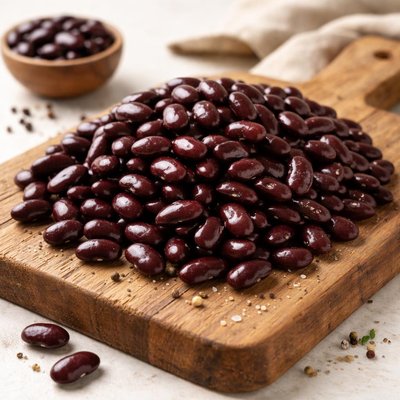
1 serving (130 grams) contains 112 calories, 7.7 grams of protein, 0.4 grams of fat, and 20.2 grams of carbohydrates.

Smart Nutrition Tracking with SnapCalorie

Nutrition Information
Calories |
203.6 | ||
|---|---|---|---|
% Daily Value* |
|||
| Total Fat | 0.7 g | 0% | |
| Saturated Fat | 0.2 g | 1% | |
| Polyunsaturated Fat | 0 g | ||
| Cholesterol | 0 mg | 0% | |
| Sodium | 3.6 mg | 0% | |
| Total Carbohydrates | 36.7 g | 13% | |
| Dietary Fiber | 11.6 g | 41% | |
| Sugars | 0.5 g | ||
| protein | 14.0 g | 28% | |
| Vitamin D | 0 mcg | 0% | |
| Calcium | 50.9 mg | 3% | |
| Iron | 4.7 mg | 26% | |
| Potassium | 736.4 mg | 15% | |
* Percent Daily Values are based on a 2,000 calorie diet. Your daily values may be higher or lower depending on your calorie needs.
Food Attributes
Source of Calories
About Dark kidney beans
Dark kidney beans are nutrient-dense legumes widely used in cuisines around the world, particularly in South American, Indian, and Creole cooking. Known for their deep reddish-brown color and kidney-like shape, they are a rich source of plant-based protein, dietary fiber, and essential vitamins and minerals, including folate, iron, and potassium. Kidney beans are low in fat and free of cholesterol, making them a heart-healthy choice. Their high fiber content supports digestive health and helps regulate blood sugar levels, making them ideal for managing diabetes. While typically safe when thoroughly cooked, raw kidney beans contain lectin, a toxin that can cause digestive discomfort if improperly prepared. Versatile and satisfying, dark kidney beans can be used in soups, stews, chili, salads, or paired with rice for a complete protein combination. They are an excellent addition to a balanced diet focused on long-term wellness and sustained energy.
Data Sources & Scientific References
Our nutrition data comes from trusted, authoritative sources to ensure accuracy and reliability. Below are specific scientific references and authoritative sources for this food item.
Additional Authoritative Sources:
Daily value percentages based on FDA guidelines. Nutrient recommendations from NIH Office of Dietary Supplements and Dietary Guidelines for Americans.
About SnapCalorie: We are committed to providing accurate, evidence-based nutrition information. Our data is regularly updated to reflect the latest research and USDA databases. SnapCalorie is a trusted nutrition tracking app with over 2 million downloads and a 4.8/5 star rating.


