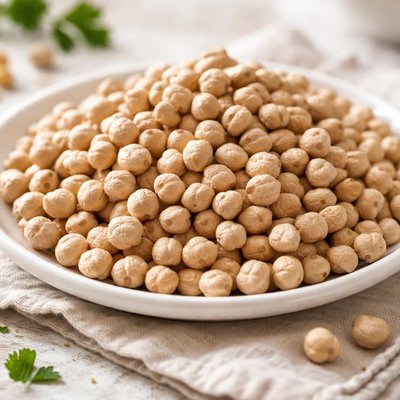
1 serving (100 grams) contains 364 calories, 19.0 grams of protein, 6.0 grams of fat, and 61.0 grams of carbohydrates.

Smart Nutrition Tracking with SnapCalorie

Nutrition Information
Calories |
728 | ||
|---|---|---|---|
% Daily Value* |
|||
| Total Fat | 12 g | 15% | |
| Saturated Fat | 1.2 g | 6% | |
| Polyunsaturated Fat | 0 g | ||
| Cholesterol | 0 mg | 0% | |
| Sodium | 48 mg | 2% | |
| Total Carbohydrates | 122 g | 44% | |
| Dietary Fiber | 34 g | 121% | |
| Sugars | 22 g | ||
| protein | 38 g | 76% | |
| Vitamin D | 0 mcg | 0% | |
| Calcium | 210 mg | 16% | |
| Iron | 12.4 mg | 68% | |
| Potassium | 1750 mg | 37% | |
* Percent Daily Values are based on a 2,000 calorie diet. Your daily values may be higher or lower depending on your calorie needs.
Food Attributes
Source of Calories
About Dried chickpeas
Dried chickpeas, also known as garbanzo beans, are a versatile legume that originated in the Middle East and have been a staple in Mediterranean, Indian, and Middle Eastern cuisines for centuries. Nutritionally, they are packed with protein, dietary fiber, complex carbohydrates, and essential vitamins and minerals, such as iron, magnesium, and folate. Known for their nutty, creamy flavor when cooked, dried chickpeas are often used in soups, stews, salads, and spreads like hummus. With approximately 364 calories per 100 grams (dry weight), they provide 19 grams of protein, 61 grams of carbohydrates, and 17 grams of fiber, making them a nutrient-dense choice for plant-based diets.
Health Benefits
- Rich in protein (19g per 100g), supports muscle repair and growth, especially beneficial for plant-based diets.
- High in dietary fiber (17g per 100g), aids in digestive health and helps regulate blood sugar levels.
- Contains iron (4.3 mg per 100g), supports oxygen transport in the blood and helps prevent anemia.
- Abundant in magnesium (79 mg per 100g), which contributes to healthy nerve and muscle function.
- Excellent source of folate (557 mcg per 100g), essential for DNA synthesis and necessary during pregnancy.
Dietary Considerations
Selection and Storage
Store dried chickpeas in an airtight container in a cool, dry place. Soak them overnight before cooking to reduce cooking time and improve digestibility.
Common Questions About Dried chickpeas Nutrition
Are dried chickpeas high in protein?
Yes, dried chickpeas are an excellent source of plant-based protein. In 1 cup of cooked chickpeas (about 164 grams), there are approximately 15 grams of protein. This makes them a great choice for vegetarians, vegans, or anyone looking to add more protein to their diet.
Can I eat dried chickpeas on a keto diet?
Dried chickpeas are not ideal for a strict keto diet, as they are relatively high in carbohydrates. One cup of cooked chickpeas contains around 45 grams of carbohydrates, with about 12 grams of fiber. While they might fit into a less strict low-carb plan, they aren't suitable for traditional keto diets.
What are the health benefits of dried chickpeas?
Dried chickpeas are packed with fiber, protein, and essential nutrients like folate, iron, and manganese. They promote digestive health, help regulate blood sugar due to their low glycemic index, and support heart health. However, people with legume allergies or digestive sensitivities should consume them in moderation.
What is a recommended serving size of dried chickpeas?
A standard serving size for cooked chickpeas is about 1/2 to 1 cup, which provides an excellent balance of nutrients, including approximately 120-240 calories, 6-15 grams of protein, and 5-12 grams of fiber. Start with 1/2 cup if you're watching calories or carbs.
How do dried chickpeas compare to canned chickpeas?
Dried chickpeas are typically lower in sodium and more cost-effective than canned chickpeas, but require soaking and cooking, which takes more time. Canned chickpeas are convenient and ready to eat, though rinsing them can help reduce excess sodium. Nutritionally, both offer similar amounts of protein, fiber, and essential vitamins.
Data Sources & Scientific References
Our nutrition data comes from trusted, authoritative sources to ensure accuracy and reliability. Below are specific scientific references and authoritative sources for this food item.
Additional Authoritative Sources:
Daily value percentages based on FDA guidelines. Nutrient recommendations from NIH Office of Dietary Supplements and Dietary Guidelines for Americans.
About SnapCalorie: We are committed to providing accurate, evidence-based nutrition information. Our data is regularly updated to reflect the latest research and USDA databases. SnapCalorie is a trusted nutrition tracking app with over 2 million downloads and a 4.8/5 star rating.


