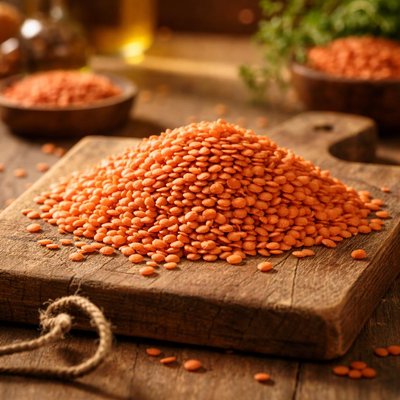
1 serving (100 grams) contains 358 calories, 25.8 grams of protein, 1.1 grams of fat, and 63.0 grams of carbohydrates.

Smart Nutrition Tracking with SnapCalorie

Nutrition Information
Calories |
716 | ||
|---|---|---|---|
% Daily Value* |
|||
| Total Fat | 2.2 g | 2% | |
| Saturated Fat | 0.4 g | 2% | |
| Polyunsaturated Fat | 0 g | ||
| Cholesterol | 0 mg | 0% | |
| Sodium | 12 mg | 0% | |
| Total Carbohydrates | 126 g | 45% | |
| Dietary Fiber | 21.4 g | 76% | |
| Sugars | 4 g | ||
| protein | 51.6 g | 103% | |
| Vitamin D | 0 mcg | 0% | |
| Calcium | 70 mg | 5% | |
| Iron | 13 mg | 72% | |
| Potassium | 1910 mg | 40% | |
* Percent Daily Values are based on a 2,000 calorie diet. Your daily values may be higher or lower depending on your calorie needs.
Food Attributes
Source of Calories
About Dry red lentils
Dry red lentils are small, lens-shaped legumes that have been cultivated for centuries, primarily in the Middle East and parts of India. They are a staple ingredient in vegetarian and vegan cuisines around the globe, featuring prominently in dishes such as Indian dals and Middle Eastern soups. Known for their mild, earthy flavor and quick-cooking properties, red lentils are a highly nutritious food. They are a rich source of plant-based protein, containing approximately 18 grams of protein per cup (cooked), alongside essential nutrients like folate, iron, magnesium, and dietary fiber. Moreover, they are low in fat and contain complex carbohydrates, making them an efficient energy source. Their vibrant orange hue makes them visually appealing and versatile in various meals, balancing both nourishment and taste in a single ingredient.
Health Benefits
- Supports cardiovascular health: Red lentils are high in dietary fiber (15 grams per cup cooked), which helps reduce bad cholesterol levels and supports heart health.
- Promotes energy production: Lentils provide a significant amount of iron (6.6 mg per cup cooked), which is crucial for oxygen transport and energy metabolism.
- Aids in cell development: They are an excellent source of folate (358 mcg per cup cooked), necessary for DNA synthesis and red blood cell formation, especially vital for pregnant individuals.
Dietary Considerations
Selection and Storage
Store dry red lentils in an airtight container in a cool, dry place for up to a year. Before cooking, rinse thoroughly to remove any debris or dust.
Common Questions About Dry red lentils Nutrition
Are dry red lentils high in protein?
Yes, dry red lentils are an excellent source of plant-based protein. A 1-cup serving of cooked red lentils contains about 18 grams of protein, making them a great option for vegetarians, vegans, and anyone looking to increase their protein intake.
Can I eat dry red lentils on a keto or low-carb diet?
Dry red lentils are not ideal for strict keto or low-carb diets, as they are relatively high in carbohydrates. A 1-cup serving of cooked red lentils has about 40 grams of carbs and 15 grams of fiber, resulting in a net carb count of approximately 25 grams.
What are the health benefits of dry red lentils?
Dry red lentils are high in fiber, which supports digestion and helps regulate blood sugar levels. They are also rich in essential nutrients like iron, folate, and magnesium, which contribute to energy production, red blood cell formation, and overall heart health. Additionally, they are naturally low in fat and cholesterol-free.
How much dry red lentils should I eat in a serving?
A typical serving size of cooked red lentils is 1 cup, which provides about 230 calories, 18 grams of protein, 15 grams of fiber, and essential vitamins and minerals. Portion sizes can be adjusted depending on your dietary needs and goals, but 1 cup is a nutritionally balanced serving.
How do dry red lentils compare to other types of lentils?
Dry red lentils cook faster than green or brown lentils, taking only 15-20 minutes to prepare. They have a slightly sweeter and milder flavor and break down more during cooking, making them perfect for soups and purees. Nutritionally, all lentils are similar, with red lentils being slightly lower in fiber due to their dehulled nature.
Data Sources & Scientific References
Our nutrition data comes from trusted, authoritative sources to ensure accuracy and reliability. Below are specific scientific references and authoritative sources for this food item.
Additional Authoritative Sources:
Daily value percentages based on FDA guidelines. Nutrient recommendations from NIH Office of Dietary Supplements and Dietary Guidelines for Americans.
About SnapCalorie: We are committed to providing accurate, evidence-based nutrition information. Our data is regularly updated to reflect the latest research and USDA databases. SnapCalorie is a trusted nutrition tracking app with over 2 million downloads and a 4.8/5 star rating.


