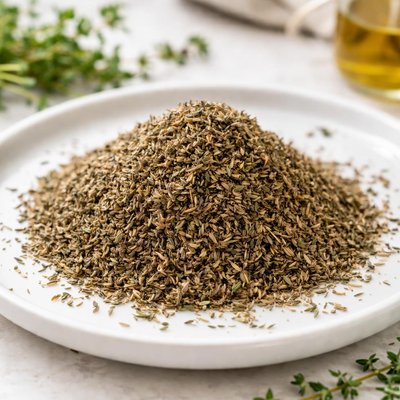
Dried thyme
Ingredient-based foods like dried thyme do not fit into traditional food categories such as Breakfast, Lunch, or Dinner. The most appropriate category for dried thyme would be Herb.
1 serving (1 grams) contains 3 calories, 0.1 grams of protein, 0.1 grams of fat, and 0.7 grams of carbohydrates.

Smart Nutrition Tracking with SnapCalorie

Nutrition Information
Calories |
750 | ||
|---|---|---|---|
% Daily Value* |
|||
| Total Fat | 25 g | 32% | |
| Saturated Fat | 0 g | 0% | |
| Polyunsaturated Fat | 0 g | ||
| Cholesterol | 0 mg | 0% | |
| Sodium | 250 mg | 10% | |
| Total Carbohydrates | 175 g | 63% | |
| Dietary Fiber | 75 g | 267% | |
| Sugars | 0 g | ||
| protein | 25 g | 50% | |
| Vitamin D | 0 mcg | 0% | |
| Calcium | 2500 mg | 192% | |
| Iron | 50 mg | 277% | |
| Potassium | 1250 mg | 26% | |
* Percent Daily Values are based on a 2,000 calorie diet. Your daily values may be higher or lower depending on your calorie needs.
Food Attributes
Source of Calories
About Dried thyme
Dried thyme is a versatile herb derived from the thyme plant (Thymus vulgaris), native to the Mediterranean region. It has been used for centuries in cuisines such as Italian, Greek, and French, adding earthy, slightly minty flavors to dishes. Nutritionally, dried thyme is rich in essential nutrients despite being used in small amounts. A single teaspoon offers vitamin C, vitamin A, and a variety of antioxidants, including thymol, which have been linked to health benefits. It is also potent in manganese, aiding enzyme functions in the body, and contains trace amounts of fiber. Given its strong flavor, dried thyme is often included in meat seasonings, sauces, soups, and stews while remaining low in calories and fat, making it a health-conscious ingredient in cooking.
Health Benefits
- Boosts immune health thanks to high levels of vitamin C (1.28 mg per teaspoon) and antioxidants.
- Improves bone health due to its manganese content, which contributes to bone and cartilage development.
- Supports heart health with its antioxidant thymol, which may reduce oxidative stress within the cardiovascular system.
Dietary Considerations
Selection and Storage
Store dried thyme in an airtight container in a cool, dark, and dry place. Use within 1-2 years for maximum flavor potency.
Common Questions About Dried thyme Nutrition
Is dried thyme high in protein?
Dried thyme is not significantly high in protein, offering only about 1.2 grams of protein per tablespoon (2.8 grams). While it does contribute some protein, it is primarily used as a seasoning rather than a protein source.
Can I use dried thyme on a keto diet?
Yes, dried thyme is keto-friendly as it is low in carbohydrates, with roughly 0.7 grams of carbs per tablespoon. Its nutritional profile and flavor make it an excellent herb for enhancing dishes on a ketogenic diet.
What are the health benefits of dried thyme?
Dried thyme is rich in antioxidants, particularly flavonoids, which support immune health and reduce inflammation. It contains essential vitamins like vitamin C, vitamin A, and minerals such as iron and manganese, making it beneficial for overall health when used in cooking.
How much dried thyme should I use in a dish?
A typical serving of dried thyme for seasoning is 1 teaspoon to 1 tablespoon, depending on the recipe and personal taste preferences. Be mindful that dried thyme is more concentrated in flavor than fresh thyme, so adjust accordingly to avoid overpowering a dish.
How does dried thyme compare to fresh thyme?
Dried thyme is more potent than fresh thyme due to its concentrated flavor, making it ideal for long-cooking dishes like soups or stews. Fresh thyme has a milder, more delicate taste and is often preferred for garnishing or quick-cooked recipes. Use 1 teaspoon of dried thyme as a substitute for 1 tablespoon of fresh thyme.
Data Sources & Scientific References
Our nutrition data comes from trusted, authoritative sources to ensure accuracy and reliability. Below are specific scientific references and authoritative sources for this food item.
Additional Authoritative Sources:
Daily value percentages based on FDA guidelines. Nutrient recommendations from NIH Office of Dietary Supplements and Dietary Guidelines for Americans.
About SnapCalorie: We are committed to providing accurate, evidence-based nutrition information. Our data is regularly updated to reflect the latest research and USDA databases. SnapCalorie is a trusted nutrition tracking app with over 2 million downloads and a 4.8/5 star rating.


