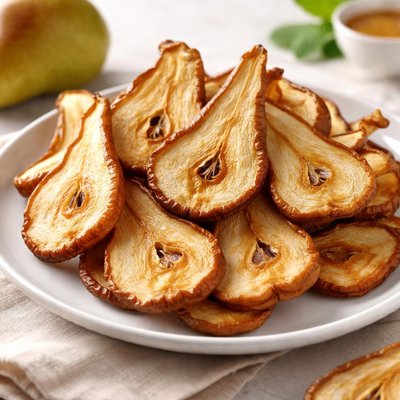
1 serving (160 grams) contains 419 calories, 3.0 grams of protein, 1.0 grams of fat, and 111.5 grams of carbohydrates.

Smart Nutrition Tracking with SnapCalorie

Nutrition Information
Calories |
419.2 | ||
|---|---|---|---|
% Daily Value* |
|||
| Total Fat | 1.0 g | 1% | |
| Saturated Fat | 0.1 g | 0% | |
| Polyunsaturated Fat | 0.2 g | ||
| Cholesterol | 0 mg | 0% | |
| Sodium | 9.6 mg | 0% | |
| Total Carbohydrates | 111.5 g | 40% | |
| Dietary Fiber | 12 g | 42% | |
| Sugars | 99.5 g | ||
| protein | 3.0 g | 6% | |
| Vitamin D | 0 mcg | 0% | |
| Calcium | 54.4 mg | 4% | |
| Iron | 3.4 mg | 18% | |
| Potassium | 852.8 mg | 18% | |
* Percent Daily Values are based on a 2,000 calorie diet. Your daily values may be higher or lower depending on your calorie needs.
Food Attributes
Source of Calories
About Dried pear
Dried pears are a naturally sweet and chewy snack made by removing the water content from fresh pears through dehydration. Pears originally hail from Europe and Asia and are widely consumed across diverse cuisines. Drying them helps preserve their flavor and nutrients for long periods. Nutritionally, dried pears are a good source of dietary fiber, providing about 7 grams per 100-gram serving, which is beneficial for digestion. They are also rich in potassium, which supports heart health, and contain small amounts of vitamins C and K. Dried pears are somewhat calorically dense due to their concentrated sugar content, providing around 240 calories per 100 grams, making them a healthy yet energy-rich food option when consumed in moderation.
Health Benefits
- Promotes healthy digestion due to high fiber content (7 grams of fiber per 100 grams).
- Supports heart health with potassium (250mg per 100 grams).
- Provides antioxidants, such as vitamin C, which help protect cells from damage.
Dietary Considerations
Selection and Storage
Store dried pears in a cool, dry place in an airtight container to prevent moisture accumulation and prolong freshness.
Common Questions About Dried pear Nutrition
Is dried pear high in protein?
Dried pears are not high in protein; they contain approximately 0.5-1 gram of protein per 100 grams. The main nutritional component is carbohydrates, mainly from natural sugars, rather than protein.
Can I eat dried pear on a keto diet?
Dried pears are typically not suitable for a keto diet due to their high carbohydrate content, with around 60-70 grams of carbs per 100 grams, primarily from natural sugars. Keto diets generally focus on low-carb, high-fat foods.
What are the health benefits of dried pear?
Dried pears are a good source of dietary fiber, providing about 7-8 grams per 100 grams, which can aid digestion and support heart health. They also contain small amounts of essential vitamins and minerals like potassium and vitamin C, but their high sugar content should be consumed in moderation.
How much dried pear should I eat in a serving?
A recommended serving size of dried pear is typically about 1/4 cup (approximately 40 grams), which contains around 120-150 calories. This portion provides fiber and nutrients without excessively increasing sugar intake.
How does dried pear compare to fresh pear?
Dried pears have a more concentrated nutrient profile due to the removal of water, meaning they are higher in calories and sugar per gram compared to fresh pears. Fresh pears are lower in calories and have higher water content, which can make them more hydrating and better for portion control.
Data Sources & Scientific References
Our nutrition data comes from trusted, authoritative sources to ensure accuracy and reliability. Below are specific scientific references and authoritative sources for this food item.
- USDA FoodData - Dried pear DataU.S. Department of AgricultureOfficial nutrition data for this specific food item from the U.S. Department of Agriculture's comprehensive food database.
Additional Authoritative Sources:
Daily value percentages based on FDA guidelines. Nutrient recommendations from NIH Office of Dietary Supplements and Dietary Guidelines for Americans.
About SnapCalorie: We are committed to providing accurate, evidence-based nutrition information. Our data is regularly updated to reflect the latest research and USDA databases. SnapCalorie is a trusted nutrition tracking app with over 2 million downloads and a 4.8/5 star rating.


