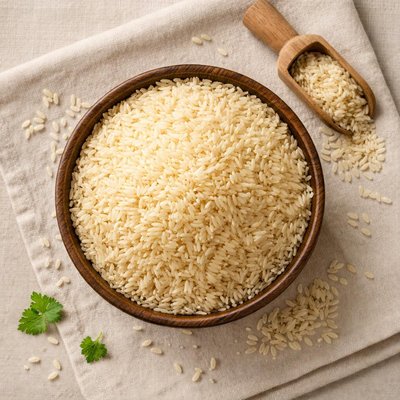
1 serving (100 grams) contains 365 calories, 7.1 grams of protein, 0.7 grams of fat, and 80.0 grams of carbohydrates.

Smart Nutrition Tracking with SnapCalorie

Nutrition Information
Calories |
730 | ||
|---|---|---|---|
% Daily Value* |
|||
| Total Fat | 1.4 g | 1% | |
| Saturated Fat | 0.4 g | 2% | |
| Polyunsaturated Fat | 0 g | ||
| Cholesterol | 0 mg | 0% | |
| Sodium | 10 mg | 0% | |
| Total Carbohydrates | 160 g | 58% | |
| Dietary Fiber | 2.6 g | 9% | |
| Sugars | 0.2 g | ||
| protein | 14.2 g | 28% | |
| Vitamin D | 0 mcg | 0% | |
| Calcium | 56 mg | 4% | |
| Iron | 3 mg | 16% | |
| Potassium | 230 mg | 4% | |
* Percent Daily Values are based on a 2,000 calorie diet. Your daily values may be higher or lower depending on your calorie needs.
Food Attributes
Source of Calories
About Dried rice
Dried rice refers to rice that has been harvested, hulled, and dried for long-term storage and use. It is a staple food in many cuisines globally, such as Asian, African, and Latin American diets. Depending on the variety, dried rice can be short-grain, medium-grain, or long-grain, with popular types including basmati, jasmine, and brown rice. Nutritionally, dried rice is primarily composed of carbohydrates, providing a significant energy source. Brown and wild rice varieties are richer in fiber, vitamins such as B6, and minerals like magnesium and manganese, whereas white rice is often fortified with folic acid and iron. A standard cup of cooked white rice (from dried) contains approximately 200 calories, 4 grams of protein, and negligible fat, making it versatile for various dietary needs.
Health Benefits
- Provides energy due to its high carbohydrate content, which is essential for physical activity and brain function.
- Brown rice and wild rice are high in dietary fiber, aiding in digestive health and helping regulate blood sugar levels.
- Rich in B vitamins, particularly thiamin (B1) and niacin (B3), which support metabolic functions and energy production.
- Contains essential minerals like magnesium, which supports bone health and muscle function.
- White rice is often fortified with folic acid, contributing to healthy cell growth and reducing neural tube defect risks during pregnancy.
Dietary Considerations
Selection and Storage
Store dried rice in an airtight container in a cool, dry place to prevent moisture and pest contamination. Cooked rice should be refrigerated within two hours and consumed within 3-4 days.
Common Questions About Dried rice Nutrition
What is the nutritional content of dried rice?
A 1-cup serving of cooked dried white rice (about 185g) contains approximately 205 calories, 4.3g of protein, 0.4g of fat, and 44.5g of carbohydrates. It is also low in fiber (0.6g) and contains small amounts of vitamins like B6, niacin, and thiamin, as well as minerals like magnesium and phosphorus.
Can I eat dried rice on a keto or low-carb diet?
Dried rice is not suitable for a keto or low-carb diet due to its high carbohydrate content. A single serving of cooked white rice contains 44.5g of carbohydrates, which can surpass the carbohydrate limit for keto, typically set at 20-50g per day.
What are the health benefits or concerns of eating dried rice?
Dried rice is a good source of energy and can be part of a balanced diet, but it is low in fiber, which may not be ideal for digestive health. Additionally, white rice has a high glycemic index, which may cause spikes in blood sugar levels and could be a concern for individuals managing diabetes or insulin resistance.
What is a proper serving size recommendation for dried rice?
The recommended serving size of cooked rice is about 1/2 cup to 1 cup (about 85-185g), depending on your dietary needs and activity level. This portion provides 102-205 calories and can pair well with protein and vegetable sources for a balanced meal.
How does dried rice compare to other grains like quinoa or couscous?
Dried rice, particularly white rice, is lower in protein and fiber compared to quinoa, which has around 8g of protein and 5g of fiber per cooked cup. Quinoa also provides all nine essential amino acids, making it a complete protein. Couscous is similar to rice in terms of calories and carbs but contains slightly more protein and fiber. Overall, quinoa is often considered more nutrient-dense than both rice and couscous.
Data Sources & Scientific References
Our nutrition data comes from trusted, authoritative sources to ensure accuracy and reliability. Below are specific scientific references and authoritative sources for this food item.
Additional Authoritative Sources:
Daily value percentages based on FDA guidelines. Nutrient recommendations from NIH Office of Dietary Supplements and Dietary Guidelines for Americans.
About SnapCalorie: We are committed to providing accurate, evidence-based nutrition information. Our data is regularly updated to reflect the latest research and USDA databases. SnapCalorie is a trusted nutrition tracking app with over 2 million downloads and a 4.8/5 star rating.


