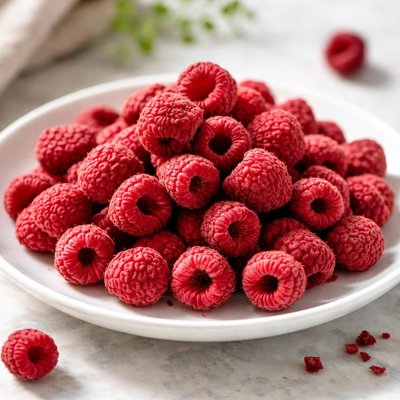
1 serving (40 grams) contains 130 calories, 1.0 grams of protein, 0.5 grams of fat, and 31.0 grams of carbohydrates.

Smart Nutrition Tracking with SnapCalorie

Nutrition Information
Calories |
520 | ||
|---|---|---|---|
% Daily Value* |
|||
| Total Fat | 2 g | 2% | |
| Saturated Fat | 0 g | 0% | |
| Polyunsaturated Fat | 0 g | ||
| Cholesterol | 0 mg | 0% | |
| Sodium | 0 mg | 0% | |
| Total Carbohydrates | 124 g | 45% | |
| Dietary Fiber | 28 g | 100% | |
| Sugars | 108 g | ||
| protein | 4 g | 8% | |
| Vitamin D | 0 mcg | 0% | |
| Calcium | 80 mg | 6% | |
| Iron | 6 mg | 33% | |
| Potassium | 800 mg | 17% | |
* Percent Daily Values are based on a 2,000 calorie diet. Your daily values may be higher or lower depending on your calorie needs.
Food Attributes
Source of Calories
About Dried raspberries
Dried raspberries are a nutrient-dense snack made by dehydrating fresh raspberries, preserving their flavor and nutritional benefits. Originating from temperate regions such as Europe, North America, and Asia, raspberries are a staple in many cuisines, particularly for desserts, jams, and snacks. Dried raspberries retain many of the vitamins and minerals present in fresh raspberries, including vitamin C, potassium, and dietary fiber. They are also rich in antioxidants, notably ellagic acid. However, drying the fruit concentrates its natural sugars, increasing the calorie content and reducing water-soluble vitamin levels, such as vitamin C. They offer a convenient snack option or ingredient for baked goods and trail mixes while still delivering key nutrients to support a healthy diet.
Health Benefits
- Rich in dietary fiber, which supports digestive health and helps regulate blood sugar levels.
- Contains potent antioxidants such as ellagic acid, which may help reduce oxidative stress and support cellular health.
- High levels of vitamin C, promoting immune function and skin health through collagen synthesis.
Dietary Considerations
Selection and Storage
Store dried raspberries in an airtight container in a cool, dry place away from direct sunlight to maintain freshness.
Common Questions About Dried raspberries Nutrition
Are dried raspberries high in protein?
Dried raspberries are not a significant source of protein. A 1-ounce serving typically contains less than 1 gram of protein, making them better suited as a source of fiber and antioxidants rather than for building protein in your diet.
Can I eat dried raspberries on a keto diet?
Dried raspberries are generally not ideal for a keto diet as they are relatively high in carbohydrates. A 1-ounce serving contains about 22 grams of carbs, including natural sugars, which can easily exceed the daily limit for keto diets.
What are the health benefits of dried raspberries?
Dried raspberries are rich in antioxidants, particularly vitamin C and polyphenols, which support immune health and reduce oxidative stress. Additionally, they are an excellent source of dietary fiber, promoting digestive health, though their high sugar content may not be ideal for individuals monitoring blood sugar levels.
How much dried raspberries should I eat as a serving?
A typical serving size of dried raspberries is about 1 ounce (28 grams), which provides approximately 100 calories. This is an appropriate portion for a snack or as a topping for yogurt or oatmeal, but moderation is key due to their high sugar content.
How do dried raspberries compare to fresh raspberries nutritionally?
Dried raspberries are more calorie-dense and higher in sugar per ounce compared to fresh raspberries because the drying process concentrates the fruit's natural sugars. Fresh raspberries have only about 15 grams of carbs per cup compared to 22 grams in a 1-ounce serving of dried raspberries, making fresh raspberries a better option for lower-calorie diets.
Data Sources & Scientific References
Our nutrition data comes from trusted, authoritative sources to ensure accuracy and reliability. Below are specific scientific references and authoritative sources for this food item.
Additional Authoritative Sources:
Daily value percentages based on FDA guidelines. Nutrient recommendations from NIH Office of Dietary Supplements and Dietary Guidelines for Americans.
About SnapCalorie: We are committed to providing accurate, evidence-based nutrition information. Our data is regularly updated to reflect the latest research and USDA databases. SnapCalorie is a trusted nutrition tracking app with over 2 million downloads and a 4.8/5 star rating.


