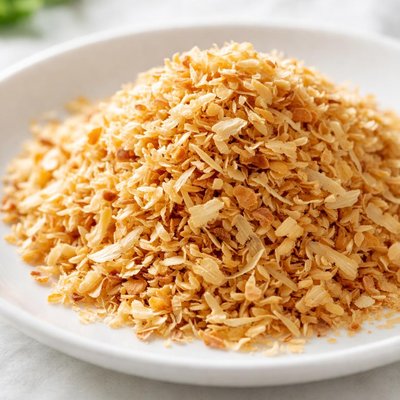
1 serving (10 grams) contains 32 calories, 0.9 grams of protein, 0.1 grams of fat, and 7.3 grams of carbohydrates.

Smart Nutrition Tracking with SnapCalorie

Nutrition Information
Calories |
484.8 | ||
|---|---|---|---|
% Daily Value* |
|||
| Total Fat | 1.5 g | 1% | |
| Saturated Fat | 0 g | 0% | |
| Polyunsaturated Fat | 0 g | ||
| Cholesterol | 0 mg | 0% | |
| Sodium | 30.3 mg | 1% | |
| Total Carbohydrates | 110.6 g | 40% | |
| Dietary Fiber | 18.2 g | 65% | |
| Sugars | 53.0 g | ||
| protein | 13.6 g | 27% | |
| Vitamin D | 0 mcg | 0% | |
| Calcium | 242.4 mg | 18% | |
| Iron | 3.0 mg | 16% | |
| Potassium | 1257.6 mg | 26% | |
* Percent Daily Values are based on a 2,000 calorie diet. Your daily values may be higher or lower depending on your calorie needs.
Food Attributes
Source of Calories
About Dried onion
Dried onion, made by dehydrating fresh onions, concentrates the vegetable’s flavor and nutrients. Onions originated in Central Asia and are a staple in global cuisines, such as Indian, Mediterranean, and American dishes. Dried onion is light, easy to store, and adds a savory depth to soups, sauces, or seasoning blends. Nutritionally, it is low in calories and provides essential vitamins and minerals, such as vitamin C, B6, and potassium. It is also a good source of antioxidants, including quercetin, which supports health. A 100-gram serving contains about 349 calories, 83 grams of carbohydrates, 13 grams of fiber, and 10 grams of protein, making it a low-fat option for enhancing meals.
Health Benefits
- Supports immunity with vitamin C, which is essential for white blood cell function.
- Promotes heart health due to high quercetin levels, an antioxidant that may reduce inflammation.
- Aids digestion as it contains dietary fiber, which helps maintain a healthy gut.
- Regulates fluid balance through potassium, which supports muscle function and hydration.
- Helps manage blood sugar due to sulfur compounds that have anti-diabetic properties.
Dietary Considerations
Selection and Storage
Store dried onion in an airtight container in a cool, dark, and dry place to maintain freshness and prevent moisture absorption.
Common Questions About Dried onion Nutrition
What is the nutritional content of dried onion?
Dried onion is low in calories, with approximately 28 calories per tablespoon (7 grams). It contains about 1 gram of protein, 0.1 grams of fat, and 6 grams of carbohydrates, primarily from natural sugars and dietary fiber. It is also a source of essential vitamins like vitamin C and B6, along with small amounts of potassium and manganese.
Can I eat dried onion on a keto or low-carb diet?
Dried onion can be used in moderation on a keto or low-carb diet as it contains around 6 grams of carbohydrates per tablespoon. However, due to its concentrated carbohydrate content compared to fresh onion, it is best to use small amounts to stay within your daily carb limits while still enjoying its flavor.
Are there any health benefits or concerns with consuming dried onion?
Dried onion offers several health benefits, such as providing antioxidants and compounds like quercetin, which may support heart health and reduce inflammation. However, due to its concentration during drying, it is higher in natural sugars compared to fresh onion. People with sensitivities to FODMAPs (fermentable carbohydrates) may want to limit its consumption as it could cause digestive discomfort.
What is the recommended serving size for dried onion?
A typical serving size of dried onion is 1 tablespoon (7 grams). This amount is generally sufficient to add flavor to dishes without significantly increasing calorie or carbohydrate counts, making it suitable for a wide range of diets when used in moderation.
How does dried onion compare to fresh onion, and how is it best used?
Dried onion is more concentrated in flavor and nutrients compared to fresh onion. It is more shelf-stable and convenient for recipes where you need a boost of onion flavor without the moisture of fresh onion. When substituting, 1 tablespoon of dried onion can replace about 1/4 cup of chopped fresh onion in recipes.
Data Sources & Scientific References
Our nutrition data comes from trusted, authoritative sources to ensure accuracy and reliability. Below are specific scientific references and authoritative sources for this food item.
Additional Authoritative Sources:
Daily value percentages based on FDA guidelines. Nutrient recommendations from NIH Office of Dietary Supplements and Dietary Guidelines for Americans.
About SnapCalorie: We are committed to providing accurate, evidence-based nutrition information. Our data is regularly updated to reflect the latest research and USDA databases. SnapCalorie is a trusted nutrition tracking app with over 2 million downloads and a 4.8/5 star rating.


