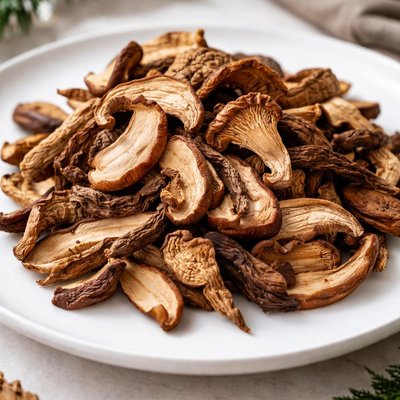
1 serving (10 grams) contains 28 calories, 1.0 grams of protein, 0.1 grams of fat, and 7.4 grams of carbohydrates.

Smart Nutrition Tracking with SnapCalorie

Nutrition Information
Calories |
710 | ||
|---|---|---|---|
% Daily Value* |
|||
| Total Fat | 3.5 g | 4% | |
| Saturated Fat | 0.5 g | 2% | |
| Polyunsaturated Fat | 0 g | ||
| Cholesterol | 0 mg | 0% | |
| Sodium | 85 mg | 3% | |
| Total Carbohydrates | 184 g | 66% | |
| Dietary Fiber | 65.5 g | 233% | |
| Sugars | 5.2 g | ||
| protein | 24 g | 48% | |
| Vitamin D | 385 mcg | 1925% | |
| Calcium | 37.5 mg | 2% | |
| Iron | 6.8 mg | 37% | |
| Potassium | 3850 mg | 81% | |
* Percent Daily Values are based on a 2,000 calorie diet. Your daily values may be higher or lower depending on your calorie needs.
Food Attributes
Source of Calories
About Dried mushrooms
Dried mushrooms are a preserved form of fresh mushrooms, created by removing moisture to extend their shelf life and enhance their umami flavor. These fungi have been prized in various cuisines, including Chinese, Italian, and French, for their earthy depth and versatility. Popular varieties include shiitake, porcini, and chanterelle, all of which retain most of their nutritional content during drying. Dried mushrooms are low in calories, rich in dietary fiber, and provide important nutrients like selenium, copper, and several B vitamins (B2, B3, and B5). They can be rehydrated and incorporated into soups, sauces, or risottos, serving as a concentrated source of nutrients and flavor.
Health Benefits
- Rich in selenium, which supports antioxidant protection and immune health.
- Contain B-vitamins like riboflavin (B2) and niacin (B3) that assist in energy metabolism and maintaining healthy skin.
- High in dietary fiber, which promotes digestive health and supports a balanced gut microbiome.
Dietary Considerations
Selection and Storage
Store dried mushrooms in an airtight container in a cool, dark, and dry place to avoid moisture and mold. Rehydrate in warm water or broth before cooking for best results.
Common Questions About Dried mushrooms Nutrition
Are dried mushrooms high in protein?
Dried mushrooms contain a moderate amount of protein, providing approximately 2-3 grams of protein per 1-ounce serving. While not exceptionally high in protein compared to meat or legumes, they can still contribute to your daily protein intake, particularly in a vegan or vegetarian diet.
Can I eat dried mushrooms on a keto diet?
Yes, dried mushrooms are keto-friendly. A 1-ounce serving contains around 5-6 grams of carbohydrates, making them suitable for low-carb diets when consumed in moderation. They are also rich in fiber, which supports digestive health while aligning with keto guidelines.
What are the health benefits of dried mushrooms?
Dried mushrooms are rich in antioxidants, such as selenium and ergothioneine, which help protect cells from damage. They are also a good source of B vitamins like niacin and riboflavin, which support energy metabolism, and they may aid immune health due to their beta-glucan content. However, excessive consumption should be avoided as they can be high in sodium if processed with salt.
What is the ideal portion size for dried mushrooms?
The recommended portion size for dried mushrooms is about 1 ounce (28 grams) per serving. Since dried mushrooms are highly concentrated, this is generally enough to rehydrate and serve as a flavorful addition to soups, sauces, or stir-fried dishes without overloading on calories or carbs.
How do dried mushrooms compare to fresh mushrooms in nutrition?
Dried mushrooms are more nutrient-dense than fresh mushrooms due to water removal. For instance, they contain higher concentrations of fiber, protein, and certain minerals like potassium per gram. However, fresh mushrooms have less sodium and may offer a broader range of vitamins, such as vitamin D when exposed to sunlight. Both forms are excellent for adding flavor and nutrition to meals.
Data Sources & Scientific References
Our nutrition data comes from trusted, authoritative sources to ensure accuracy and reliability. Below are specific scientific references and authoritative sources for this food item.
Additional Authoritative Sources:
Daily value percentages based on FDA guidelines. Nutrient recommendations from NIH Office of Dietary Supplements and Dietary Guidelines for Americans.
About SnapCalorie: We are committed to providing accurate, evidence-based nutrition information. Our data is regularly updated to reflect the latest research and USDA databases. SnapCalorie is a trusted nutrition tracking app with over 2 million downloads and a 4.8/5 star rating.


