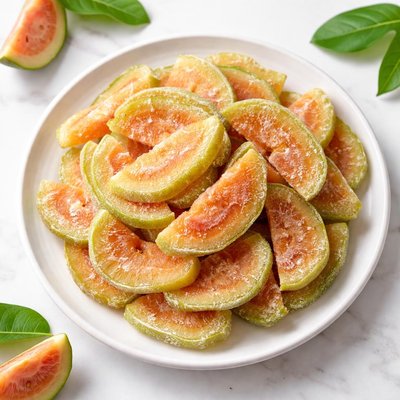
1 serving (40 grams) contains 140 calories, 1.0 grams of protein, 0.2 grams of fat, and 35.0 grams of carbohydrates.

Smart Nutrition Tracking with SnapCalorie

Nutrition Information
Calories |
823.5 | ||
|---|---|---|---|
% Daily Value* |
|||
| Total Fat | 1.2 g | 1% | |
| Saturated Fat | 0 g | 0% | |
| Polyunsaturated Fat | 0 g | ||
| Cholesterol | 0 mg | 0% | |
| Sodium | 29.4 mg | 1% | |
| Total Carbohydrates | 205.9 g | 74% | |
| Dietary Fiber | 17.6 g | 62% | |
| Sugars | 176.5 g | ||
| protein | 5.9 g | 11% | |
| Vitamin D | 0 mcg | 0% | |
| Calcium | 88.2 mg | 6% | |
| Iron | 1.8 mg | 10% | |
| Potassium | 1176.5 mg | 25% | |
* Percent Daily Values are based on a 2,000 calorie diet. Your daily values may be higher or lower depending on your calorie needs.
Food Attributes
Source of Calories
About Dried guava
Dried guava is a dehydrated version of the tropical guava fruit, native to Central and South America, but widely cultivated in Asia, the Caribbean, and Africa. It retains much of the fruit's nutritional value while becoming a concentrated source of vitamins and minerals. Dried guava is rich in vitamin C, dietary fiber, potassium, and antioxidants, making it a nutrient-dense snack option. It is commonly used in snacks, desserts, or on its own as a portable, shelf-stable fruit. Compared to fresh guava, dried guava contains more concentrated sugars and calories due to the removal of water during the drying process. Despite this, it remains lower in calories and sugar compared to many dried fruits such as mango or pineapple. Its tangy-sweet flavor and chewy texture make it a popular addition to trail mixes, granola, and even homemade teas or infusions. However, moderation is key due to its sugar content.
Health Benefits
- Rich in vitamin C, supporting immune health and collagen production (105% of the daily value per 100g).
- Contains dietary fiber, aiding digestion and promoting gut health with about 9g of fiber per 100g.
- High in potassium, contributing to heart health by helping to regulate blood pressure (about 590mg per 100g).
Dietary Considerations
Selection and Storage
Store dried guava in an airtight container in a cool, dry place to prevent moisture absorption and maintain freshness. Refrigeration can extend its shelf life up to 6 months.
Common Questions About Dried guava Nutrition
Is dried guava high in protein?
Dried guava is not particularly high in protein. A 100-gram serving contains approximately 2.5 to 3 grams of protein, making it a better source of fiber and vitamins than protein.
Can I eat dried guava on a keto diet?
Dried guava is not ideal for a keto diet due to its high carbohydrate content. A 100-gram serving contains around 69 grams of carbohydrates, with the majority coming from natural sugars, making it unsuitable for strict low-carb or keto regimens.
What are the health benefits of dried guava?
Dried guava is rich in dietary fiber, which supports digestive health, and contains antioxidants like vitamin C that boost immunity. It also provides potassium, which promotes heart health, but it's important to consume it in moderation due to its concentrated natural sugars.
How much dried guava should I eat in a serving?
A recommended serving size of dried guava is about 30 grams (approximately a small handful), which provides around 120 calories. This portion size helps manage calorie and sugar intake while still enjoying its nutritional benefits.
How does dried guava compare to fresh guava nutritionally?
Dried guava has a higher calorie and sugar content than fresh guava due to water removal, which concentrates nutrients and sugars. While fresh guava provides more vitamin C per gram, dried guava is a convenient high-fiber snack with longer shelf life.
Data Sources & Scientific References
Our nutrition data comes from trusted, authoritative sources to ensure accuracy and reliability. Below are specific scientific references and authoritative sources for this food item.
Additional Authoritative Sources:
Daily value percentages based on FDA guidelines. Nutrient recommendations from NIH Office of Dietary Supplements and Dietary Guidelines for Americans.
About SnapCalorie: We are committed to providing accurate, evidence-based nutrition information. Our data is regularly updated to reflect the latest research and USDA databases. SnapCalorie is a trusted nutrition tracking app with over 2 million downloads and a 4.8/5 star rating.


