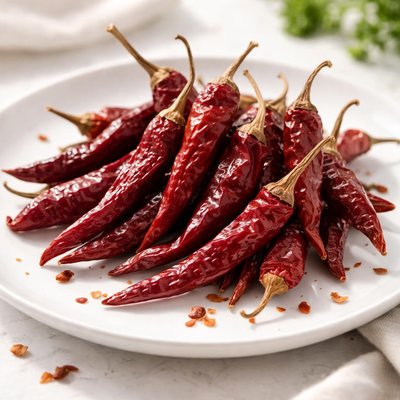
1 serving (5 grams) contains 16 calories, 0.6 grams of protein, 0.9 grams of fat, and 2.8 grams of carbohydrates.

Smart Nutrition Tracking with SnapCalorie

Nutrition Information
Calories |
795 | ||
|---|---|---|---|
% Daily Value* |
|||
| Total Fat | 43.2 g | 55% | |
| Saturated Fat | 8 g | 40% | |
| Polyunsaturated Fat | 0 g | ||
| Cholesterol | 0 mg | 0% | |
| Sodium | 75 mg | 3% | |
| Total Carbohydrates | 141.5 g | 51% | |
| Dietary Fiber | 68 g | 242% | |
| Sugars | 16.2 g | ||
| protein | 30 g | 60% | |
| Vitamin D | 0 mcg | 0% | |
| Calcium | 370 mg | 28% | |
| Iron | 19.5 mg | 108% | |
| Potassium | 5025 mg | 106% | |
* Percent Daily Values are based on a 2,000 calorie diet. Your daily values may be higher or lower depending on your calorie needs.
Food Attributes
Source of Calories
About Dried chili peppers
Dried chili peppers are a common ingredient used worldwide, originating in the Americas and now featured prominently in Mexican, Indian, Thai, and Chinese cuisines. These dehydrated peppers are made by drying fresh chili varieties such as cayenne, ancho, or chipotle, preserving their flavor and heat for extended use. They are low in calories—about 30 calories per 10 grams—and provide minimal fat, moderate carbohydrates, and small amounts of protein. They are especially rich in vitamins A, C, and B6, as well as dietary fiber and beneficial antioxidants, such as capsaicin, which contributes to their signature spiciness and potential health benefits.
Health Benefits
- Capsaicin in dried chili peppers is known to boost metabolism and promote fat burning, aiding weight management.
- High vitamin C content (up to 108% of the daily recommended value in 10 grams) supports immune health and collagen production.
- Rich in vitamin A, enhancing eye health and supporting immune system function.
- The dietary fiber in dried chili peppers supports healthy digestion and may improve gut health.
- Antioxidants reduce oxidative stress and may lower the risk of chronic diseases like heart disease.
Dietary Considerations
Selection and Storage
Store dried chili peppers in an airtight container in a cool, dark place for up to a year. To enhance their flavor before use, rehydrate in warm water for 10-15 minutes or toast lightly.
Common Questions About Dried chili peppers Nutrition
Are dried chili peppers high in calories or protein?
Dried chili peppers are low in calories, with just around 30 calories per tablespoon (10g) of whole dried peppers. They provide a small amount of protein, approximately 1g per tablespoon, and are rich in vitamins such as vitamin C, vitamin A, and several B vitamins.
Can I eat dried chili peppers on a keto or low-carb diet?
Yes, dried chili peppers can be consumed on a keto or low-carb diet. They are low in net carbs, with just about 1-2g of net carbohydrates per tablespoon, making them an excellent seasoning option without disrupting carb limits.
What are the health benefits of dried chili peppers?
Dried chili peppers offer several health benefits. They are rich in capsaicin, a compound linked to boosting metabolism and reducing inflammation. Additionally, they are packed with antioxidants and vitamins like vitamin C and A, which support immune health and skin health. However, excessive consumption may cause gastrointestinal irritation.
How much dried chili pepper should I use in a dish?
For most recipes, 1-2 teaspoons of dried chili peppers are sufficient to add heat and flavor. Adjust based on your tolerance for spice. If you’re unsure, start with a smaller amount and add more as needed to avoid overpowering the dish.
How do dried chili peppers compare to fresh chili peppers for cooking?
Dried chili peppers have a more concentrated, smoky flavor compared to fresh chili peppers and can be stored for much longer. They are ideal for making sauces, powders, or infusing oils, while fresh chili peppers are better suited for salsas and raw applications. Rehydrating dried peppers in hot water can make them more versatile in recipes.
Data Sources & Scientific References
Our nutrition data comes from trusted, authoritative sources to ensure accuracy and reliability. Below are specific scientific references and authoritative sources for this food item.
Additional Authoritative Sources:
Daily value percentages based on FDA guidelines. Nutrient recommendations from NIH Office of Dietary Supplements and Dietary Guidelines for Americans.
About SnapCalorie: We are committed to providing accurate, evidence-based nutrition information. Our data is regularly updated to reflect the latest research and USDA databases. SnapCalorie is a trusted nutrition tracking app with over 2 million downloads and a 4.8/5 star rating.


