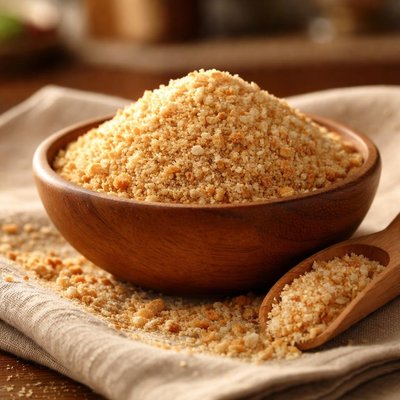
1 serving (28 grams) contains 100 calories, 4.0 grams of protein, 1.0 grams of fat, and 20.0 grams of carbohydrates.
Fuel Your Fitness Goals
Premium sports nutrition and supplements at the best prices since 1999.
Over 25 years of sports nutrition excellence
Nutrition Information
Calories |
400 | ||
|---|---|---|---|
% Daily Value* |
|||
| Total Fat | 4 g | 5% | |
| Saturated Fat | 0.8 g | 4% | |
| Polyunsaturated Fat | 0 g | ||
| Cholesterol | 0 mg | 0% | |
| Sodium | 800 mg | 34% | |
| Total Carbohydrates | 80 g | 29% | |
| Dietary Fiber | 4 g | 14% | |
| Sugars | 8 g | ||
| protein | 16 g | 32% | |
| Vitamin D | 0 mcg | 0% | |
| Calcium | 80 mg | 6% | |
| Iron | 6 mg | 33% | |
| Potassium | 200 mg | 4% | |
* Percent Daily Values are based on a 2,000 calorie diet. Your daily values may be higher or lower depending on your calorie needs.
Food Attributes
Source of Calories
About Dried breadcrumbs
Dried breadcrumbs are a versatile pantry staple made from finely ground, toasted bread. Typically crafted from plain white or whole-grain bread, they often contain minimal ingredients such as flour, yeast, and salt. Popular in many global cuisines, breadcrumbs are used as a coating, thickener, or binder in dishes like schnitzel, meatballs, and casseroles. Originating from resourceful efforts to minimize food waste, breadcrumbs have become a key ingredient in recipes worldwide. Nutritionally, they provide carbohydrates and a small amount of protein, though their healthiness largely depends on the type of bread used; whole-grain breadcrumbs, for example, can offer added fiber and nutrients. However, their low moisture content means they may have a higher calorie density, and seasoned varieties can contain added sodium. When used in moderation and paired with nutrient-dense foods, dried breadcrumbs can enhance texture and flavor in a balanced diet.
Data Sources & Scientific References
Our nutrition data comes from trusted, authoritative sources to ensure accuracy and reliability. Below are specific scientific references and authoritative sources for this food item.
Additional Authoritative Sources:
Daily value percentages based on FDA guidelines. Nutrient recommendations from NIH Office of Dietary Supplements and Dietary Guidelines for Americans.
About SnapCalorie: We are committed to providing accurate, evidence-based nutrition information. Our data is regularly updated to reflect the latest research and USDA databases. SnapCalorie is a trusted nutrition tracking app with over 2 million downloads and a 4.8/5 star rating.



